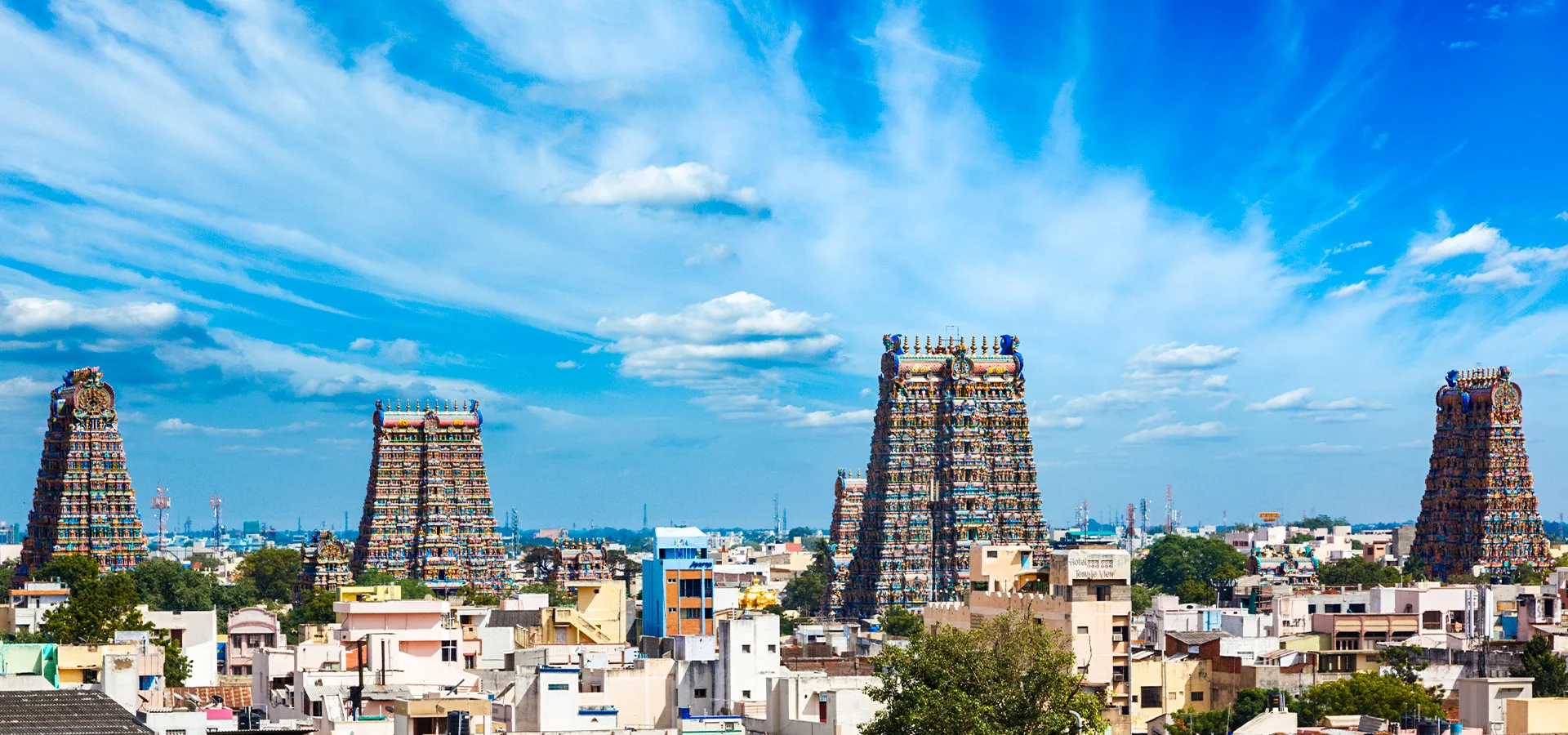
Tamil Nadu holds one of the world's longest continuously practised temple-building traditions — towering Dravidian gopurams still ring with the same bells and rituals performed here for over a thousand years, from Chennai's Kapaleeshwarar Temple to Madurai's extraordinary Meenakshi Amman complex.
Along the coast, the Pallava-era rock-cut monuments of Mahabalipuram stand as a UNESCO World Heritage testament to 7th-century sculptors, while Pondicherry's French Quarter offers a completely different rhythm — mustard-yellow colonial villas, quiet tree-lined streets, and a seafront promenade unlike anywhere else in India.
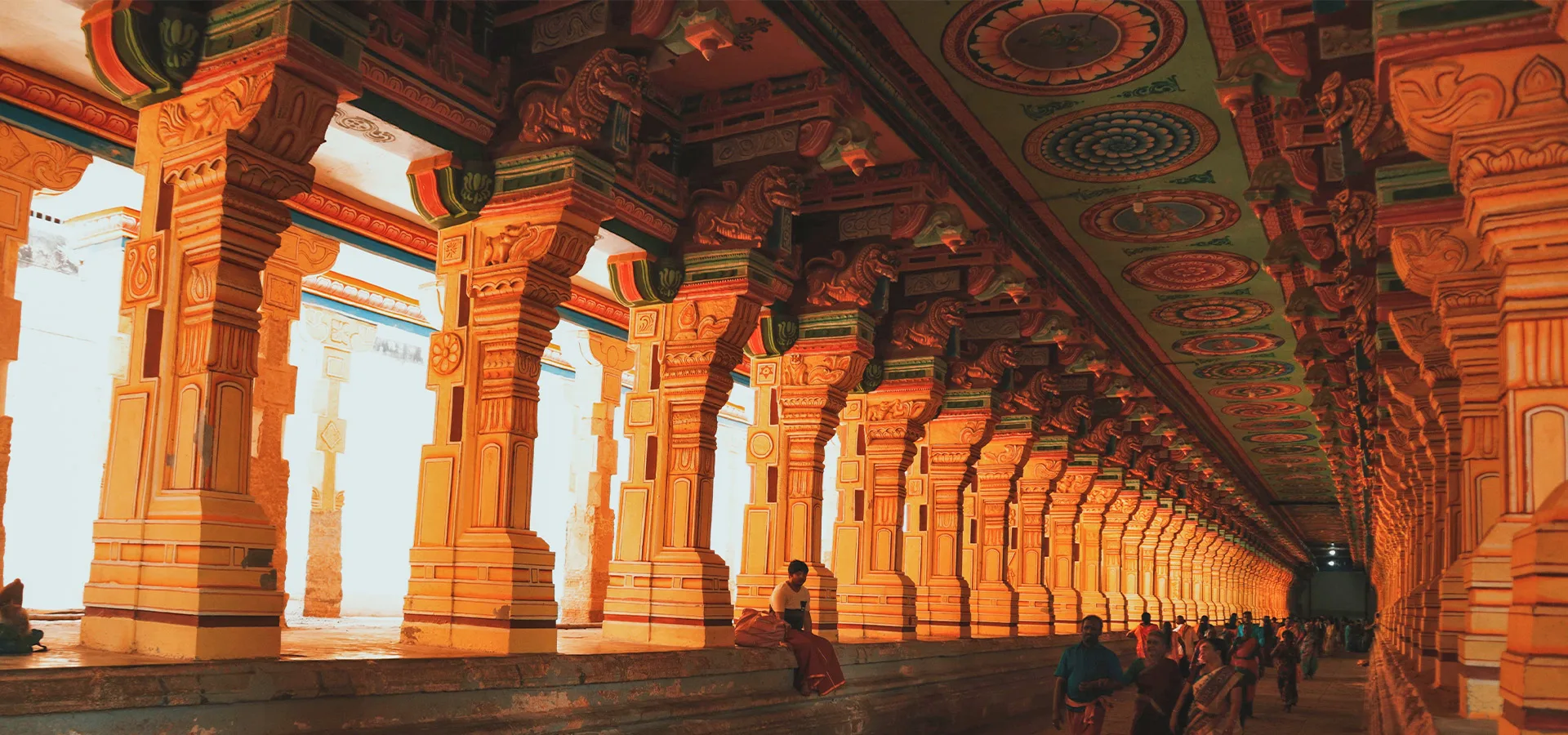
The journey south leads through Thanjavur's Chola-dynasty temples, Rameshwaram's sacred Ramanathaswamy shrine, and finally to Kanyakumari, where the Arabian Sea, Bay of Bengal, and Indian Ocean meet at the very tip of the subcontinent.
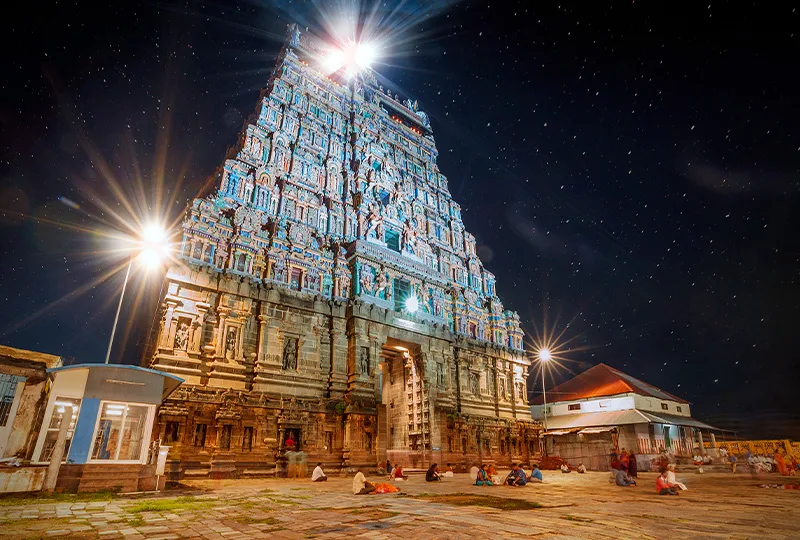
Six reasons Tamil Nadu rewards the unhurried traveller
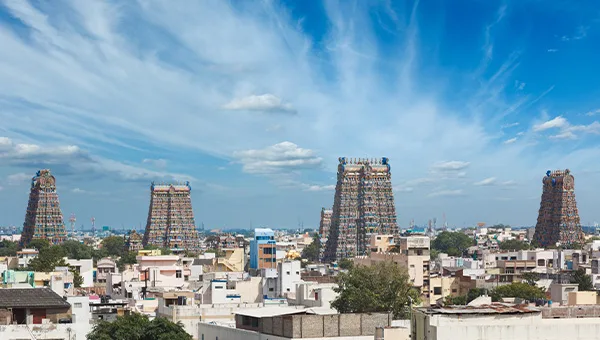
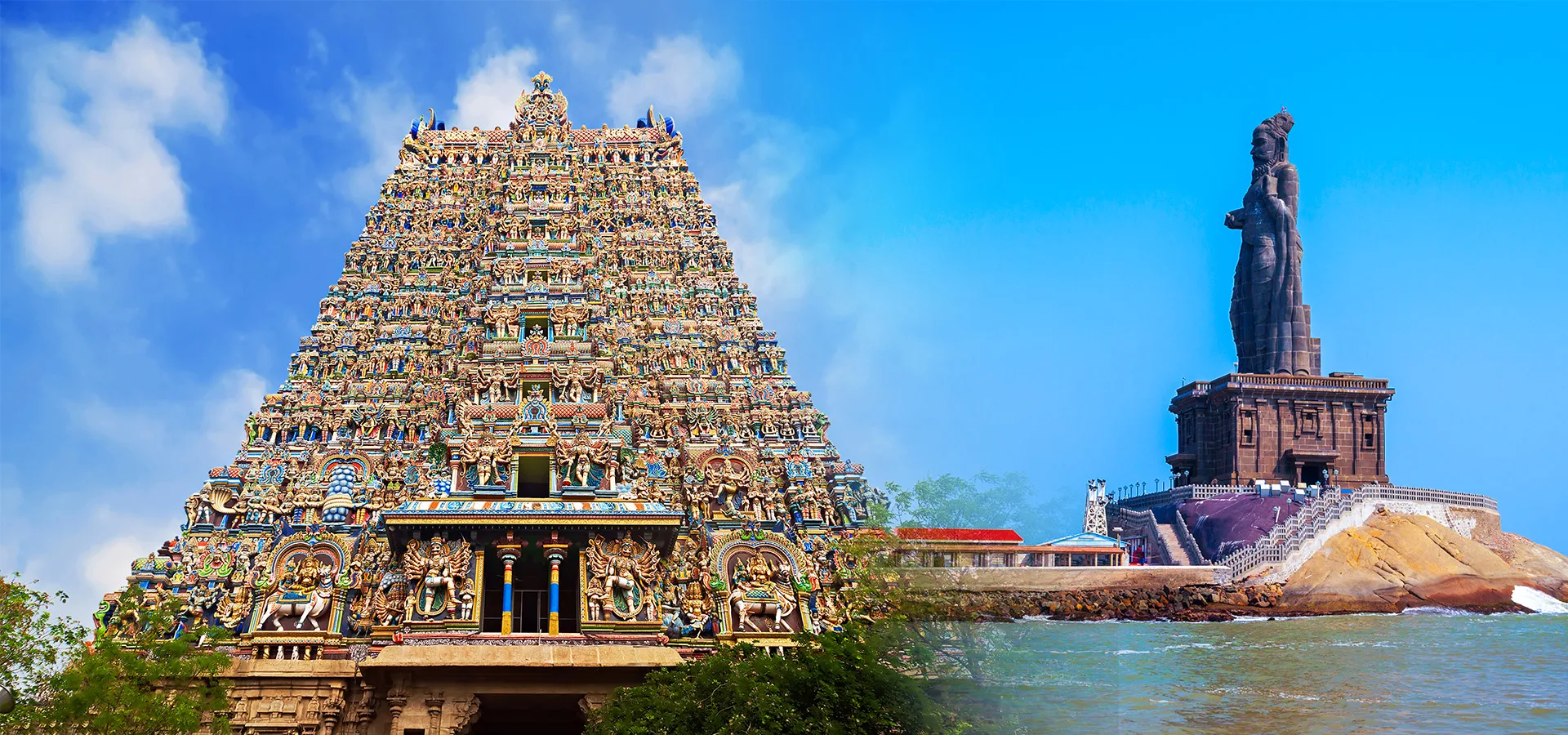
One of South India's most magnificent living temples, its towering gopurams covered in thousands of painted sculpted deities, still at the centre of daily Tamil devotional life.
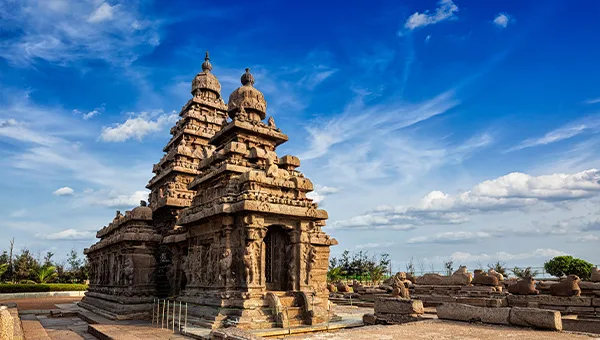
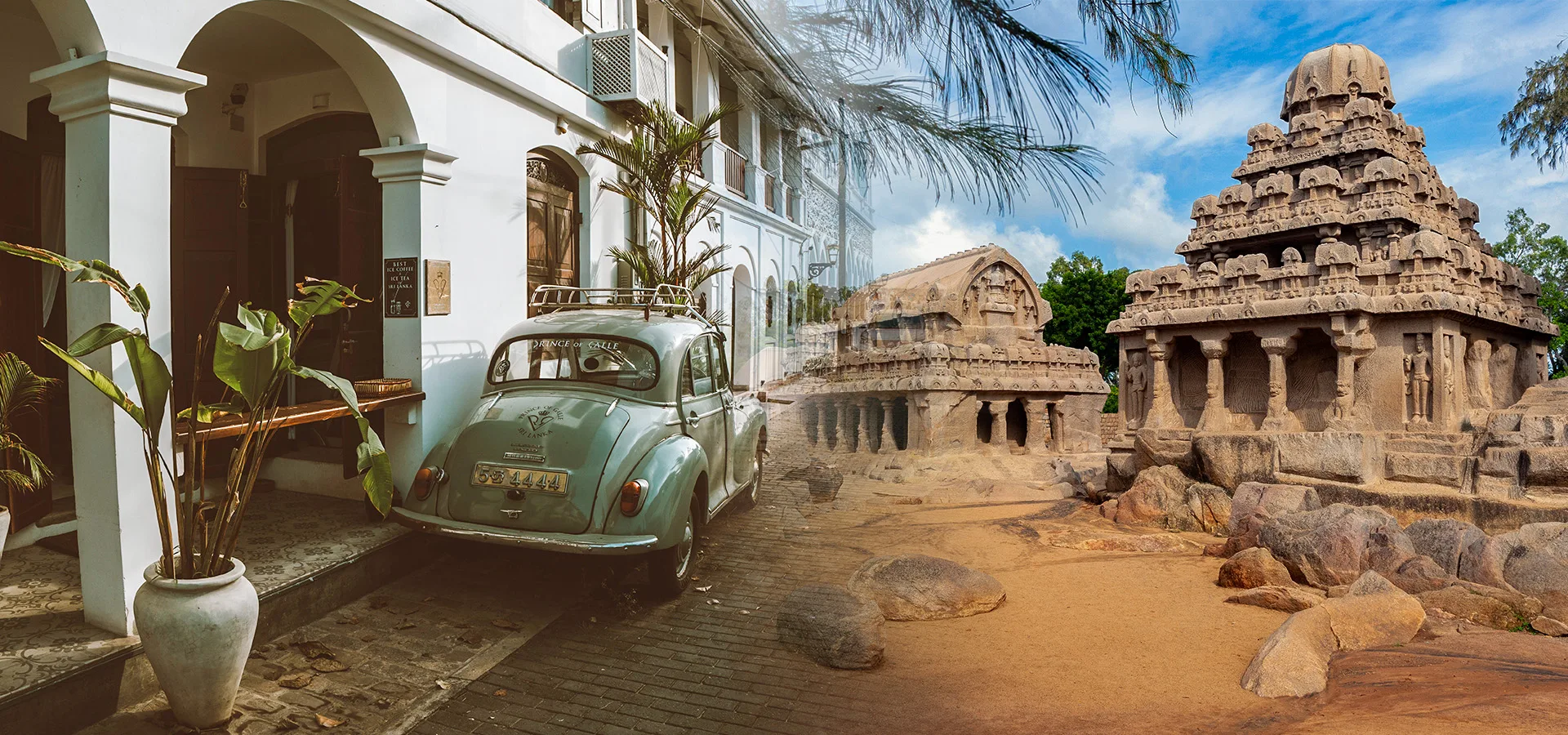
UNESCO World Heritage Pallava-era rock-cut monuments — the Shore Temple, Pancha Rathas, and Arjuna's Penance — carved directly from granite outcrops by 7th-century sculptors.
Mustard-yellow colonial villas, bougainvillea-draped lanes, and a seafront promenade — a genuinely different Tamil Nadu, shaped by 300 years of French rule.
Stand at India's southernmost point, where the Arabian Sea, Bay of Bengal, and Indian Ocean meet — one of the most photographed sunset and sunrise points in the country.
Tamil Nadu is the birthplace of Bharatanatyam, one of India's oldest classical dance forms, still taught and performed exactly as codified centuries ago.
Fiery Chettinad curries, banana-leaf temple thalis, and filter coffee culture — a cuisine shaped equally by trade routes and temple kitchens.
Tamil Nadu's coastal plains stay warm year-round, with the state's unique dependence on the northeast monsoon shaping the ideal visiting window.
Warm, dry, and comfortable for temple visits and coastal sightseeing. Daytime temperatures of 22–30°C across most of the state.
Hot on the plains but hill stations like Ooty and Kodaikanal stay pleasant. Good value, fewer crowds at major temple sites.
The northeast monsoon brings periodic heavy rain to the coast — Chennai, Mahabalipuram, and Pondicherry are most affected; inland temple towns less so.
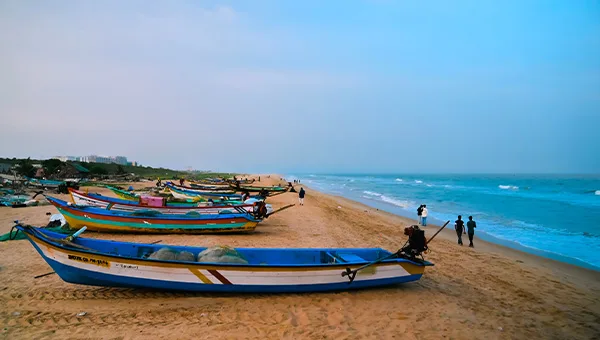
Tamil Nadu's capital blends Dravidian temples, colonial-era landmarks, and the longest urban beach in India along the Marina.
Kapaleeshwarar Temple, Fort St. George, and the bustling lanes of Mylapore give Chennai a genuine sense of living heritage rather than a museum piece.
A UNESCO World Heritage town where 7th-century Pallava sculptors carved entire temples and reliefs directly from granite outcrops beside the sea.
The Shore Temple, weathered by a thousand years of salt spray, remains one of the most photographed monuments in South India.
A former French colonial enclave until 1954, Pondicherry's White Town retains its mustard-yellow villas, church spires, and grid of tree-lined streets.
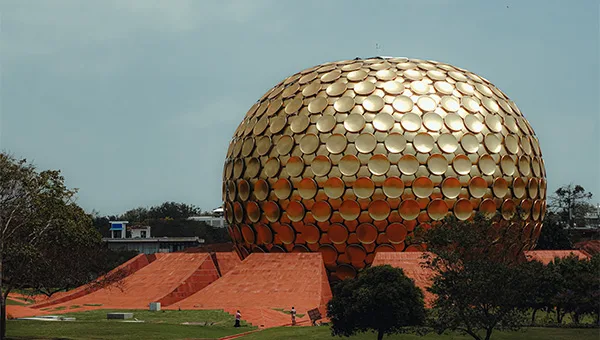
Auroville's international community, Paradise Beach, and a seafront promenade give Pondicherry a pace found nowhere else in Tamil Nadu.
One of India's oldest continuously inhabited cities, built around the extraordinary Meenakshi Amman Temple, whose towering gopurams dominate the skyline.
Madurai's night market, silk weaving traditions, and the temple's dawn and dusk rituals give visitors a genuine window into living Tamil devotional culture.