Scottish Himalayas & the World's Most Famous Exile Capital
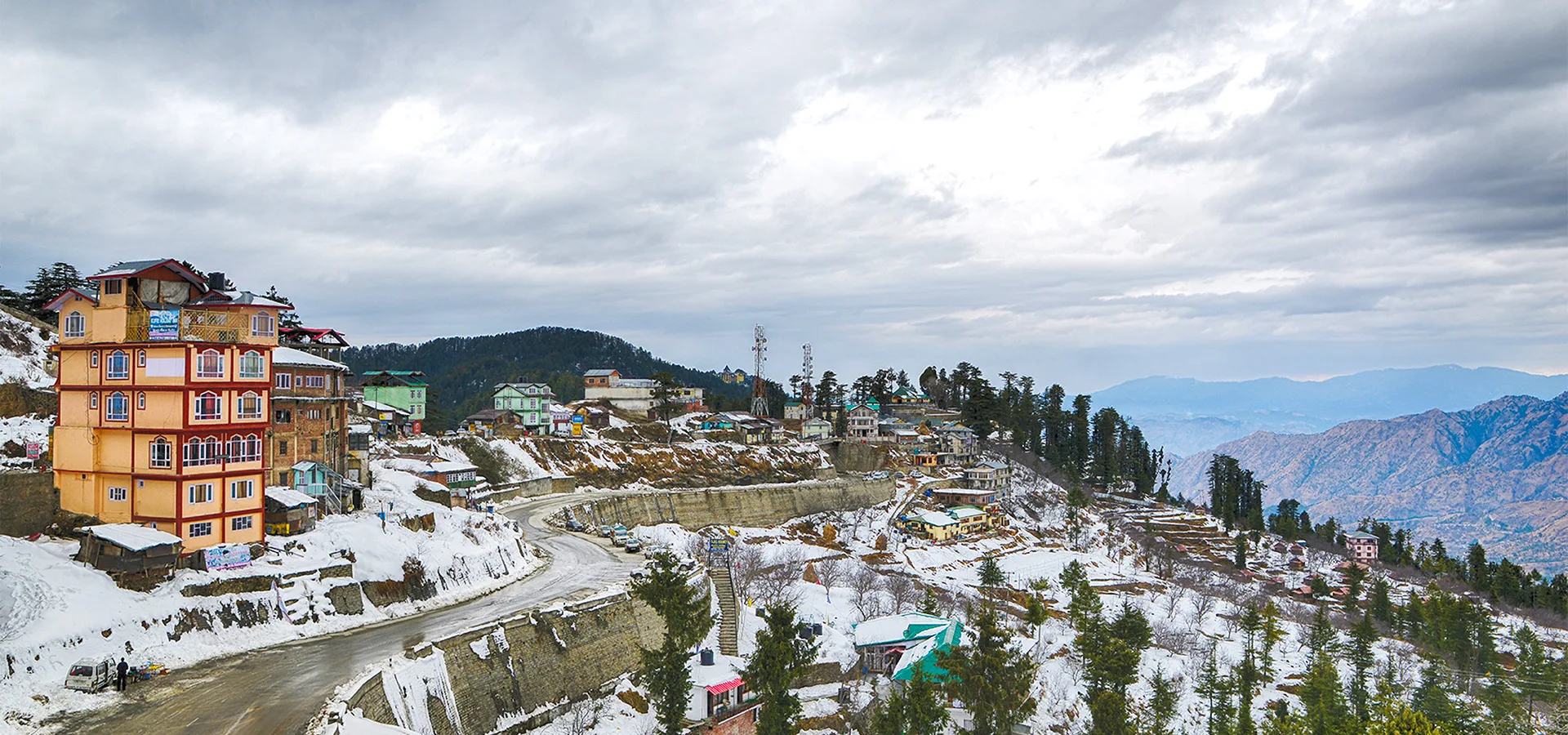
Five days through two of the most distinctive hill towns in the Indian Himalaya — Dalhousie, a 19th-century British hill station of Scottish character set across five hills at 2,036m, and Dharamsala, the seat of the Tibetan Government in Exile and the residence of His Holiness the 14th Dalai Lama.
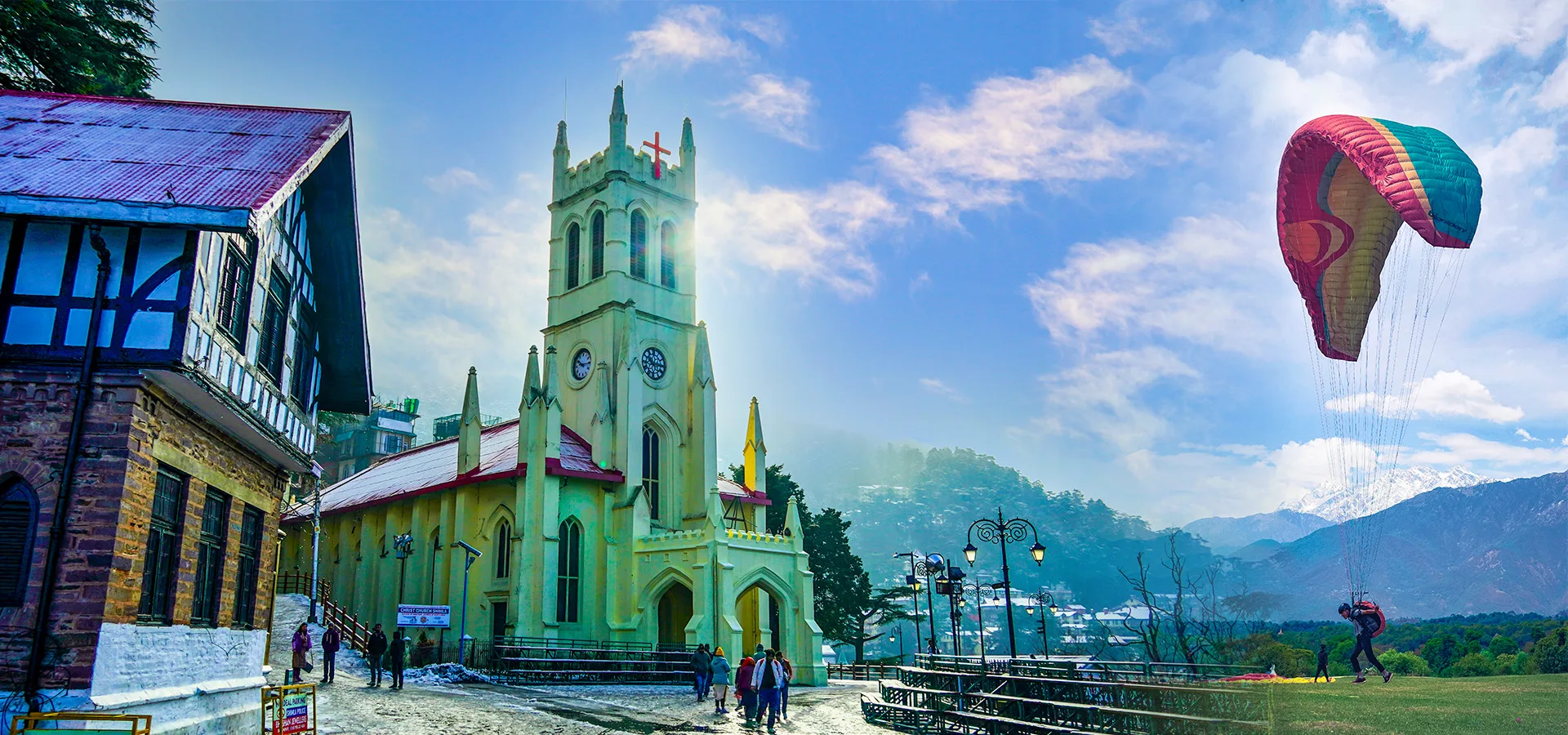
Dalhousie was founded in 1854 by Lord Dalhousie as a sanatorium and summer retreat for British soldiers and administrators. Its five hills — Kathalagh, Potreyn, Terah, Bakrota, and Balun — each have their own character: Victorian church, deodar cedar forest, and views across the Ravi valley to the snow-capped Pir Panjal range. The nearby Chamba valley contains some of the finest early Himalayan Hindu temple art in India. Khajjiar — the 'Switzerland of India' at 1,920m — is a natural meadow surrounded by deodar forest with a small glacial lake.
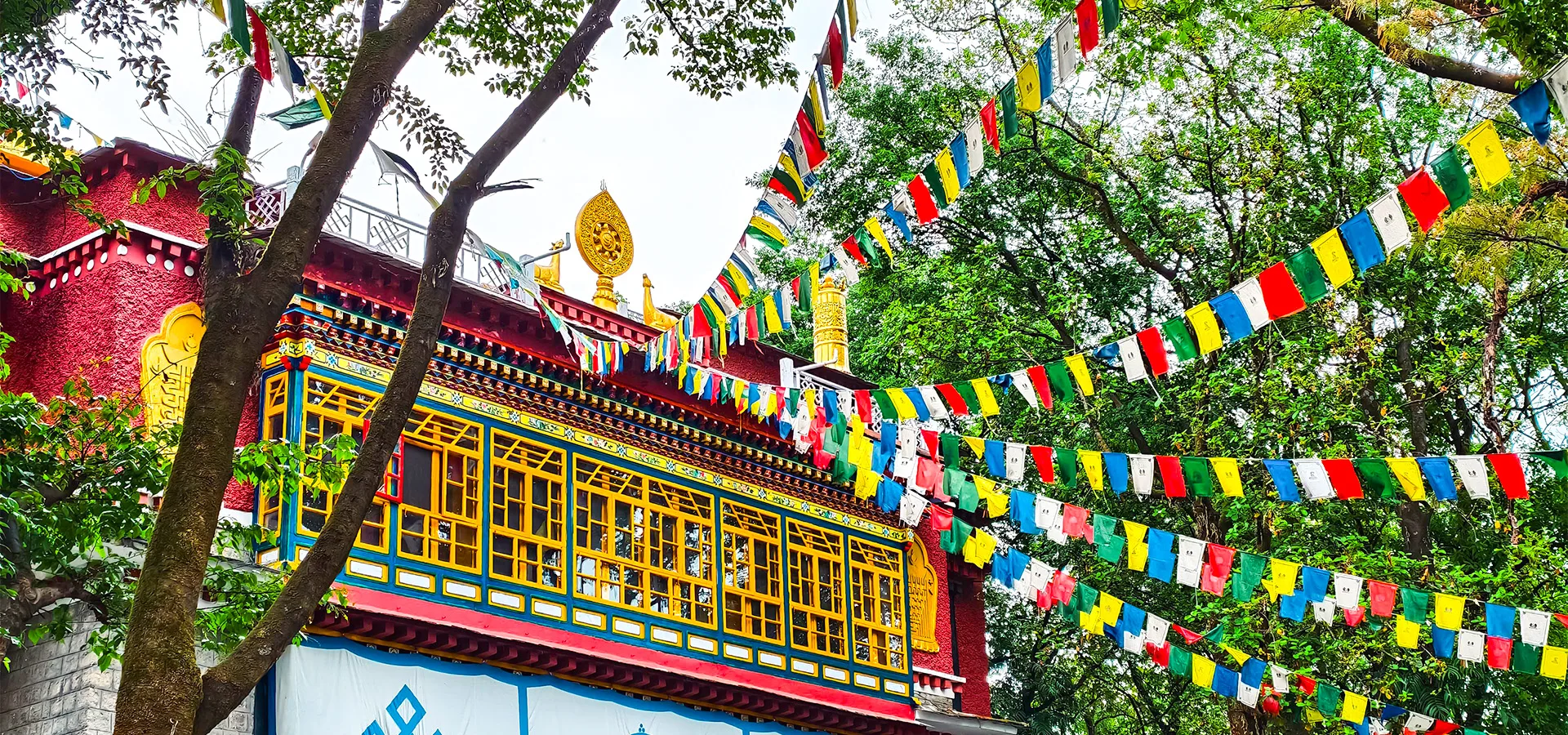
Dharamsala (1,457m) and upper McLeod Ganj (1,457m) are the twin nerve centres of the Tibetan exile community in India. Since 1960, when the Dalai Lama established his government-in-exile here after fleeing Tibet, this hill town has become one of the most culturally extraordinary places in South Asia — a genuinely living Tibetan city in the Kangra Valley, with Buddhist temples, prayer wheels, momo restaurants, Tibetan arts and craft workshops, and the constant presence of maroon-robed monks.
What makes this journey special
Your journey, unfolded
Depart Delhi early morning by private vehicle. Drive north through Punjab to Pathankot and then up into the Chamba hills to Dalhousie (560 km, ~10 hrs). Arrive by evening and check in to your colonial-era hill hotel. First walk on Subhash Chowk — Dalhousie's main square, surrounded by Victorian buildings. The evening air at 2,036m, scented with deodar and pine, is an immediate contrast to the plains.
Full day exploring the area around Dalhousie. Morning: Khajjiar (22 km, 1,920m) — a circular meadow of vivid green grass with a small glacial lake at the centre, surrounded entirely by dense deodar cedar forest. The combination of open meadow, dark forest, and distant snow peaks has earned it the nickname 'Mini Switzerland'. A signpost here marks the official measurement: 'Khajjiar is 2,525 km & 7 metres from Geneva'.
Drive down to Chamba (56 km from Khajjiar) — one of the oldest and best-preserved hill towns in the western Himalaya, founded in the 9th century. The Champavati Temple, Lakshmidevi Temple, and the Hari Rai Temple contain extraordinary early Himachali temple sculpture in an unbroken tradition. The Bhuri Singh Museum has an exceptional collection of Pahari miniature paintings — the court tradition of these hill kingdoms that flourished parallel to the Mughal school. Return to Dalhousie via Banikhet.
Morning: Bakrota Hills walk — the finest walk in Dalhousie, a 5 km forest circuit on Dalhousie's highest ridge with views across the Ravi valley to the Pir Panjal snows. St Andrew's Church (1903) and St Francis Church, two of Dalhousie's Victorian church gems. Drive to Dharamsala (95 km, ~3 hrs) through the Kangra Valley — a beautiful drive past tea gardens (Kangra tea is one of India's finest) and rice terraces. Continue up to McLeod Ganj (10 km above Dharamsala). Check in. Evening: first walk on McLeod Ganj's main street — the extraordinary mixture of Tibetan monks, trekkers, yoga students, and Himachali locals in a small mountain town.
Full day in McLeod Ganj. The Tsuglagkhang Complex — the Dalai Lama's main residence and temple, built in 1968 and housing a large golden Shakyamuni Buddha. The complex includes the Kalachakra Temple and the Namgyal Monastery (the Dalai Lama's personal monastery, with monks performing daily rituals). The Tibet Museum — one of the most important human rights museums in South Asia, documenting the Tibetan diaspora, the 1959 exodus across the Himalayas, and the ongoing situation in Tibet.
Bhagsu Nag Temple and Bhagsu Waterfall — a 2 km walk from McLeod Ganj through the forest to an ancient Shiva temple and a dramatic waterfall. Optional half-day trek to Triund Hill (9 km, 2,827m) through oak and rhododendron forest — one of the finest short treks in Himachal Pradesh, with views of the entire Dhauladhar range and, on clear days, across the Kangra Valley to the Himalayan skyline.
Morning: Norbulingka Institute (7 km from McLeod Ganj) — a remarkable centre for the preservation of Tibetan arts and culture, where thangka painters, appliqué artists, woodcarvers, and silk weavers work in a beautifully designed Tibetan campus with gardens, a temple, and a Doll Museum. The institute exports Tibetan crafts worldwide and accepts donations for its preservation work. Drive back to Delhi (490 km, ~9 hrs). Tour concludes at Delhi.
Inclusions & Exclusions
Included ✓
- ✓ 4 nights accommodation in handpicked heritage hotels
- ✓ Daily breakfast throughout
- ✓ Private vehicle for all transfers
- ✓ Bhuri Singh Museum entry (Chamba)
- ✓ Tibet Museum entry (McLeod Ganj)
- ✓ Tsuglagkhang Complex guided visit
- ✓ All applicable taxes
Not Included ✗
- ✗ Flights / trains to / from Delhi
- ✗ Travel insurance
- ✗ Lunches & dinners
- ✗ Triund trek guide fee (optional, payable locally)
- ✗ Norbulingka Institute workshop donations
- ✗ Personal expenses & shopping
- ✗ Gratuities
Your questions, answered
The Dalai Lama's schedule is not publicly disclosed and private audiences are not available for tourists. However, when he is in residence at Tsuglagkhang, public teachings (Kalachakra and other dharma teachings) are occasionally announced — the HHDL Office website publishes upcoming public programmes. If a public teaching coincides with your visit, we can adjust the itinerary so you can attend. When the Dalai Lama is travelling internationally (which is frequent), Tsuglagkhang is still open for visitors to the temple and monastery. We recommend checking the dalailama.com events calendar when planning your dates.
Khajjiar (1,920m) is a circular plateau meadow about 22 km from Dalhousie — an almost perfectly round natural bowl of vivid green grass with a small glacial lake at its centre, surrounded on all sides by dense deodar cedar forest, with distant snow peaks visible on clear days. In 1992, the Swiss ambassador to India drove a post into the ground declaring Khajjiar similar to Switzerland, and the comparison — open green meadow, dense forest, snow backdrop — has stuck. The Swiss consulate officially recognised the comparison and there is now a Swiss signpost in the meadow measuring exactly 2,525 km to Geneva.
March–June is ideal — apple blossom, spring flowers, comfortable temperatures (15–25°C in Shimla, cooler at Manali). September–November: post-monsoon clarity, crisp air, and golden apple harvest. December–February: heavy snow in Manali and Rohtang — perfect for winter sports. Avoid July–August (monsoon): roads can be disrupted and views are often obscured by cloud. Shimla is pleasant year-round; Manali and Rohtang are best avoided in monsoon.
Absolutely — every tour is fully private. We can adjust duration, add Spiti Valley, Kinnaur, Kasol, or connect to Leh-Ladakh via the Manali-Leh highway. Enquire at no obligation.
The most convenient options from Delhi: by AC Volvo bus (8–10 hrs overnight to Shimla or Manali), by private vehicle (the most comfortable option, included in our tours), or by train to Kalka followed by the UNESCO Heritage Toy Train to Shimla (5.5 hrs, a wonderful experience). Our tours include private vehicle transfers throughout.
Rohtang Pass (3,978m) is typically open May–November. It closes due to snowfall (usually November) and doesn't reopen until May/June. It also closes on Tuesdays for environmental reasons, and the Himachal Pradesh government limits the number of vehicles per day (permits required — we arrange these). An alternative when Rohtang is closed is the Atal Tunnel (completed 2020) which connects Manali to the Lahaul valley year-round at any weather.
60+ days: full refund minus admin fee. 30–59 days: 75% refund. 15–29 days: 50%. Under 15 days: no refund. Travel insurance strongly recommended.