From Dal Lake to the Roof of the World — India's Greatest Road Journey
The Srinagar–Leh Highway (NH1) is one of the most celebrated roads on earth — a 434 km mountain route that crosses three Himalayan passes, passes through Buddhist kingdoms and Kargil's war-memorial landscape, and arrives at Leh (3,524m) in the ancient Kingdom of Ladakh. This 8-day tour drives the full length, with time to stop and absorb every extraordinary section.
The journey begins in Srinagar — two nights on Dal Lake, the Mughal Gardens, an overnight in Gulmarg's alpine meadow, and a day at Sonmarg's golden valley and Thajiwas Glacier. Then the famous Zoji La Pass (3,528m) — the gate between Kashmir and Ladakh, where the landscape changes in minutes from green to barren, from valley to moonscape.
Kargil (2,676m) provides a historically charged overnight — the site of the 1999 Kargil War, whose Tiger Hill and Tololing peaks are visible from the highway. Dras (the second coldest inhabited place on earth) is passed en route. The second day's drive crosses the twin passes of Namika La (3,720m) and Fotu La (4,108m) to Leh — the ancient capital of Ladakh, at 3,524m, with the Leh Palace, Shanti Stupa, and Thiksey Monastery.
Two nights in Leh allow acclimatisation and exploration of the Indus Valley monasteries. Then north to the Nubra Valley (Khardung La, 5,359m — one of the world's highest motorable passes), where Bactrian camels graze on sand dunes beside the Shyok River. The tour concludes at the extraordinary Pangong Tso lake (4,350m) — 134 km long, famously turning from turquoise to emerald to sapphire as the light changes across the day.
What makes this journey special
Your journey, unfolded
Welcome! Transfer to your Dal Lake houseboat or hotel. Evening Shikara ride. Hazratbal Mosque. Wazwan dinner. Rest and acclimatise — the altitude journey ahead requires you to be well-rested.
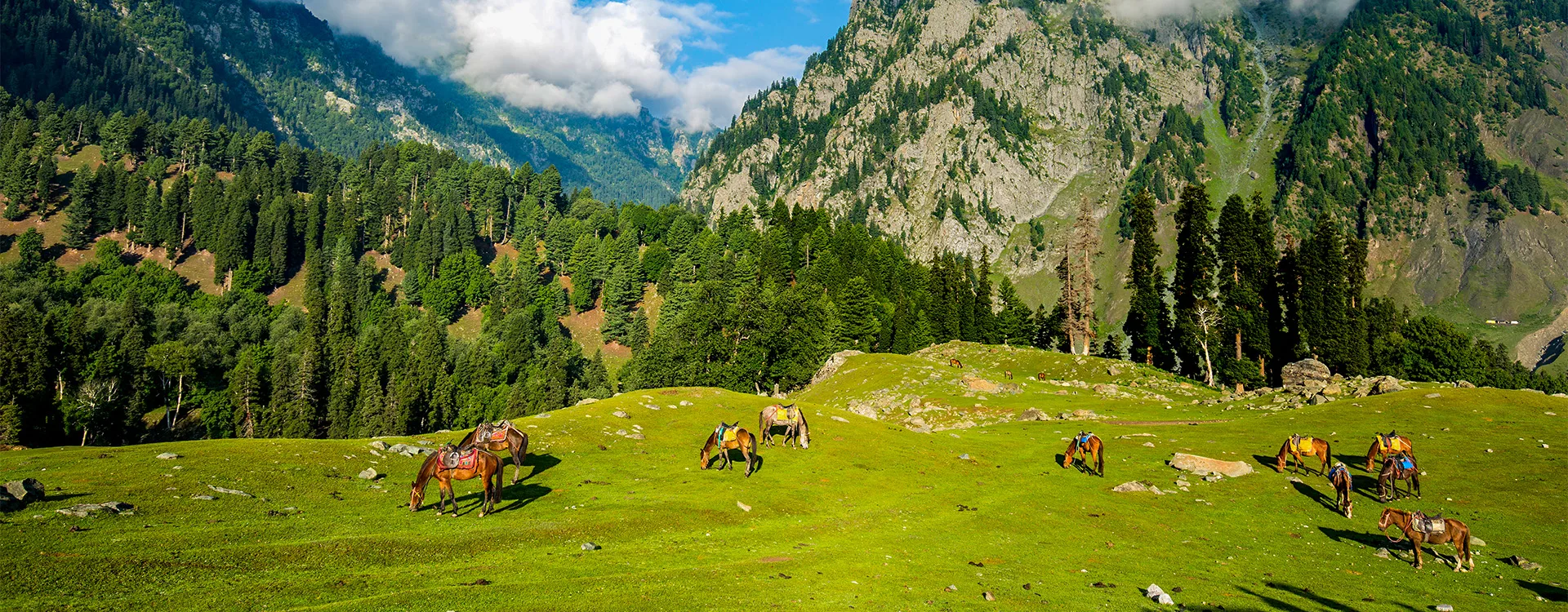
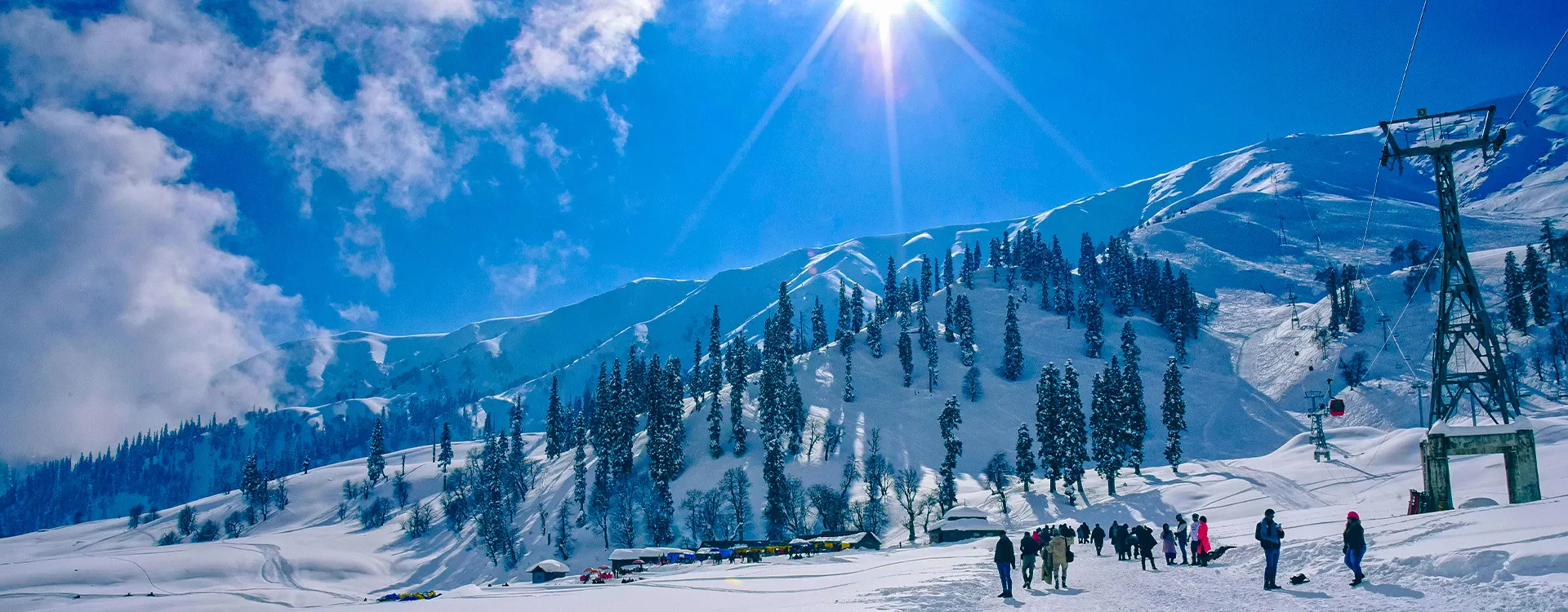
Morning: three Mughal Gardens — Shalimar Bagh, Nishat Bagh, Chashme Shahi. Quick Jama Masjid stop. Drive to Gulmarg. Gondola Phase 1 to Kongdori (3,979m) — Nanga Parbat views. Evening meadow walk as day-trippers depart. Overnight at 2,650m.
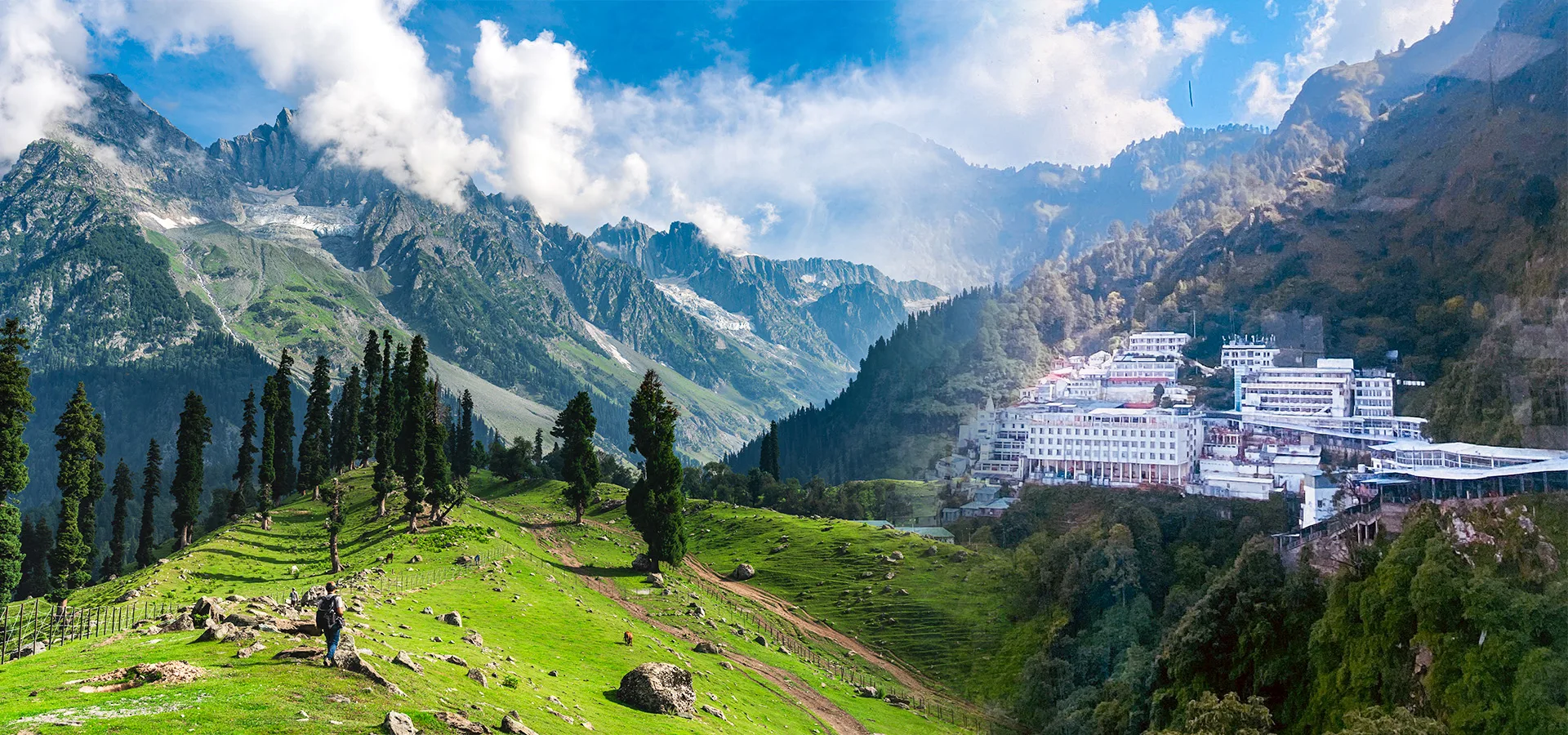
Drive from Gulmarg to Sonmarg (90 km via Srinagar, ~3 hrs). Thajiwas Glacier trek (4 km return) — the last great Kashmir landscape before entering Ladakh. Continue east on NH1 through the Zoji La Pass (3,528m) — the dramatic threshold between Kashmir's green valleys and Ladakh's barren moonscape. The change in landscape at the pass is one of the most remarkable transformations in Indian travel — lush pine forest on the west, bare rock and scree on the east. Dras village (1st stage, often cited as the world's second coldest inhabited place). Arrive Kargil.
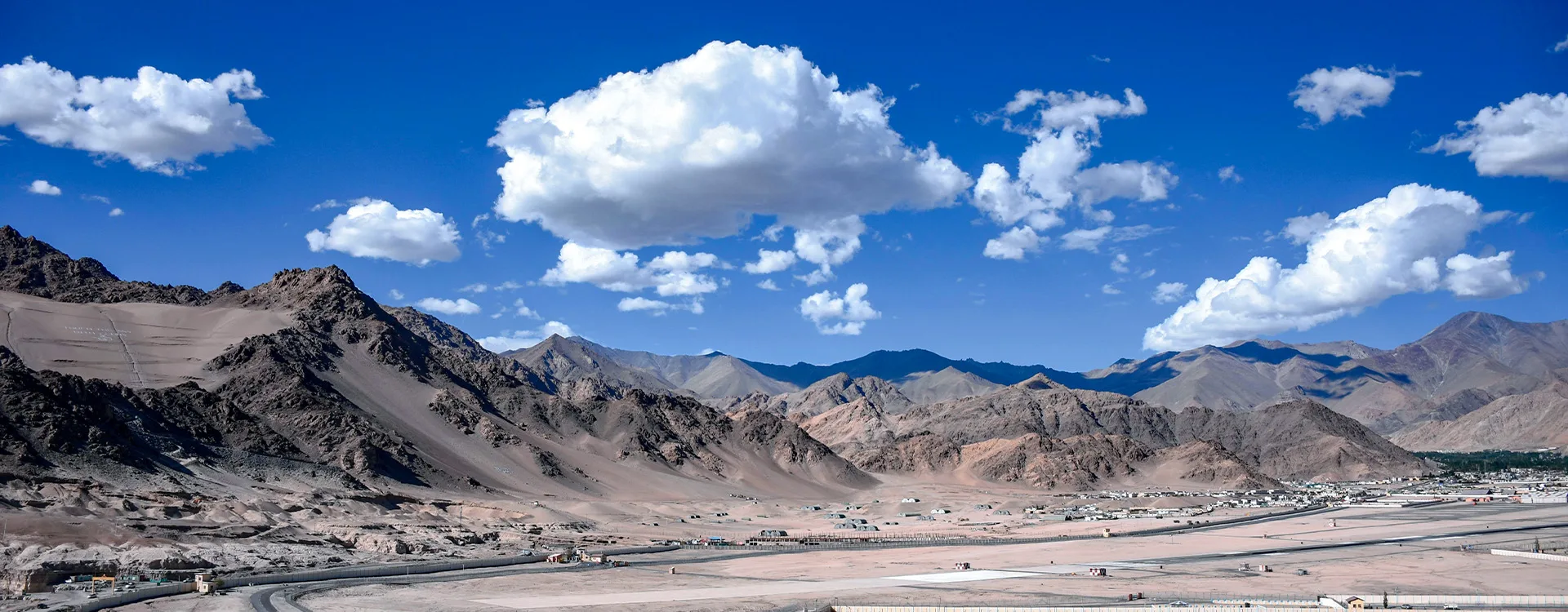
Drive from Kargil to Leh (230 km, ~6 hrs) via the two high passes of Namika La (3,720m) and Fotu La (4,108m, the highest pass on the Srinagar–Leh highway). Stop at Lamayuru — the oldest monastery in Ladakh (900+ CE), perched dramatically on a moonland plateau. The Indus River joins the road at Khalsi and accompanies you all the way to Leh. Magnetic Hill (where vehicles appear to roll uphill), the Sangam confluence of Indus and Zanskar Rivers (the striking blue-meets-green confluence), and the Pathar Sahib Gurudwara. Arrive Leh (3,524m) and check in. Rest — altitude acclimatisation is critical on this first night in Leh.
Acclimatisation day — essential at 3,524m. Morning: gentle exploration of Leh. The Leh Palace (17th century, 9-storey, modelled on the Potala Palace in Lhasa — now partially a museum). Shanti Stupa (Japanese-funded, 1991) on a hilltop above the city with panoramic Ladakh views. Leh Market and the main bazaar.
Afternoon: drive south down the Indus Valley to Thiksey Monastery (12-storey complex, resembles the Potala, houses a 49-foot Maitreya Buddha) and Hemis Monastery (the largest and wealthiest monastery in Ladakh, famous for its June Hemis Festival and its collection of sacred thangkas). Hemis is the site of the disputed manuscript that claims Jesus visited India during the 'lost years'.
Drive north from Leh over Khardung La (5,359m) — one of the world's highest motorable passes, with stunning views of the Ladakhi ranges and a certificate available at the top (a popular tradition). Descend to the Nubra Valley (2,900m) — a broad, surprisingly lush valley carved by the Shyok River, with sand dunes rising beside a glacial river in a surreal high-altitude desert landscape.
At the Hunder sand dunes: Bactrian double-humped camels (descendants of the Silk Route trading caravans) give rides across the dunes. Visit Diskit Monastery — the oldest and largest monastery in the Nubra Valley, with a giant Maitreya Buddha statue watching over the valley. Overnight at your Nubra Valley guesthouse.
Drive from Nubra Valley to Pangong Tso Lake (160 km, ~5 hrs) via the Shyok River valley — a spectacular route through barren mountain landscapes. Pangong Tso (4,350m) is one of the highest saltwater lakes in the world — 134 km long, straddling the India-China border, turning from turquoise to emerald to deep sapphire as the light changes across the day. The lake became internationally famous after the 2009 Bollywood film '3 Idiots'. Arrive in time for the afternoon. Walk along the shore, watch the light change, and stay for the sunset — one of the great natural spectacles of India. Overnight in a camp or guesthouse on the lakeshore.
Rise at dawn for the extraordinary early morning light on Pangong — the lake surface at first light turns shades of rose and gold before settling into its famous turquoise. Drive back to Leh (160 km, ~5 hrs) via Chang La Pass (5,360m, another world-class mountain pass). Transfer to Leh's Kushok Bakula Rimpochee Airport for your departure flight (Leh connects to Delhi, Srinagar, Chandigarh, and Jammu daily). Tour concludes at Leh Airport.
Inclusions & Exclusions
Included ✓
- ✓ 7 nights accommodation (houseboat + Gulmarg resort + Kargil hotel + Leh hotel + Nubra guesthouse + Pangong camp)
- ✓ Daily breakfast throughout
- ✓ Dinner on Days 3, 4, 6, 7
- ✓ Private vehicle / SUV for all transfers (4WD for high passes)
- ✓ Guided dawn Shikara on Dal Lake
- ✓ All three Mughal Gardens entry fees
- ✓ Gulmarg Gondola Phase 1 cable car
- ✓ All Leh monastery entry fees (Thiksey, Hemis, Diskit)
- ✓ Inner Line Permit for Nubra Valley and Pangong (arranged by us)
- ✓ All applicable taxes
Not Included ✗
- ✗ Flights (Srinagar arrival / Leh departure)
- ✗ Travel insurance (strongly recommended)
- ✗ Lunches throughout
- ✗ Oxygen cylinders at high altitude (available in Leh if needed)
- ✗ Bactrian camel ride Nubra (payable locally)
- ✗ Gondola Phase 2 (optional)
- ✗ Personal expenses & gratuities
Your questions, answered
Leh (3,524m), Khardung La (5,359m), and Pangong Tso (4,350m) are the high-altitude sections. Acute Mountain Sickness (AMS) is a genuine risk for some travellers. Key precautions: acclimatise in Srinagar (1,585m) and Gulmarg (2,650m) before reaching Leh; rest on Day 5 in Leh before going higher; drink 3–4 litres of water daily; avoid alcohol for the first 48 hours in Leh; carry Diamox (acetazolamide) if prescribed by your doctor (consult before travel). Oxygen cylinders are available in Leh if needed. Symptoms of AMS include headache, nausea, and fatigue — if severe, descend immediately. Our drivers carry basic medical supplies. Do not attempt this tour if you have cardiac or severe respiratory conditions.
The Srinagar–Leh Highway (NH1) is typically open from late May to late October/November, subject to snow conditions. The Zoji La Pass is the most weather-sensitive section — it can close with even moderate snowfall. The optimum months for this tour are June–September, with June and July offering the most reliable road conditions. We monitor the highway daily during your tour and have contingency plans (including Leh approach by flight from Srinagar) if road sections are temporarily closed.
The road journey from Srinagar to Leh via Zoji La, Kargil, and the high passes is one of the great travel experiences in Asia — the Zoji La pass transformation from green Kashmir to barren Ladakh, Lamayuru's moonland, and the Indus River alongside you for hundreds of kilometres are extraordinary. Flying into Leh is faster but misses all of this. We strongly recommend driving the full route if you have the time and health. Flying out of Leh at the end (as this tour does) gives you the best of both — the road journey in, the mountain airport departure out.
Kashmir is among India's fastest-growing tourism destinations. The main tourist areas — Srinagar's Dal Lake, Gulmarg, Pahalgam, and Sonmarg — are safe and well-managed. Millions of Indian and international tourists visit every year without incident. We monitor conditions continuously and our flexible booking policy allows rescheduling if needed.
April–June: gardens in bloom, pleasant temperatures (15–25°C). July–September: lush green, some rain. October–November: autumn chinar colours, crisp air, excellent visibility. December–March: snow — Gulmarg becomes a ski resort. October and April are generally the finest months.
A traditional houseboat is one of the quintessential Kashmir experiences — walnut-wood interiors, a private sun deck, Shikara access, and the extraordinary experience of waking on the lake to mist and mountains. Houseboats range from budget to 5-star deluxe. We recommend at least one night for any Kashmir visitor.
No special permit is required for Indian or foreign nationals to visit the standard tourist areas (Srinagar, Gulmarg, Pahalgam, Sonmarg). Certain sensitive border zones require additional clearance — our team advises if your itinerary includes any such areas.
Absolutely — every tour is fully private. We can adjust duration, add Gurez Valley, Yusmarg, or Bangus Valley, or connect to Leh-Ladakh. Enquire at no obligation.
60+ days: full refund minus admin fee. 30–59 days: 75% refund. 15–29 days: 50%. Under 15 days: no refund. Travel insurance strongly recommended.