Bharatpur sits at a useful crossroads — close enough to Agra to be added easily onto a Golden Triangle itinerary, yet home to one of the most important bird habitats in Asia: the Keoladeo National Park, a UNESCO World Heritage wetland created in the 19th century as a royal duck-hunting reserve and now a sanctuary for over 370 recorded bird species.
The city itself grew up around Lohagarh Fort ('Iron Fort'), built by the Jat ruler Maharaja Suraj Mal in the 18th century and renowned for never being successfully captured despite repeated sieges by both British and Mughal forces — its moats and earthen ramparts proved more effective than stone alone.
Tourism in Bharatpur is overwhelmingly nature-focused: cycle-rickshaw or boat tours through Keoladeo's wetlands draw birdwatchers from around the world, particularly in winter when migratory species from Central Asia and Siberia arrive in large numbers.
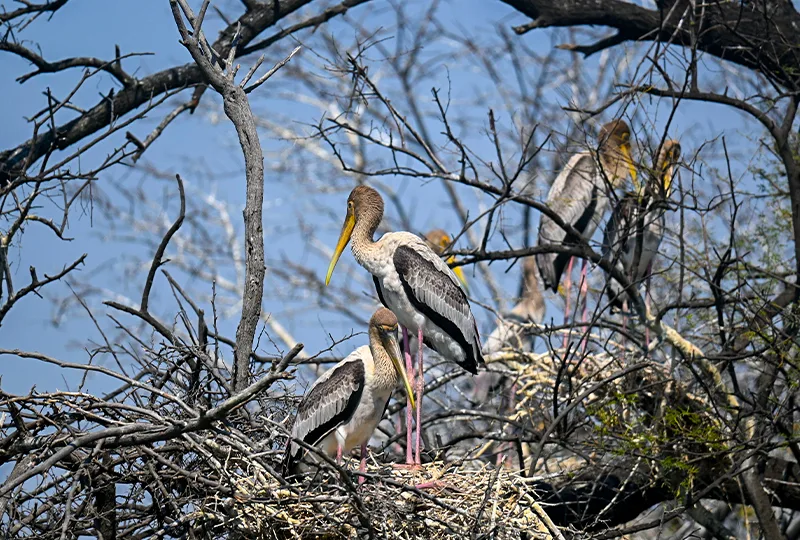
Bharatpur's appeal is tied closely to its bird migration calendar, making timing especially important here.
The prime birdwatching window — migratory species from Siberia and Central Asia arrive, alongside resident species, with comfortable temperatures (10–25°C) for long walks through the park.
Many migratory birds have departed, but resident species remain and temperatures are still manageable for a shorter visit.
Very hot through May-June; the monsoon brings welcome rain to the wetlands but few migratory birds are present outside the winter season.
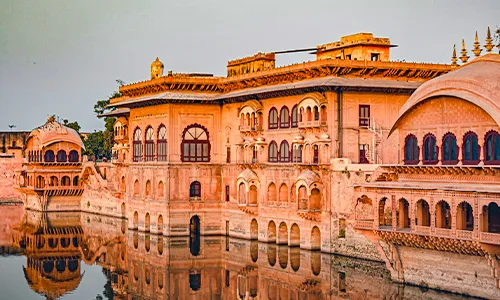
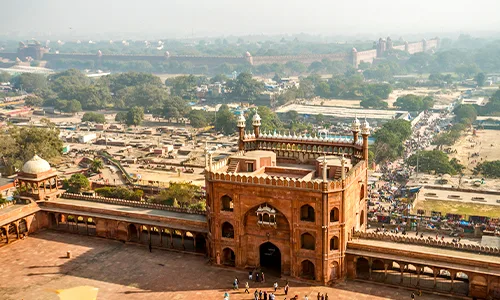
Six landmarks — the wetland sanctuary, the fort, and palaces beyond — that define a visit to Bharatpur.
UNESCO Wetland
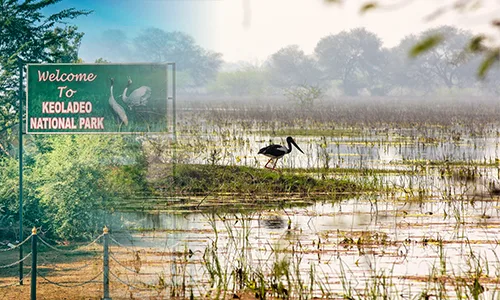
A UNESCO World Heritage wetland and former royal hunting reserve, now home to over 370 recorded bird species — explored by cycle-rickshaw, on foot, or by boat through the marshes.
Fort
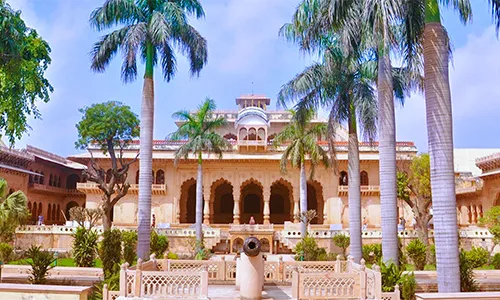
The 'Iron Fort', built in the 1730s by Maharaja Suraj Mal and famously never captured despite repeated sieges — its earthen ramparts and moats proved unusually effective defences.
Museum
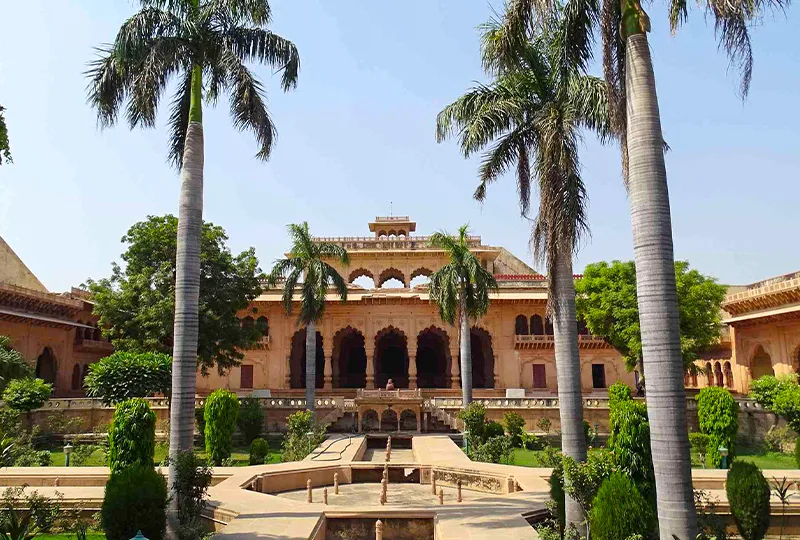
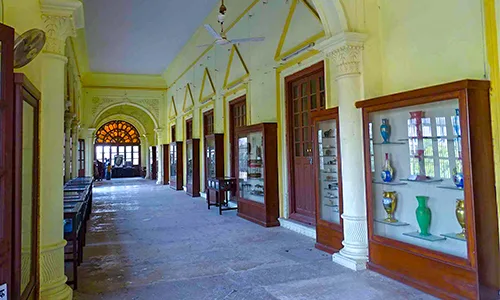
Housed within the old royal palace inside Lohagarh Fort, this museum displays armour, sculpture, and artefacts from the Jat rulers of Bharatpur.
Excursion
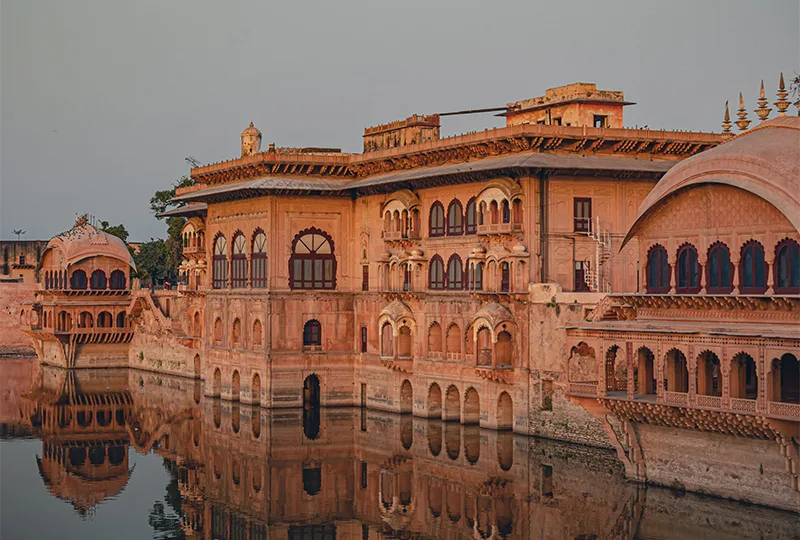
A pleasure palace 32 km from Bharatpur, famous for an ingenious 18th-century fountain system using gravity-fed water and coloured powders to simulate monsoon rain on command.
UNESCO Site
The abandoned Mughal capital built by Akbar, easily combined with Bharatpur on the route to or from Agra — a UNESCO World Heritage ghost city of red sandstone.
The wetland is best explored slowly — a cycle-rickshaw with a knowledgeable local guide is the classic way to cover ground while spotting birds.
Boat rides into the deeper marsh areas reveal species that road-based viewing misses entirely.
The fort's unusual defensive success makes it a notable stop for military history alongside the more famous bird sanctuary.
The palace museum within gives useful context on the Jat rulers who built and defended it.
Deeg's water palace and Fatehpur Sikri both make excellent additions to a Bharatpur stay, particularly for travellers combining the city with an Agra-Jaipur route.
Both are within comfortable day-trip distance and add Mughal and regional Rajput history to the birdwatching focus.
Bharatpur sits directly on the Agra-Jaipur road, making it one of the easiest Rajasthan additions to a Golden Triangle tour.
Agra Airport (AGR), about 55 km away, is the nearest airport; Delhi's airport offers far more international connectivity for a longer journey.
Bharatpur Junction is well connected to Delhi, Agra, and Jaipur, sitting directly on the main Delhi-Mumbai rail line.
Bharatpur lies directly between Agra and Jaipur on NH21, making it a natural stop on any Golden Triangle road itinerary.
What to eat, and a few customs worth knowing, before you arrive
The Rajasthani staple, widely available across Bharatpur's restaurants and roadside dhabas.
A regional vegetarian thali featuring local lentil and millet preparations, typical of this part of eastern Rajasthan.
Keep noise to a minimum within Keoladeo Park — birds are easily startled, and quiet observation yields the best sightings.
A guide who can identify calls and species by sight adds significantly to the birdwatching experience here.
Cycle-rickshaw tours involve some walking on uneven wetland paths — practical footwear helps.
Many of Keoladeo's best sightings are at a distance — proper optics make a real difference.
A few practical things worth knowing before you arrive in Bharatpur.
Bird activity is highest in the first few hours after sunrise — arrive at opening time for the best sightings.
Keoladeo charges separate entry and (optional) vehicle/rickshaw fees — confirm current rates at the gate or with your guide.
A cycle-rickshaw covers more ground in less time; walking allows quieter, closer approaches to skittish species.
Peak migratory bird numbers are typically December-January — plan around this window if birdwatching is your priority.
Bharatpur's position between Agra and Jaipur makes it simple to add a half-day or overnight stop without major rerouting.
The wetland environment can have biting insects at dawn and dusk — repellent and light long sleeves help.
Bharatpur is generally safe and quiet; as everywhere, agree any guide or rickshaw pricing clearly before starting.