Lord Shiva's Mountain Shrine, and the Abode of Lord Vishnu — Two Dhams, One Journey
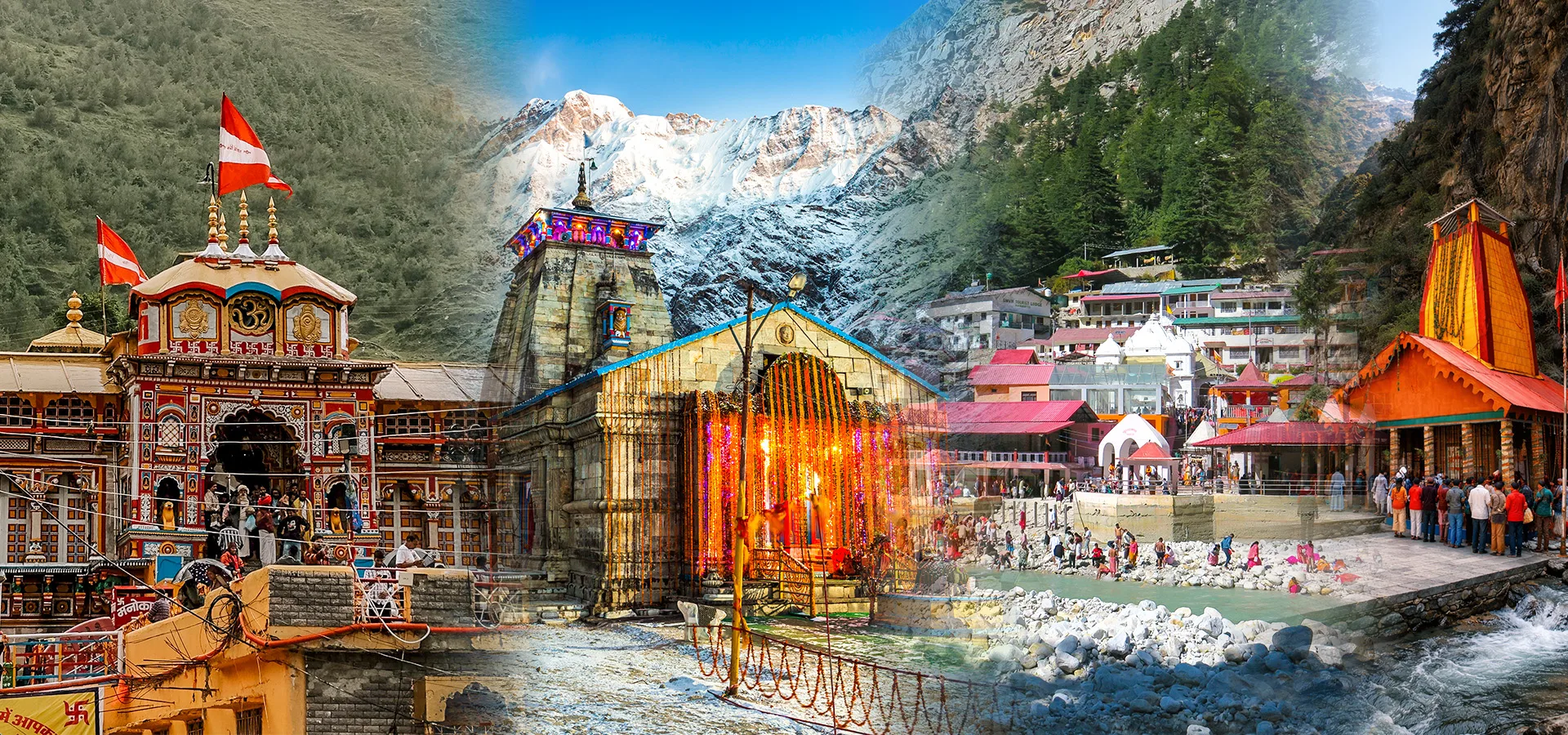
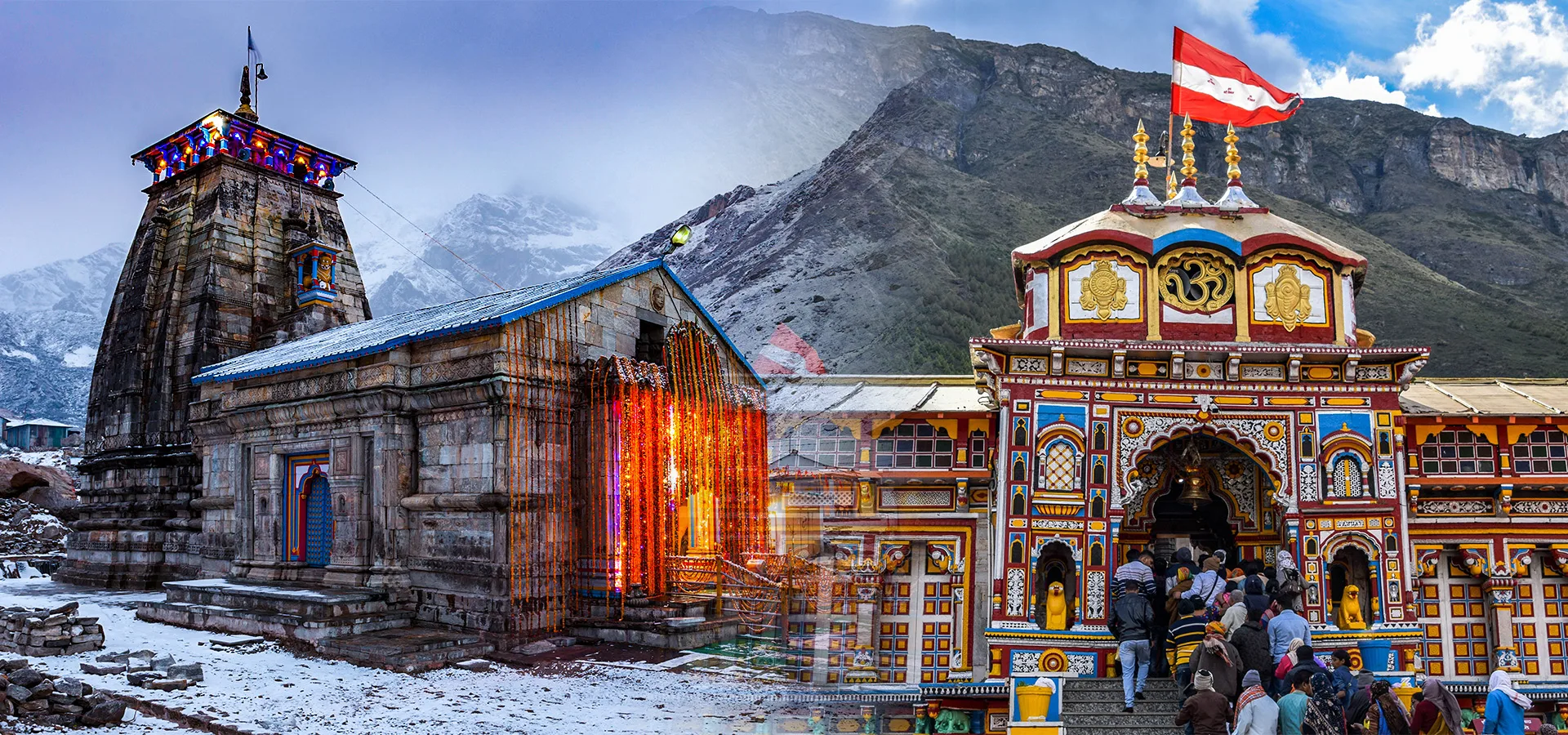
The Do Dham Yatra to Kedarnath and Badrinath is the most popular shorter alternative to the full Chardham circuit — focusing on the two most visited of Uttarakhand's four sacred shrines, dedicated respectively to Lord Shiva and Lord Vishnu, the two most revered deities in Hindu tradition.
Kedarnath, one of the twelve Jyotirlingas of Lord Shiva, is reached via a 16-19 km trek from Gaurikund (pony, palanquin, and helicopter alternatives are available) — the temple stands at 3,583m against a backdrop of snow-clad peaks, on a site that, according to legend, the Pandavas sought out for redemption after the Kurukshetra War.
From Kedarnath, the route turns to Badrinath, dedicated to Lord Vishnu and situated at 3,133m between the Nar and Narayan mountain ranges, with the towering Neelkanth Peak as a backdrop. A holy dip in the Tapt Kund hot springs precedes darshan, and a visit to Mana Village — the last Indian settlement before the Tibetan border — adds a further layer of mythology and frontier atmosphere to the pilgrimage.
The journey concludes with the drive back through Rudraprayag and Devprayag's sacred river confluences to Haridwar or Rishikesh, where the Ganga Aarti provides a fitting close to this profound seven-day pilgrimage.
What makes this journey special
Your journey, unfolded
Meet our representative at Haridwar Railway Station or Dehradun Airport, and begin the drive to Guptkashi (approximately 205-250 km, ~7-8 hours), passing through Rudraprayag, the confluence of the Alaknanda and Mandakini rivers. On arrival, check in to your hotel or camp, with the evening free to rest ahead of the Kedarnath trek.
Early morning, drive to Sonprayag/Gaurikund (approximately 30-32 km), the trailhead for Kedarnath. From here, trek 16-19 km to Kedarnath (3,583m) — on foot (6-7 hours), by pony or palanquin (doli), or by helicopter from Phata/Guptkashi for those preferring a quicker ascent. On arrival, check in to your guesthouse and attend the evening Aarti at the temple — one of the twelve Jyotirlingas of Lord Shiva, where Hindu mythology holds that the Pandavas sought redemption from Shiva after the Kurukshetra War.
Early morning darshan and special pooja at the Kedarnath Temple. Afterward, trek back down to Gaurikund and drive to Guptkashi. On arrival, check in to your hotel for a relaxed evening after two demanding trekking days.
After breakfast, check out and drive to Badrinath (approximately 190-210 km, ~7-8 hours), passing through Joshimath, the winter seat of the Badrinath deity. The drive offers some of the most beautiful Himalayan scenery on the entire journey, through medicinal forest and along the Alaknanda valley. On arrival, check in to your hotel and visit the temple for an evening darshan.
Morning visit to the temple after a holy dip in the Tapt Kund hot springs, on the bank of the Alaknanda River, where it is customary to bathe before entering the Badrinath temple. Proceed through the temple's colourful entrance for darshan of Badrivishal, along with Ganesh, Kubera, Garuda, Narada, Udhhav, Nar, and Narayan. Visit Mana Village, just 3 km away — the last Indian village before the Tibetan border, inhabited by an Indo-Mongolian tribe — including Vyas Gufa, Ganesh Gufa, Bhim Pul (a natural rock bridge over the Saraswati River), and Charanpaduka. Overnight stay in Badrinath.
After breakfast, check out and drive back toward Rudraprayag (approximately 160-165 km, ~7 hours), retracing the route via Joshimath and the Vishnuprayag and Nandprayag river confluences. On arrival, check in to your hotel for an overnight stay.
After breakfast, check out and drive to Haridwar (approximately 160-175 km, ~6-7 hours), with a short photo stop at Devprayag, where the Alaknanda and Bhagirathi rivers meet to form the Ganges. On arrival, transfer to Haridwar railway station or Dehradun Airport for your onward journey. Tour concludes.
Inclusions & Exclusions
Included ✓
- ✓ 6 nights accommodation on twin/triple-share basis (hotels & guesthouses)
- ✓ Buffet meals as specified in the itinerary (breakfast & dinner)
- ✓ Private chauffeur-driven vehicle suitable for hill roads, for all transfers & sightseeing
- ✓ Chardham biometric registration assistance
- ✓ All toll, tax, parking, and driver allowances
- ✓ All applicable Indian GST
Not Included ✗
- ✗ International/domestic airfare or train fare to/from Delhi or Dehradun
- ✗ Travel insurance (strongly recommended)
- ✗ Pony/palanquin/helicopter charges at Kedarnath (optional, payable locally)
- ✗ VIP/Special Darshan (Mahabhishek Puja) fees at Kedarnath or Badrinath (optional, payable locally)
- ✗ Entrance fees / camera charges at temples and attractions
- ✗ Tipping — an entirely personal gesture
- ✗ Laundry, drinks, and items of a personal nature
Your questions, answered
No — the two shrines are in entirely different valleys, separated by a full day's drive plus the Kedarnath trek itself. This is why the standard Do Dham itinerary requires a minimum of 6-7 days to visit both comfortably and safely.
Helicopter services operate from Phata or Guptkashi to Kedarnath, reducing the trek to a short walk from the helipad to the temple, and can also be arranged for the Badrinath sector from Dehradun's Sahastradhara helipad. A helicopter-based Do Dham circuit can be completed in as few as 3-4 days; advance booking (subject to availability and weather) is essential, and costs significantly more than the road-based itinerary. Let us know if you'd like a helicopter-inclusive quote.
Yes — both of our Do Dham itineraries are sub-circuits of the complete Chardham Yatra, which visits all four shrines (Yamunotri, Gangotri, Kedarnath, and Badrinath) in a single 11-12 day journey. If you would like to undertake the full circuit, see our Chardham Yatra page, or let us know and we can combine both Do Dham itineraries into one continuous trip.
Yes — Uttarakhand's tourism department requires biometric registration for Char Dham pilgrims, completed online in advance or at registration counters in Haridwar and Rishikesh. We handle this registration on your behalf as part of the booking process; please provide ID and passport-size photographs ahead of your travel dates.
Absolutely. Every Discover India tour is fully private and built around your preferences. We can add a Rishikesh stay, arrange a helicopter upgrade, or adjust the pace. Submit an enquiry and our specialists will tailor it for you at no obligation.
Cancellations 60+ days before departure receive a full refund minus a small admin fee. 30–59 days: 75% refund. 15–29 days: 50% refund. Under 15 days: no refund. We strongly recommend comprehensive travel insurance, particularly given the route's dependence on mountain weather conditions.
October to March offers the most comfortable temperatures (15–28°C) for the ghats, boat rides, and temple queues. April–June is hot on the Gangetic plain (up to 42°C); the monsoon (July–September) raises the Ganges considerably, which can affect ghat access in both cities.
The new Ram Janmabhoomi Mandir draws very large crowds, particularly on weekends and during festivals such as Ram Navami and Diwali. We schedule darshan with queue time built into the itinerary; carrying a valid photo ID is recommended, as security screening is in place at the main temple complex.
Absolutely. Every Discover India tour is fully private and built around your preferences. We can adjust the duration, add Lucknow, or swap Chitrakoot for additional time in Prayagraj. Submit an enquiry and our specialists will tailor it for you at no obligation.
Cancellations 60+ days before departure receive a full refund minus a small admin fee. 30–59 days: 75% refund. 15–29 days: 50% refund. Under 15 days: no refund. We strongly recommend comprehensive travel insurance.