Scotland of the East, World's Wettest Place & The Land of the One-Horned Rhino
Six days through two of northeast India's most extraordinary natural landscapes — Meghalaya's cloud-wrapped plateau of waterfalls and living root bridges, and Kaziranga's UNESCO World Heritage floodplain where over 2,400 one-horned rhinoceroses graze in the Brahmaputra valley.
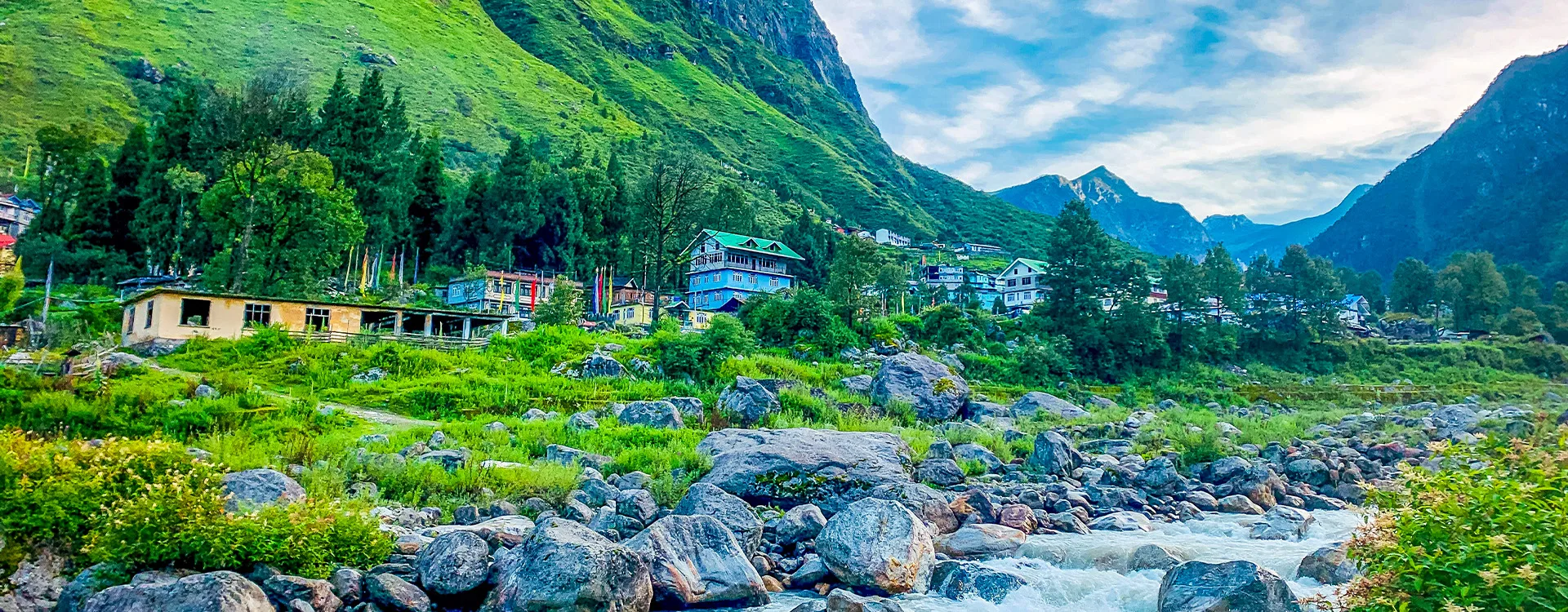
Meghalaya ('Abode of the Clouds') is India's most spectacular hill state — a sandstone plateau at 1,500m receiving the highest rainfall on earth at Mawsynram and Cherrapunjee (Sohra). The landscape is defined by waterfalls, limestone caves, and the extraordinary Living Root Bridges of the Khasi people — ancient bridges woven from the aerial roots of rubber trees over generations, some over 500 years old and still growing stronger.
Shillong — the 'Scotland of the East' — is Meghalaya's charming capital: a colonial-era hill town of British bungalows, pine forests, golf courses, and a vibrant music culture (Meghalaya is India's rock music capital). Ward's Lake, Don Bosco Museum, and the lively Police Bazaar add urban texture before the drive south to Cherrapunjee.
Cherrapunjee (Sohra) holds the record for the most rain ever recorded in a single month. Even in the dry season the waterfalls are extraordinary: Nohkalikai Falls (340m, the tallest plunge waterfall in India), Seven Sisters Falls, and the trek to the Umshiang double-decker living root bridge — the most famous natural structure in northeast India.
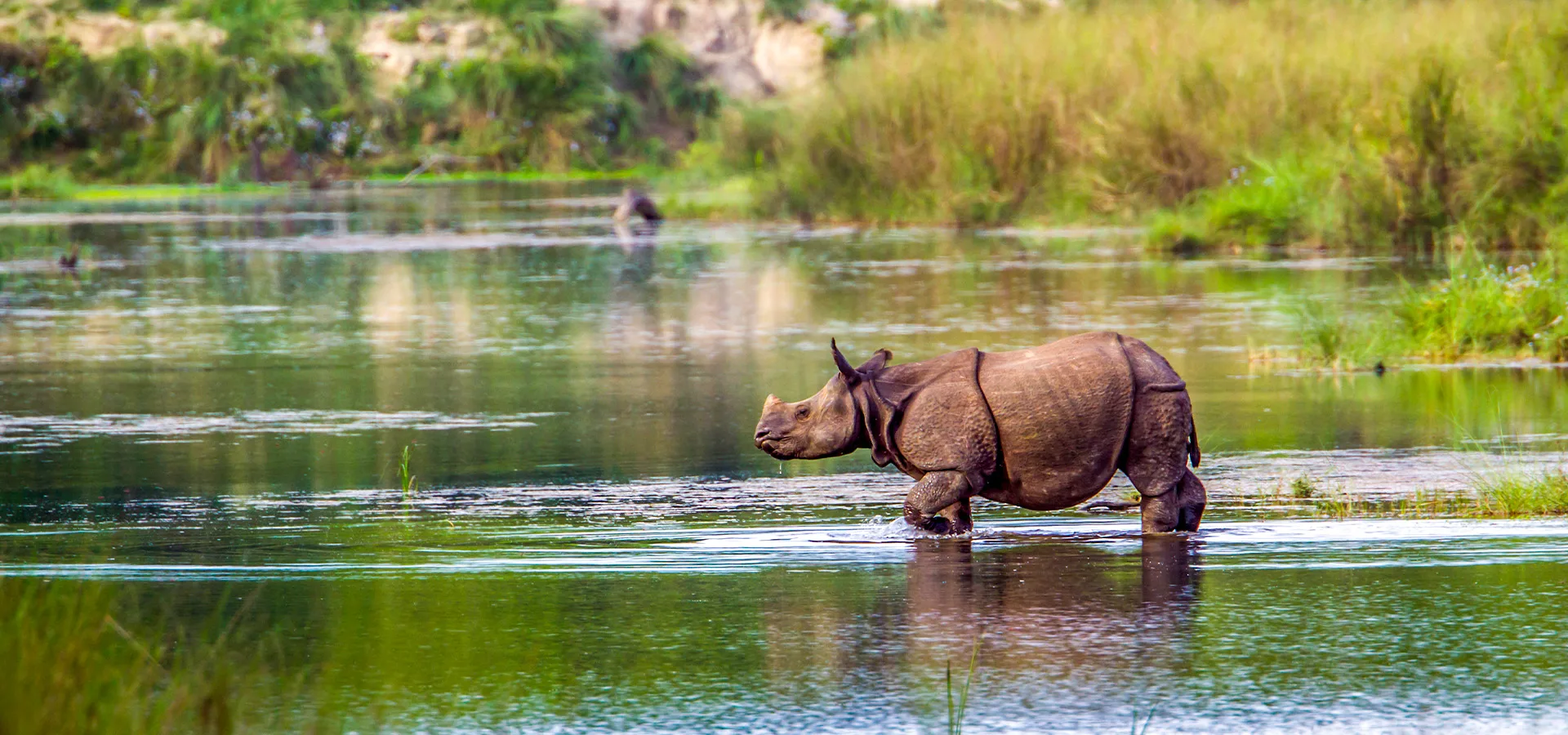
Kaziranga National Park (UNESCO World Heritage, 1985) is the world's greatest one-horned rhinoceros sanctuary — over 2,400 Indian rhinos live in the park, along with wild water buffalo, swamp deer, tigers, elephants, and over 400 bird species. Morning elephant safaris and jeep safaris into three different zones give extraordinary close-up wildlife encounters.
What makes this journey special
Your journey, unfolded
Welcome to northeast India! Transfer from Guwahati Airport. Drive to Shillong (100 km, ~2.5 hrs) via the Guwahati–Shillong Highway. Stop at Umiam Lake (Barapani) — a large reservoir in the Khasi Hills, 17 km from Shillong, surrounded by pine and oak forest; pedal boats and water sports are available for those who wish. Arrive Shillong and check in to your hotel. Evening: explore the Bara Bazar (Police Bazaar) — Shillong's lively central market, and the Civil Lines area for dinner.
A full day in the Scotland of the East. Ward's Lake — a picturesque artificial lake in the heart of Shillong with a Victorian pavilion, boating, and manicured gardens. Don Bosco Museum of Indigenous Cultures — seven floors of extraordinary exhibits covering the material culture, music, textiles, and traditions of 200+ northeast Indian tribes; one of the finest ethnographic museums in Asia.
Elephant Falls — a three-tier waterfall in a forested valley just outside Shillong, named by the British after an elephant-shaped rock (destroyed in an earthquake but the name remains). Shillong Golf Course — the third oldest golf course in Asia (1898), surrounded by pine trees and with views over the town. Optional: Cathedral of Mary Help of Christians — a Gothic-style cathedral, one of the most beautiful churches in northeast India.
Drive from Shillong to Cherrapunjee (55 km, ~2 hrs). En route: Mawphlang Sacred Forest — an ancient grove of dense subtropical forest that the Khasi people have protected as sacred for centuries; the biodiversity and atmosphere are extraordinary (guided walk with local naturalist). Cherrapunjee (Sohra, 1,484m) receives among the highest rainfall on earth — even in the dry season the landscape is lush and the waterfalls are spectacular.
Nohkalikai Falls (340m) — the tallest plunge waterfall in India, plunging into a turquoise pool at the base of a sheer limestone cliff. Seven Sisters Falls (Nohsngithiang) — seven parallel streams cascading 315m over a dramatic horseshoe cliff face. Mawsmai Cave — a short limestone cave walk through Cherrapunjee's karst landscape. Check in to your Cherrapunjee guesthouse.
Morning: the most famous natural attraction in Meghalaya — the Umshiang Double-Decker Living Root Bridge in the village of Nongriat (Cherrapunjee). The trek descends ~3,500 steps through sub-tropical jungle (2.5–3 hours round trip) to reach a pair of root bridges that span the Umshiang River — the lower bridge has been growing for over 500 years, the upper deck for over 200 years. Both are still living, still growing, and still in daily use by the villagers. The bridge is simultaneously a botanical wonder, an engineering achievement, and a work of organic art.
After returning and freshening up, drive north from Cherrapunjee to Kaziranga National Park (235 km, ~5 hrs) via Guwahati. Arrive at your jungle resort in Kaziranga for the evening.
A full day of wildlife encounters in one of the world's most remarkable national parks. Dawn (5:30 AM): elephant safari into the Central Zone — the finest way to see rhinos close-up. Riding at eye level through the tall elephant grass with a trained mahout, you are likely to encounter Indian one-horned rhinoceroses at just a few metres' distance — the largest animals in Asia, armour-plated and entirely at ease. Wild water buffalo, swamp deer, and hog deer are also common.
Morning jeep safari into the Eastern Zone (Agoratoli) — different habitat, with higher ground and more open savanna. Greater one-horned rhinoceros, wild elephant herds, and Bengal florican (a critically endangered bird) are highlights here. Afternoon jeep safari into the Western Zone (Bagori) — best for tiger sightings and birdlife along the Diffalu River. Kaziranga has the world's highest density of Bengal tigers per square kilometre outside a core reserve. Over 400 bird species recorded in the park.
Morning jeep safari in Kaziranga — one final chance at a tiger, or simply the pleasure of watching rhinos graze in the golden morning light with the Brahmaputra floodplain stretching to the horizon. Return to your resort for breakfast and checkout. Drive to Guwahati Airport (210 km, ~4 hrs) for your departure flight. The tour concludes at Lokpriya Gopinath Bordoloi International Airport, Guwahati.
Inclusions & Exclusions
Included ✓
- ✓ 5 nights accommodation in handpicked hotels, resorts & guesthouses
- ✓ Daily breakfast throughout
- ✓ All meals at Kaziranga jungle resort (Days 5 & 6 breakfast)
- ✓ Private vehicle for all transfers
- ✓ Expert English-speaking guide throughout
- ✓ Don Bosco Museum entry
- ✓ Mawphlang Sacred Forest guided walk
- ✓ Kaziranga elephant safari permit (Dawn, Day 5)
- ✓ Two Kaziranga jeep safari permits
- ✓ All applicable park fees & taxes
Not Included ✗
- ✗ Flights to / from Guwahati
- ✗ Travel insurance (strongly recommended)
- ✗ Lunches throughout (except at Kaziranga resort)
- ✗ Personal expenses & shopping
- ✗ Gratuities for guides, mahouts & drivers
- ✗ Living Root Bridge trek guide fee (nominal, payable locally)
- ✗ Mawsmai Cave entry (nominal)
Your questions, answered
The Umshiang Double-Decker Living Root Bridge in Nongriat village near Cherrapunjee is one of the most extraordinary natural structures in the world — two bridges stacked on top of each other, woven over centuries from the aerial roots of Ficus elastica (rubber trees) by the War Khasi people. The lower bridge is over 500 years old; the upper deck over 200 years old. Both are still growing and in daily use. The trek involves descending approximately 3,500 stone steps (about 1.5 hours down, 2 hours back up) through dense subtropical jungle. The terrain is steep and slippery when wet — good walking shoes with grip are essential. Anyone in reasonable health can do the trek; we do not recommend it for those with severe knee problems or very young children.
Kaziranga has the highest density of Indian one-horned rhinoceroses anywhere on earth — over 2,400 animals in a 430 sq km area. Rhino sightings on the elephant safari are essentially guaranteed; it is unusual to complete an elephant safari without encountering 5–10 rhinos at close range. The jeep safaris also yield excellent rhino sightings. Wild water buffalo (the world's largest bovine), swamp deer, hog deer, and often wild elephants are also commonly seen. Tiger sightings on jeep safari are possible but not guaranteed — Kaziranga has around 100 tigers but they are elusive.
Yes — Mawlynnong (declared Asia's cleanest village in 2003) is about 80 km from Shillong and also has a living root bridge and views toward Bangladesh from a treetop platform. If you wish to include it, we can redesign Day 3 to incorporate Mawlynnong and Dawki (the crystal-clear Umngot River where boats appear to float on glass) instead of, or in addition to, the Cherrapunjee sights. This makes for an excellent alternative day if you prefer not to do the root bridge trek.
Cherrapunjee is at its most dramatic during the monsoon (June–September) when all its waterfalls are thundering — the area receives 10,000+ mm of rain in this period and the landscape is extraordinary. However, the rain is very heavy, visibility is often poor, and travel can be difficult. October–May (dry season) is better for travel: the waterfalls are still beautiful (fed by stored water in the limestone aquifers), the living root bridge trek is manageable, and the views are clear. We recommend October–November or February–April for the best balance of greenery, waterfalls, and good travel conditions.
Absolutely — Guwahati is the gateway to both Meghalaya and Arunachal Pradesh. We offer a combined 13–14 day Northeast India Grand Circuit covering Meghalaya, Kaziranga, and the Arunachal Tawang Circuit. Submit an enquiry for a customised multi-state itinerary.