Buddhist Monasteries, Alpine Lakes & Kangchenjunga Views
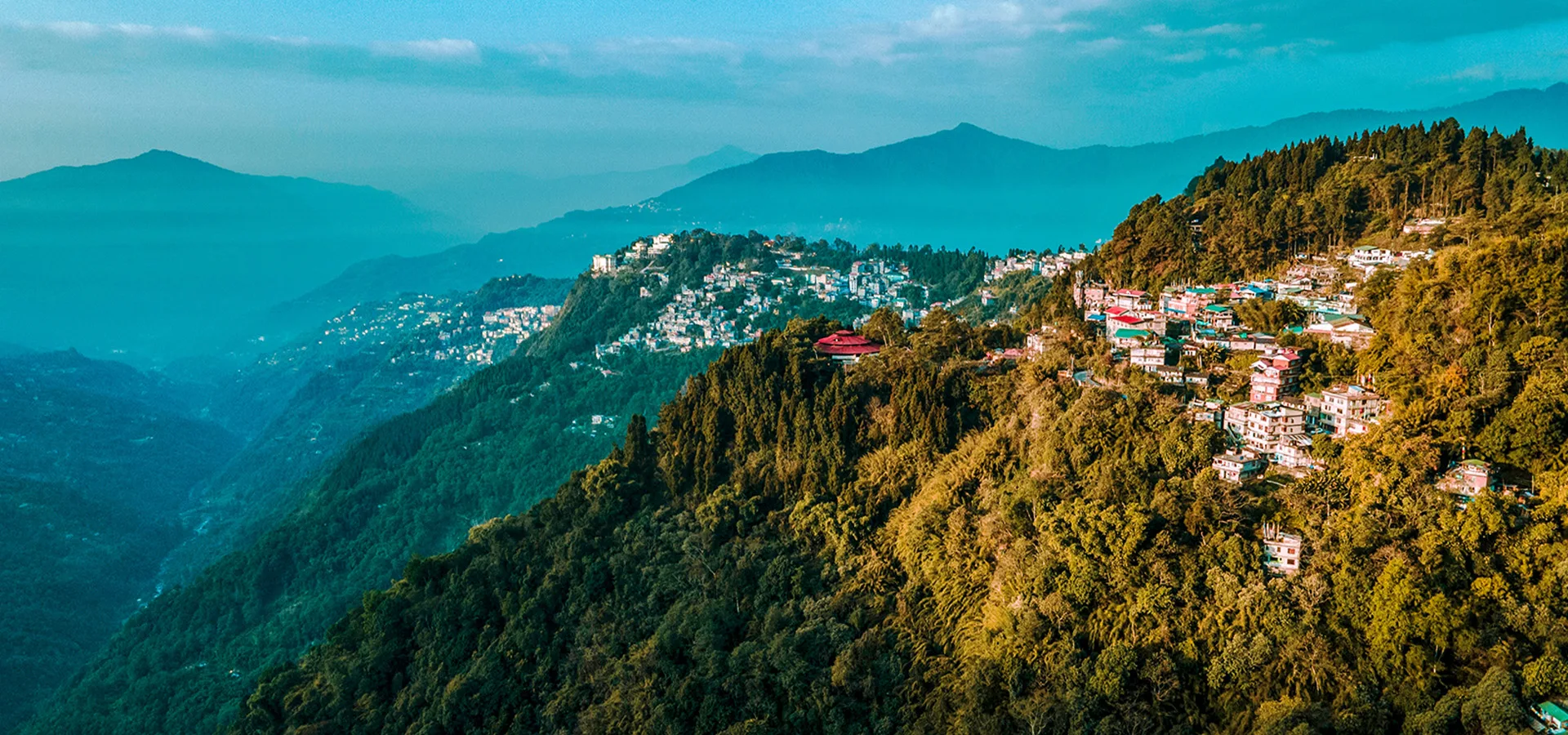
Gangtok — the capital of Sikkim at 1,650 metres — is one of the most charming hill towns in the Indian Himalaya: a clean, well-ordered city of Buddhist monasteries, cascading terraces, rhododendron-lined roads, and views of Kangchenjunga (8,586m) that appear without warning around every corner.
Sikkim is India's smallest and most ecologically progressive state — organic farming, zero plastic, and a genuine Buddhist culture that permeates daily life. The monasteries here are not tourist attractions but active religious centres of the Karma Kagyu, Nyingma, and Gelug schools of Tibetan Buddhism.
This 4-day tour covers the essentials of Gangtok: the Tashi Viewpoint sunrise over Kangchenjunga, the extraordinary Rumtek Monastery (seat of the Karma Kagyu school), the high-altitude Tsomgo Lake at 3,780m, the spectacular Banjhakri Falls, and the Namgyal Institute of Tibetology — one of the finest Buddhist research libraries in the world.
What makes this journey special
Your journey, unfolded
Transfer from Bagdogra Airport or NJP Railway Station. The drive to Gangtok (125 km, ~4 hrs) follows the Teesta River valley through tea gardens, dense subtropical forest, and spectacular gorges — one of the most scenic approach drives to any Indian hill station. The river narrows into a turquoise gorge at Rangpo (the Sikkim border) before the road climbs to Gangtok. Check in. Evening: MG Marg — Gangtok's car-free promenade, lined with restaurants, handicraft shops, and local food stalls. Try momos, thukpa, and chhurpi cheese.
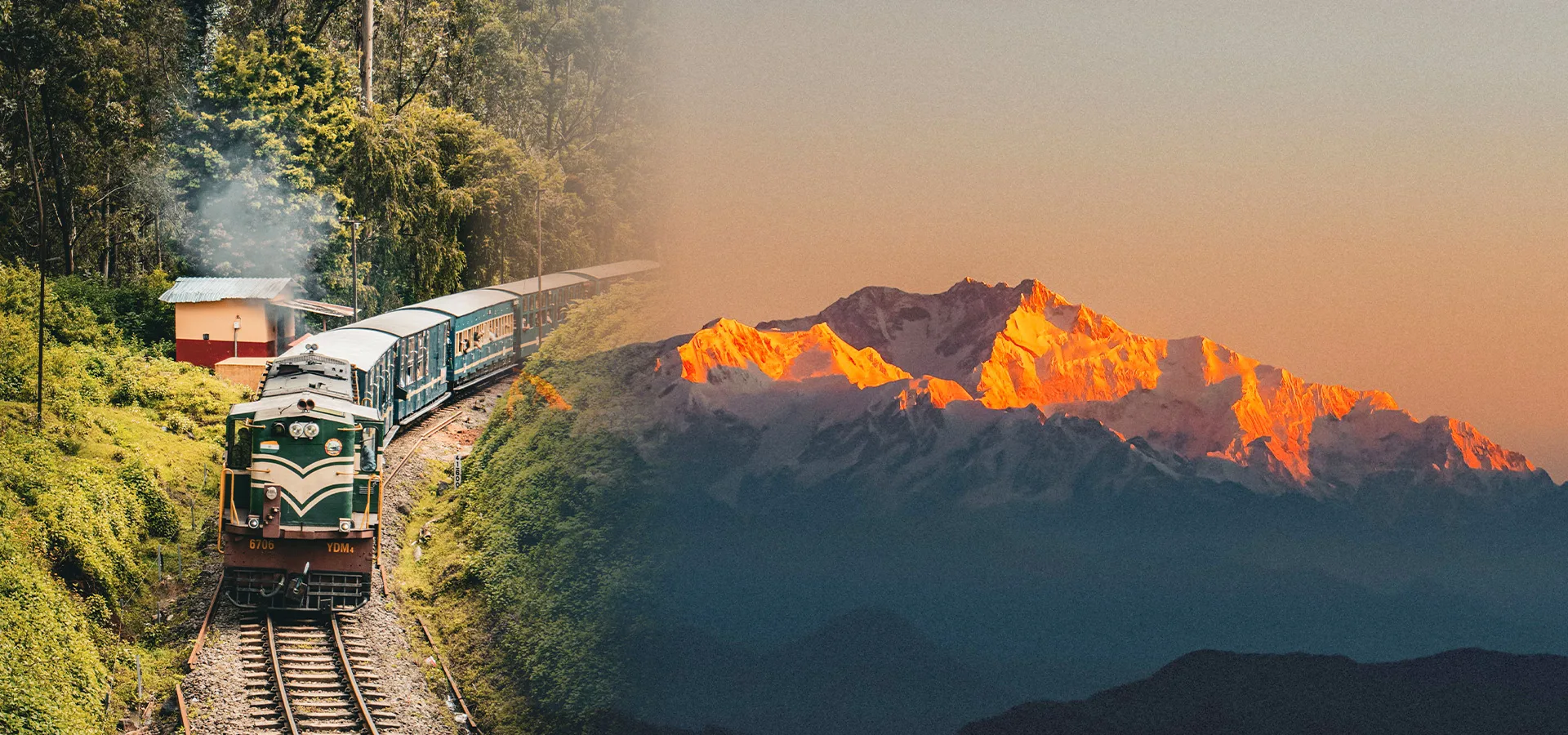
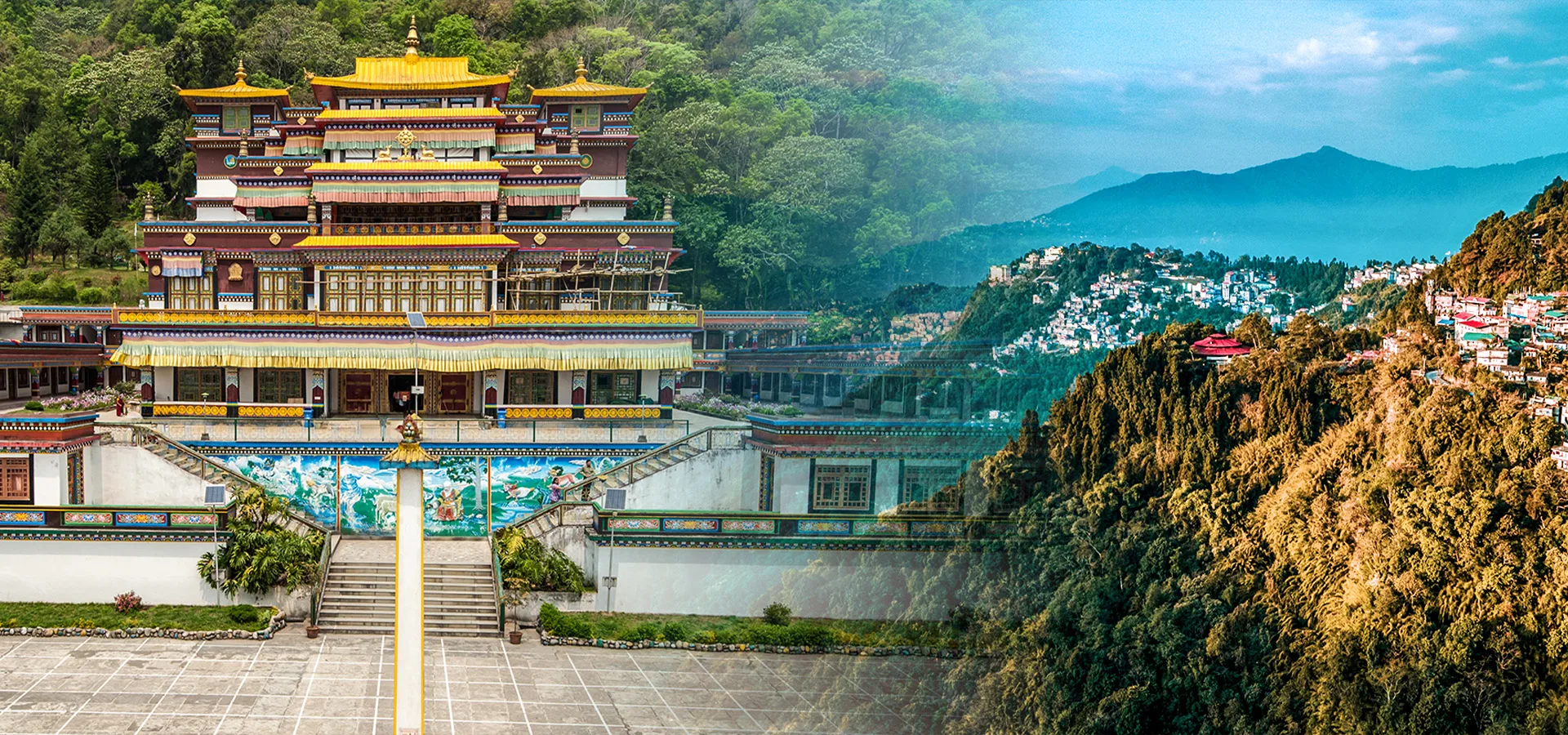
Pre-dawn drive to Tashi Viewpoint (15 km from Gangtok) for the most spectacular sunrise in Sikkim — Kangchenjunga (8,586m) and the entire eastern Himalayan range turning from purple to gold as the sun rises. Return for breakfast, then drive to Rumtek Monastery (23 km, ~45 min) — the main seat of the Karma Kagyu school of Tibetan Buddhism in India, rebuilt in 1960s by the 16th Karmapa. The monastery complex houses extraordinary thangka paintings, ritual instruments, and the Nalanda Institute for Higher Buddhist Studies.
Afternoon: Enchey Monastery — set on a forested ridge above Gangtok, this 1840 monastery of the Nyingma school has 200-year-old murals, a large prayer hall, and superb views. Return to Gangtok for a Sikkimese cooking demonstration and dinner.
Morning: drive to Tsomgo (Changu) Lake (35 km, ~2 hrs) — a glacial sacred lake at 3,780m surrounded by alpine meadows and rocky slopes. The lake's colour shifts with the seasons — emerald in spring, deep blue in monsoon, and partially frozen in winter. Yaks graze on the slopes above; migratory Brahminy ducks (ruddy shelduck) winter on the water. The surrounding alpine flora includes primulas, potentilla, and high-altitude rhododendrons.
Return to Gangtok for lunch, then Banjhakri Falls & Energy Park — a 40-metre waterfall in a landscaped forest park with traditional Sikkimese cultural elements. Afternoon: Namgyal Institute of Tibetology (1958) — a premier research institute for Mahayana and Vajrayana Buddhism, housing over 200 rare Buddhist manuscripts, bronze statues, and ritual objects from across the Himalayan world. The Sikkim Research Institute of Tibetology Library is extraordinary.
Morning: the Gangtok Ropeway — a three-stage cable car connecting Deorali to the Secretariat complex, with sweeping views over Gangtok's terraced hillside and, on clear days, Kangchenjunga. Visit Do Drul Chorten Stupa — one of the most important stupas in Sikkim, built in 1945, surrounded by 108 prayer wheels. Drive back to Bagdogra for your onward departure. Tour concludes at Bagdogra Airport or NJP Station.
Inclusions & Exclusions
Included ✓
- ✓ Accommodation in handpicked hotels throughout
- ✓ Daily breakfast throughout
- ✓ Private vehicle for all transfers & sightseeing
- ✓ English-speaking driver-guide throughout
- ✓ All applicable taxes
- ✓ Airport / station transfers
- ✓ Rumtek Monastery guided tour
- ✓ Tsomgo Lake excursion (permit included)
- ✓ Banjhakri Falls & Energy Park entry
- ✓ Namgyal Institute of Tibetology entry
- ✓ Gangtok Ropeway cable car ride
Not Included ✗
- ✗ Flights / trains to / from the region
- ✗ Travel insurance (strongly recommended)
- ✗ Lunches & dinners (except where specified)
- ✗ Personal expenses & shopping
- ✗ Gratuities for guides & drivers
- ✗ Permit fees (Inner Line / Restricted Area where applicable)
- ✗ Yak ride at Tsomgo Lake (optional, payable locally)
- ✗ Inner Line Permit for Sikkim (foreign nationals — arranged by us)
- ✗ North Sikkim extension (add-on available)
Your questions, answered
Indian nationals do not require a separate permit for South and East Sikkim (including Gangtok and Rumtek) — just carry a valid ID. For Tsomgo Lake, Baba Mandir, and areas beyond, a Protected Area Permit (PAP) is required for all nationalities — we arrange this as part of your booking. Foreign nationals require an Inner Line Permit for all of Sikkim, obtainable at the border or online; our team handles this in advance.
March–May (spring) brings clear skies and rhododendrons in bloom — the best views of Kangchenjunga. October–November (post-monsoon) offers crystal-clear mountain visibility and golden autumn colours. December–February is cold but scenic, with possible snowfall. Avoid June–September: heavy monsoon rains reduce visibility and can cause landslides on mountain roads.
Indian nationals do not require a separate permit for most of Sikkim (including Gangtok). Foreign nationals require an Inner Line Permit (ILP) for Sikkim, obtainable at the border checkpost or online. Additional Restricted Area Permits (RAP) are required for North Sikkim (Lachung, Yumthang) and certain border areas. Our team arranges all permits as part of your booking.
Absolutely. Every tour is fully private and tailored to your preferences. We can adjust duration, add Pelling's Rabdentse ruins, extend to North Sikkim, or combine with Kolkata or Assam. Submit an enquiry at no obligation.
On a clear morning from Tiger Hill above Darjeeling, or from Tashi Viewpoint near Gangtok, the sunrise on Kangchenjunga (8,586m — the world's third highest peak) is one of the great natural spectacles of India. The summit appears to glow in shades of gold, orange, and rose as the light intensifies. It is genuinely breathtaking — and genuinely dependent on weather. We always plan an early morning sunrise attempt; if the first morning is cloudy, we try again the next day.
60+ days: full refund minus admin fee. 30–59 days: 75% refund. 15–29 days: 50%. Under 15 days: no refund. Comprehensive travel insurance is strongly recommended.