Three Himalayan Hill Towns, One Perfect Circuit
Six days through the three most rewarding hill towns of the Eastern Himalaya — each completely different in character, each framing its own section of the world's greatest mountain range.
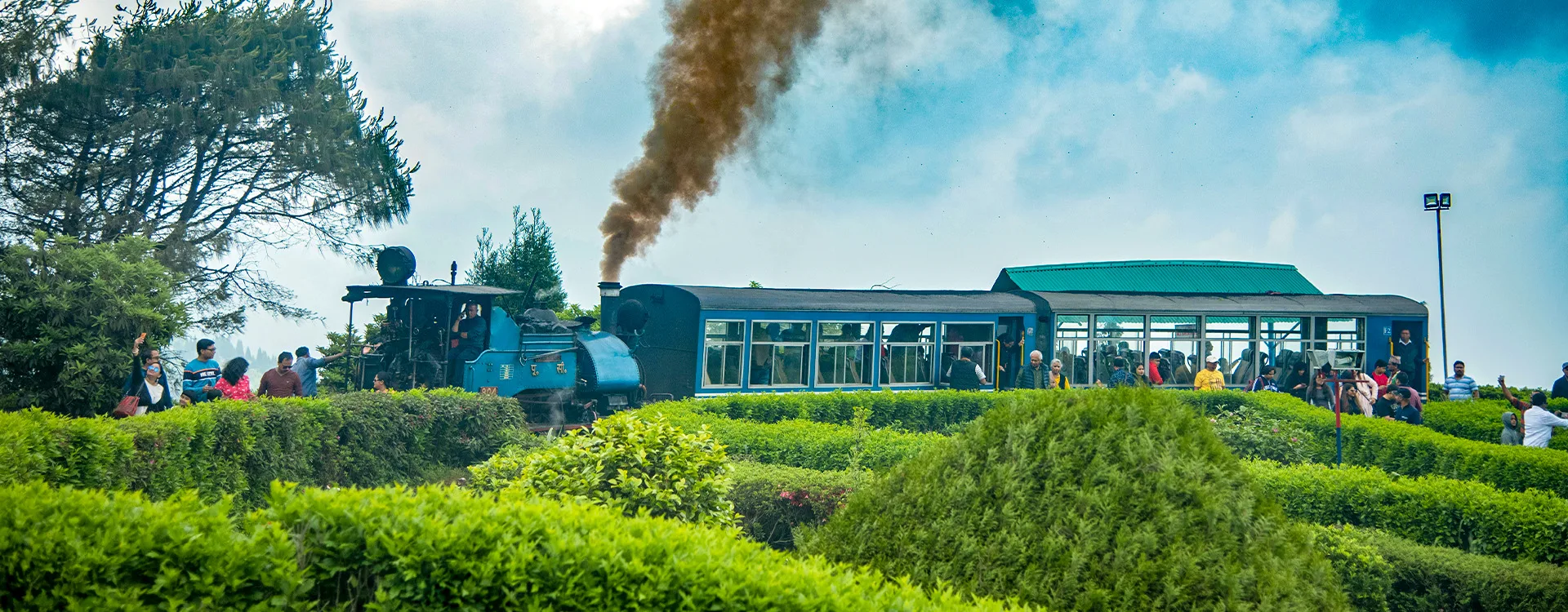
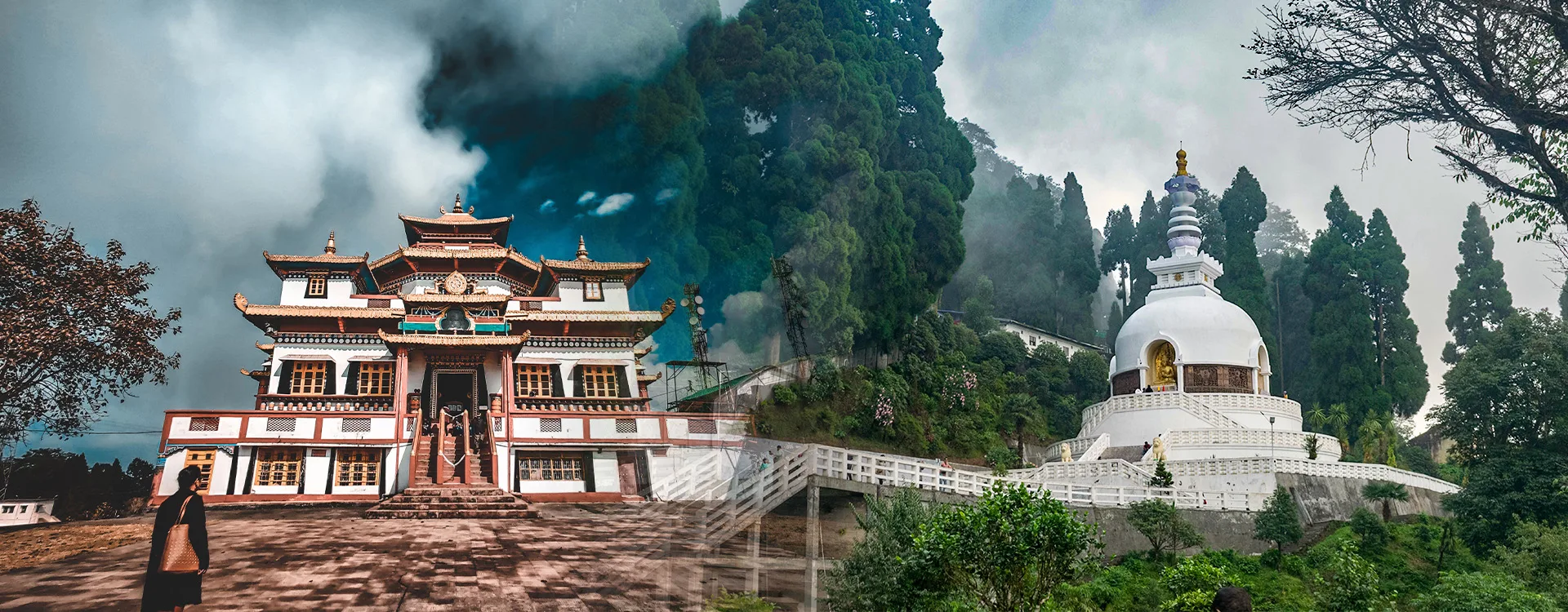
Darjeeling, the Queen of Hill Stations, opens the tour with Tiger Hill's legendary sunrise, the UNESCO Himalayan toy train, and the world's finest tea. The second destination — Kalimpong — is the tour's hidden gem: a former trading crossroads between Tibet, Bhutan, and Bengal, still redolent of its silk-route past. The orchid nurseries, the Himalayan flower market, the Zong Dog Palri Fo-Brang Monastery (designed by the Dalai Lama), and the extraordinary Arts and Crafts Cottage Industries make Kalimpong a destination unlike any other in the Eastern Himalaya.
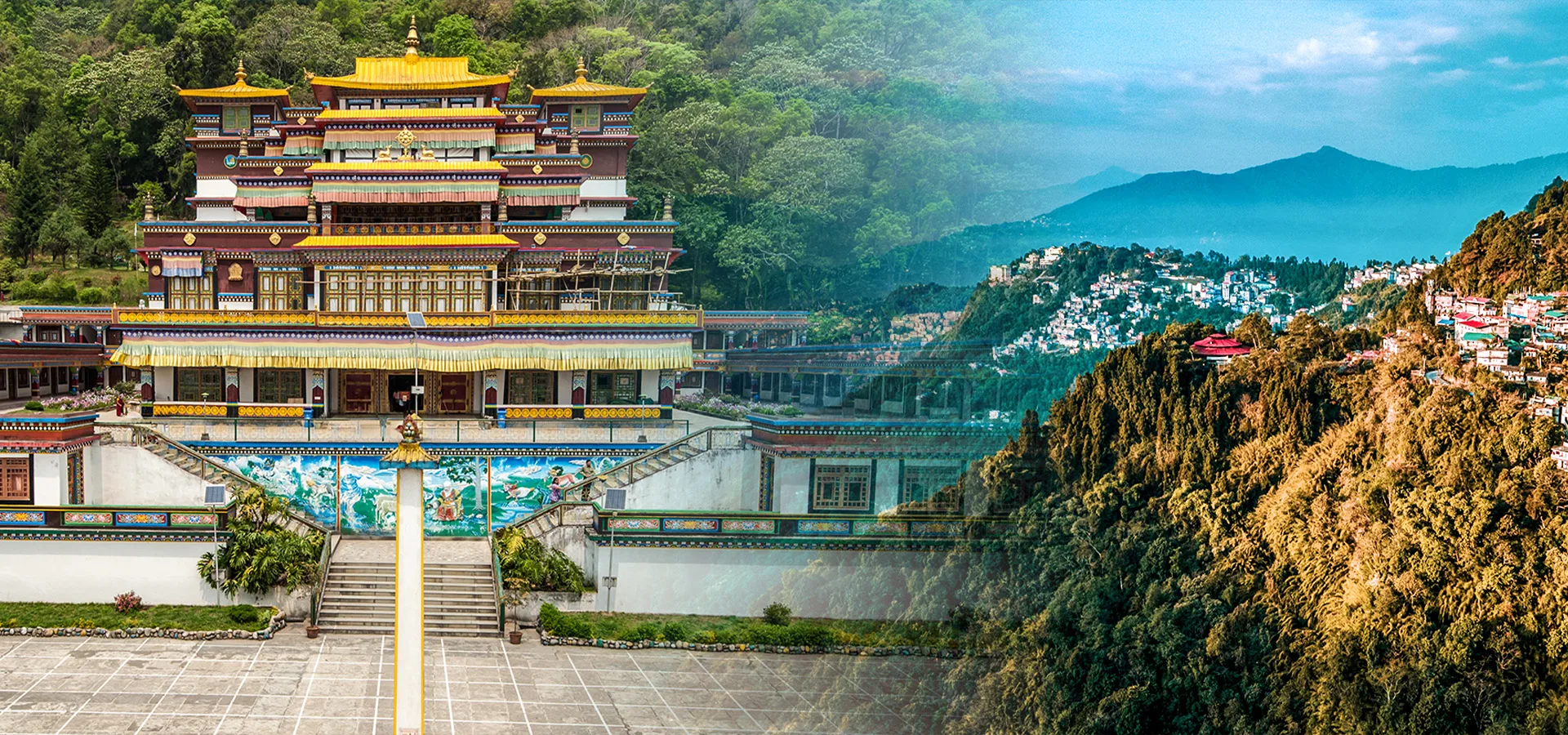
Gangtok completes the circuit with the sacred Rumtek Monastery, the alpine Tsomgo Lake, and the lively MG Marg promenade — a fitting conclusion to a tour that covers three states (West Bengal, West Bengal again via Kalimpong, and Sikkim) and an extraordinary diversity of cultures.
What makes this journey special
Your journey, unfolded
Welcome! Transfer from Bagdogra or NJP. Drive the Hill Cart Road to Darjeeling (90 km, ~3 hrs) through ascending tea gardens. Evening: Chowrasta promenade and Observatory Hill.
4:00 AM Tiger Hill sunrise. Batasia Loop toy train ride. Ghoom Monastery. Happy Valley Tea Estate tour and tasting. HMI Everest Museum. Padmaja Naidu Himalayan Zoo (Red Panda).
Drive from Darjeeling to Kalimpong (55 km, ~2.5 hrs) via the Teesta River bridge — the road drops steeply before climbing again to Kalimpong's ridge at 1,250m. Kalimpong was a key trans-Himalayan trading town on the Old Silk Route between Lhasa and Calcutta until the 1950s. Visit the famous Kalimpong Flower Market (supplied every Tuesday and Saturday to florists across eastern India) and the orchid nurseries. The Zong Dog Palri Fo-Brang Monastery — designed by the Dalai Lama, consecrated 1976 — is the principal monastery. The Thongsa Gumba (1692, one of the oldest monasteries in Kalimpong) and the Morgan House heritage bungalow add historical layers.
Morning in Kalimpong: the Arts and Crafts Cottage Industries centre (Tibetan and Sikkimese handloom, woodcarving, thangka painting), and Deolo Hill Park (1,704m, viewpoint with orange groves and bamboo forests). Drive to Gangtok (75 km, ~2.5 hrs via Teesta valley). Evening: MG Marg promenade — Sikkimese food, handicrafts, and the lively hill-town energy of Gangtok at night.
Pre-dawn Tashi Viewpoint sunrise. Rumtek Monastery guided tour (thangkas, Nalanda Institute). Tsomgo Lake (3,780m) — glacial sacred lake with yaks and alpine flora. Return to Gangtok for the Namgyal Institute of Tibetology and the Enchey Monastery.
Morning: Do Drul Chorten Stupa (108 prayer wheels) and Gangtok Ropeway. Drive to Bagdogra (125 km, ~4 hrs). Tour concludes at Bagdogra Airport or NJP Station.
Inclusions & Exclusions
Included ✓
- ✓ Accommodation in handpicked hotels throughout
- ✓ Daily breakfast throughout
- ✓ Private vehicle for all transfers & sightseeing
- ✓ English-speaking driver-guide throughout
- ✓ All applicable taxes
- ✓ Airport / station transfers
- ✓ Tiger Hill sunrise vehicle
- ✓ Batasia Loop toy train ride
- ✓ Happy Valley Tea Estate tour
- ✓ Rumtek Monastery guided tour
- ✓ Tsomgo Lake permit & excursion
- ✓ Gangtok Ropeway
- ✓ Kalimpong Arts & Crafts Centre visit
Not Included ✗
- ✗ Flights / trains to / from the region
- ✗ Travel insurance (strongly recommended)
- ✗ Lunches & dinners (except where specified)
- ✗ Personal expenses & shopping
- ✗ Gratuities for guides & drivers
- ✗ Permit fees (Inner Line / Restricted Area where applicable)
- ✗ Inner Line Permit for Sikkim (foreign nationals — arranged by us)
- ✗ North Sikkim extension available
Your questions, answered
Kalimpong is the Eastern Himalaya's most underrated destination — a quiet, characterful ridge town that was once the most important trading post between Tibet and Bengal. Its remarkable flower market (orchids and gladioli grown on Himalayan terraces, exported across India), its 17th-century monasteries, its colonial-era bungalows, and its genuine Tibetan Buddhist cultural life make it a very different experience from Darjeeling or Gangtok. It is also significantly less visited, which means more atmospheric and unhurried. We strongly recommend including it.
March–May (spring) brings clear skies and rhododendrons in bloom — the best views of Kangchenjunga. October–November (post-monsoon) offers crystal-clear mountain visibility and golden autumn colours. December–February is cold but scenic, with possible snowfall. Avoid June–September: heavy monsoon rains reduce visibility and can cause landslides on mountain roads.
Indian nationals do not require a separate permit for most of Sikkim (including Gangtok). Foreign nationals require an Inner Line Permit (ILP) for Sikkim, obtainable at the border checkpost or online. Additional Restricted Area Permits (RAP) are required for North Sikkim (Lachung, Yumthang) and certain border areas. Our team arranges all permits as part of your booking.
Absolutely. Every tour is fully private and tailored to your preferences. We can adjust duration, add Pelling's Rabdentse ruins, extend to North Sikkim, or combine with Kolkata or Assam. Submit an enquiry at no obligation.
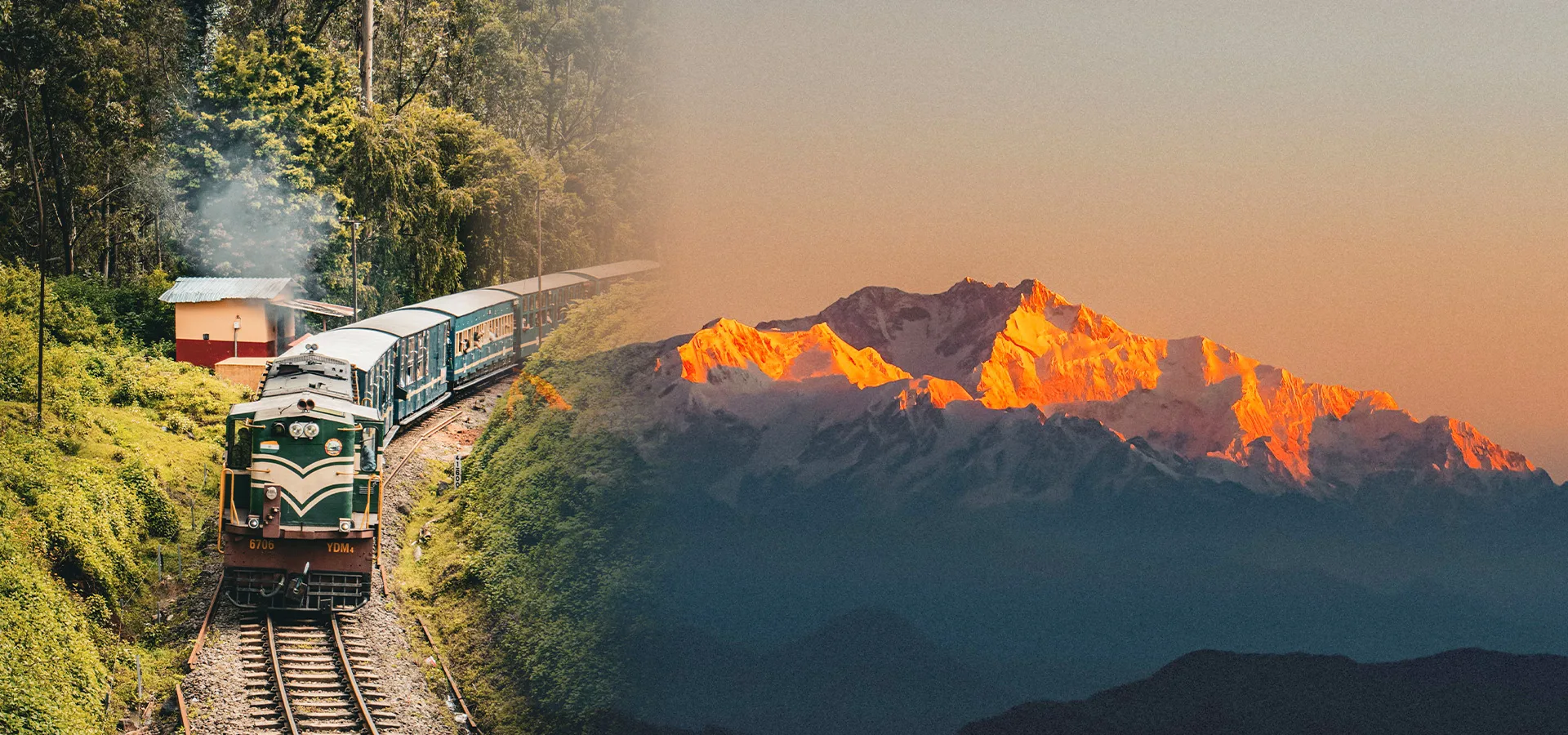
On a clear morning from Tiger Hill above Darjeeling, or from Tashi Viewpoint near Gangtok, the sunrise on Kangchenjunga (8,586m — the world's third highest peak) is one of the great natural spectacles of India. The summit appears to glow in shades of gold, orange, and rose as the light intensifies. It is genuinely breathtaking — and genuinely dependent on weather. We always plan an early morning sunrise attempt; if the first morning is cloudy, we try again the next day.
60+ days: full refund minus admin fee. 30–59 days: 75% refund. 15–29 days: 50%. Under 15 days: no refund. Comprehensive travel insurance is strongly recommended.