Sacred Mountains & Himalayan Pine Forests
One of India's most powerful pilgrimage experiences combined with the cool pine forests of Patnitop — a four-day journey through the Shivalik and Trikuta ranges of Jammu.
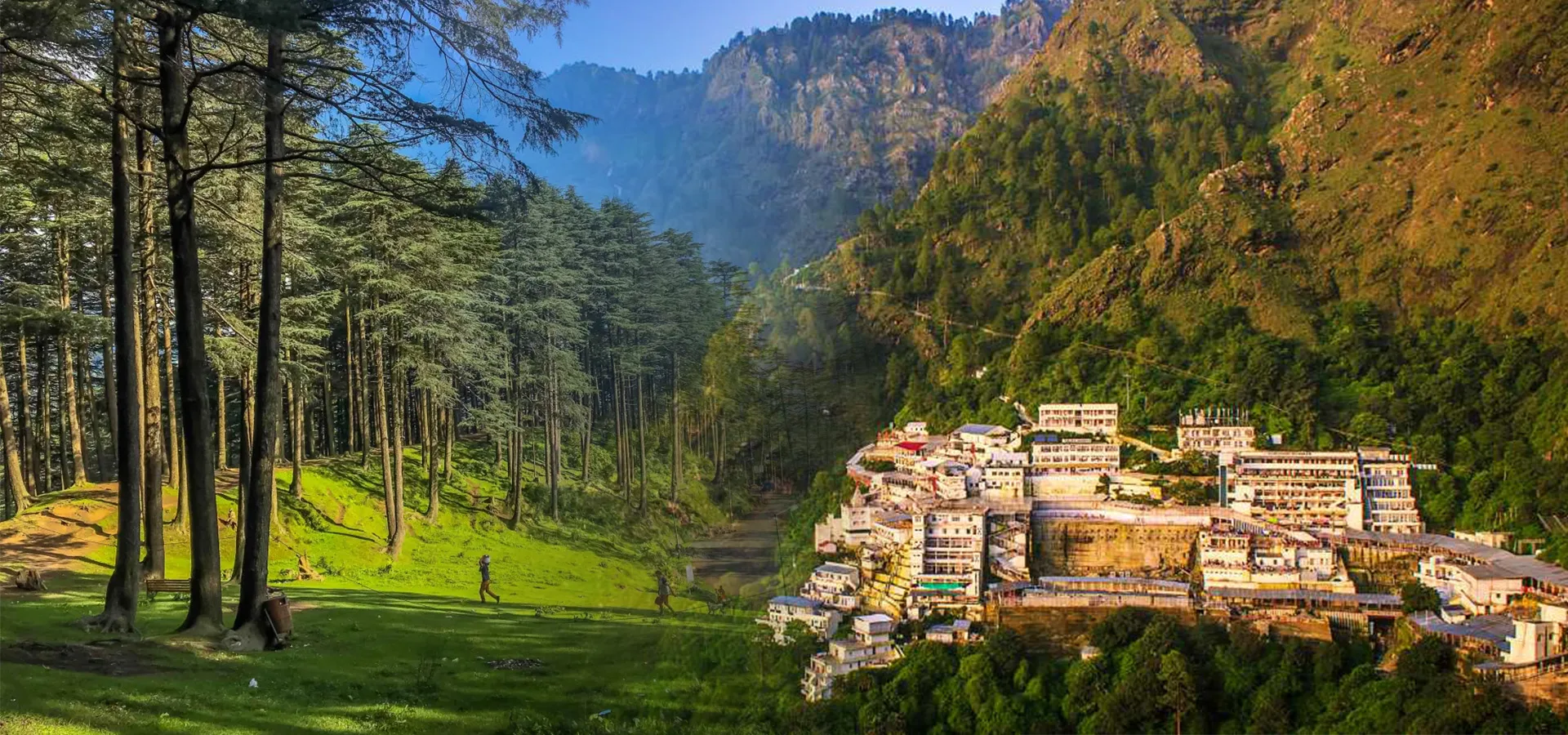
The Shri Mata Vaishno Devi Shrine — situated at 5,200 feet in the Trikuta Mountains — is one of the most visited shrines in the world, receiving over 8 million pilgrims annually. The trek from Katra base camp to the shrine (13 km one way) passes through extraordinary mountain scenery — pine forests, mountain streams, and the sacred cave at Banganga where the goddess is said to have rested. Helicopter service is available for those who prefer to reduce the walking distance.
Patnitop is the tour's contrast — a quiet hill station in the Udhampur district at 2,024 metres, set among dense pine and deodar forests with views toward the snow-capped Pir Panjal range. In winter it receives heavy snowfall; in spring and autumn it is a cool, forested retreat with meadows of wildflowers. The Nathatop viewpoint, the Sanasar bowl meadow, and the natural beauty of the surrounding forests make it a perfect place to rest and reflect after the Vaishno Devi yatra.
What makes this journey special
Your journey, unfolded
Welcome! Transfer from Jammu Airport or Railway Station to Katra (48 km, ~1.5 hrs) — the base camp for the Vaishno Devi pilgrimage. Katra is a busy, spirited pilgrim town at 756m at the foot of the Trikuta Mountains. Register your RFID yatra pass at the Yatra Registration Counter (mandatory for all pilgrims, free). Evening: walk through Katra bazaar, visit the Banganga Temple, and prepare for tomorrow's early morning trek.
Early morning (2:00–4:00 AM): begin the trek to Vaishno Devi Shrine. The 13 km route from Katra to the Bhawan (main shrine) climbs through pine forest and mountain terrain. Key stops: Banganga (3 km, sacred stream), Charan Paduka (4.5 km, rock impressions of the goddess's feet), Adhkwari Cave (7.5 km, the 9-month meditation cave of the goddess — the half-kilometre crawl through the cave is a profound experience for pilgrims), and the Sanjhi Chhat viewpoint at 9.5 km.
At the Bhawan (5,200 ft): darshan at the ancient cave shrine of Mata Vaishno Devi — one of the 108 Shakti Peethas, where three natural rock formations (pindies) represent Mahakali, Mahalakshmi, and Mahasaraswati. Descend via the Tarakot route (8 km, slightly longer but easier on the knees). Return to Katra for rest and dinner. Optional: helicopter service (Katra to Sanjhi Chhat) for those preferring a shorter walk.
Rest and recovery morning in Katra after the trek. After a late breakfast, check out and drive to Patnitop (100 km, ~3 hrs via Udhampur). The road climbs through the Shivalik foothills into the pine-forested Patnitop plateau at 2,024m. Arrive and check in to your hill resort. Afternoon: Nathatop viewpoint (15 km from Patnitop) — one of the finest panoramic viewpoints in the Jammu region, with views across the Chenab valley and toward the Greater Himalayan peaks. Evening: bonfire at your resort.
Morning: Sanasar — a natural mountain bowl meadow 20 km from Patnitop, used for paragliding and camping, surrounded by dense deodar forest. Nag Temple (a small ancient snake deity shrine in the forest) and a walk through the Patnitop forest trails. Drive back to Jammu (130 km, ~2.5 hrs) for your onward journey. Tour concludes at Jammu Railway Station or Airport.
Inclusions & Exclusions
Included ✓
- ✓ 3 nights accommodation in handpicked hotels
- ✓ Daily breakfast throughout
- ✓ Private vehicle for all road transfers
- ✓ RFID Yatra Registration assistance
- ✓ Trekking route guidance and porter arrangement (on request)
- ✓ All applicable taxes
Not Included ✗
- ✗ Flights / trains to Jammu
- ✗ Travel insurance
- ✗ Helicopter service (optional, payable separately at ₹1,800–2,200/person return)
- ✗ Lunches & dinners
- ✗ Porter/pony charges on trek (payable locally)
- ✗ Locker & poncho charges at shrine (nominal)
- ✗ Personal expenses & donations
Your questions, answered
The standard route from Katra to the Bhawan (main shrine) is 13 km one way, gaining approximately 4,400 feet in altitude. The return route via Tarakot is 8 km. Most pilgrims of moderate fitness complete the ascent in 4–6 hours and the descent in 2–3 hours. The path is well-maintained with stone steps and railings in steeper sections, refreshment stalls every 2–3 km, and medical posts throughout. Ponies, palkis (palanquins), and battery-operated vehicles are available for sections of the route at additional cost. Helicopter service (Katra to Sanjhi Chhat, near the top) reduces the trek to approximately 3 km each way.
Yes — RFID registration is mandatory for all pilgrims visiting the Vaishno Devi Shrine. The free registration is done at the Yatra Registration Counter in Katra (or online in advance at the Shri Mata Vaishno Devi Shrine Board website). Each pilgrim receives a wristband with their unique RFID chip that is scanned at various points on the route. This system manages the flow of pilgrims and improves safety. Our team assists with the registration process on arrival in Katra. Pre-registration online at maavaishnodevi.org is recommended during peak pilgrimage seasons (Navratri).
Kashmir has been welcoming tourists very successfully for several years and is among the fastest-growing tourism destinations in India. The main tourist areas — Srinagar's Dal Lake, Gulmarg, Pahalgam, Sonmarg, and Patnitop — are safe and well-managed. We monitor the situation continuously and maintain close contacts with our on-ground team. Our flexible booking policy allows rescheduling if any concerns arise. Millions of Indian and international tourists visit Kashmir each year without incident.
April–June (spring/summer): gardens in bloom, pleasant temperatures (15–25°C), ideal for Dal Lake and Pahalgam. July–September: cooler, some rain, but Gulmarg and Sonmarg are lush and green. October–November: autumn colours on chinar trees, crisp air, excellent visibility. December–March: heavy snowfall — Gulmarg becomes a ski resort, Srinagar's Dal Lake sometimes freezes. Each season has its own beauty; October and April are generally considered the finest months.
Absolutely. Every Discover India tour is fully private and tailored to you. We can adjust duration, add Gurez Valley, Bangus Valley, Yusmarg, or extend to Leh-Ladakh. Submit an enquiry for a customised quote — no obligation.
No special permit is required for Indian nationals to visit Kashmir. Foreign nationals do not require a special permit for the tourist areas covered in our tours (Srinagar, Gulmarg, Pahalgam, Sonmarg). Certain sensitive border areas require additional permits — our team will advise if your itinerary includes any such areas.
60+ days: full refund minus admin fee. 30–59 days: 75% refund. 15–29 days: 50%. Under 15 days: no refund. Comprehensive travel insurance is strongly recommended.