Madhya Pradesh · City Guide

Khajuraho

950–1050Temples Built (CE)
6Must-See Temple Groups
Oct–MarBest Season
Region
Madhya Pradesh, Central India
Nickname
The Temple Sculpture Capital
Nearest Airport
Khajuraho Airport (HJR)
Ideal Stay
1–2 Days
Known For
UNESCO Temples · Intricate Sculpture · Chandela Architecture

A thousand years of
stone carved into devotion

Khajuraho's temples were built between 950 and 1050 CE by the Chandela dynasty, who ruled this part of central India at the height of its medieval prosperity — of an original 85 temples, only around 25 survive, rediscovered by a British engineer in 1838 after centuries of being reclaimed by jungle.

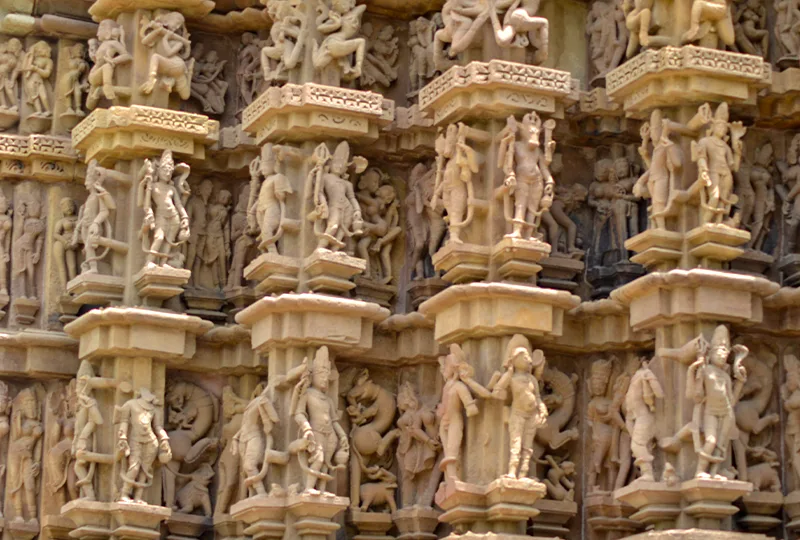
Inscribed as a UNESCO World Heritage Site in 1986, Khajuraho's fame rests on the extraordinary density and quality of its sculptural decoration — every surface, inside and out, is carved with deities, celestial beings, and scenes of daily and courtly life, alongside the famously frank depictions of human intimacy that have made the site globally known.

It's worth understanding before you visit that these explicit carvings represent a small fraction of the overall sculptural programme (most scholars estimate under 10%), set within temples built primarily as serious works of Hindu and Jain devotional architecture — context that considerably enriches a visit beyond the headline reputation.
Khajuraho
When to Visit

Best time to visit Khajuraho

Khajuraho's central Indian climate makes timing genuinely important for comfortable, unhurried temple exploration.

October – March (Peak Season)

Cool and pleasant (10–27°C), ideal for the considerable walking involved in covering the Western, Eastern, and Southern temple groups thoroughly.

Recommended

September (Shoulder Season)

Post-monsoon, with temperatures beginning to ease and the surrounding landscape notably green.

Good

April – June (Summer)

Very hot, regularly exceeding 42°C, with little shade among the open temple complexes.

Avoid
Best time to visit

Places to see

Six landmarks — the three temple groups and supporting sites — that define a visit to this UNESCO World Heritage destination.

Western Group of Temples UNESCO Site
01

Western Group of Temples

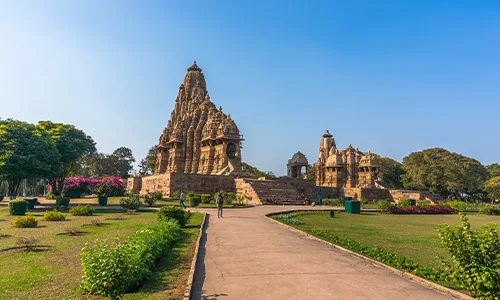
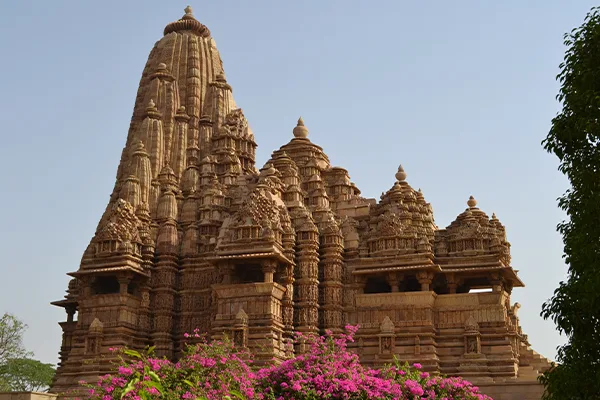
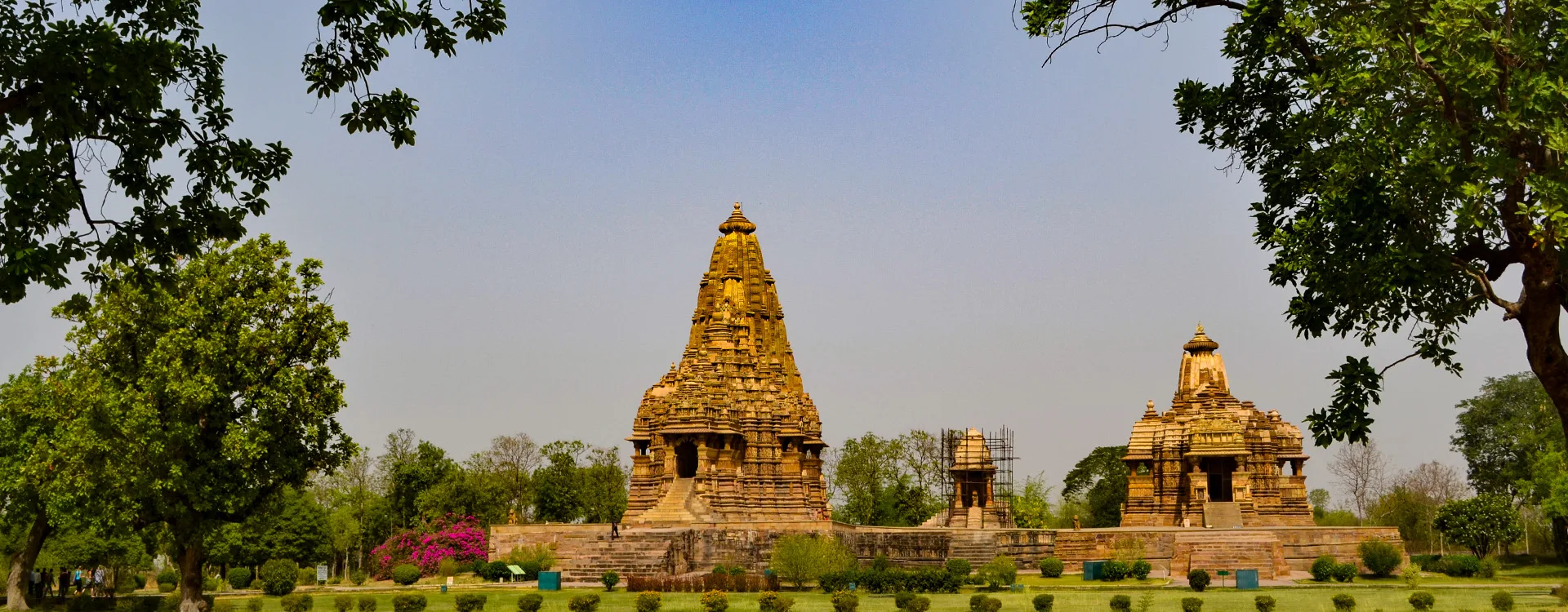
The largest, best-preserved, and most visited cluster, including the Kandariya Mahadeva Temple — Khajuraho's largest, with a 31-metre tower and over 900 individual sculptures.

2.5–3 hrs 📍 Western Khajuraho 🕗 6 AM – 6 PM
Kandariya Mahadeva Temple Temple
02

Kandariya Mahadeva Temple

The largest and most architecturally accomplished temple at Khajuraho, dedicated to Shiva, its soaring shikhara tower rising in a sequence of diminishing peaks symbolising the Himalayas.

45 min – 1 hr 📍 Western Group 🕗 6 AM – 6 PM
Eastern Group of Temples Temple Group
03

Eastern Group of Temples

A scattered group including both Hindu and Jain temples, notably the Parsvanath Temple — the largest Jain temple at the site, with finely detailed carved panels.

1–1.5 hrs 📍 Eastern Khajuraho 🕗 Sunrise – sunset
Southern Group of Temples Temple Group
04

Southern Group of Temples

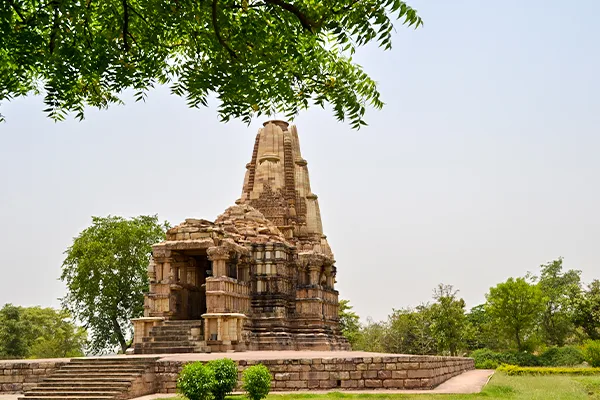
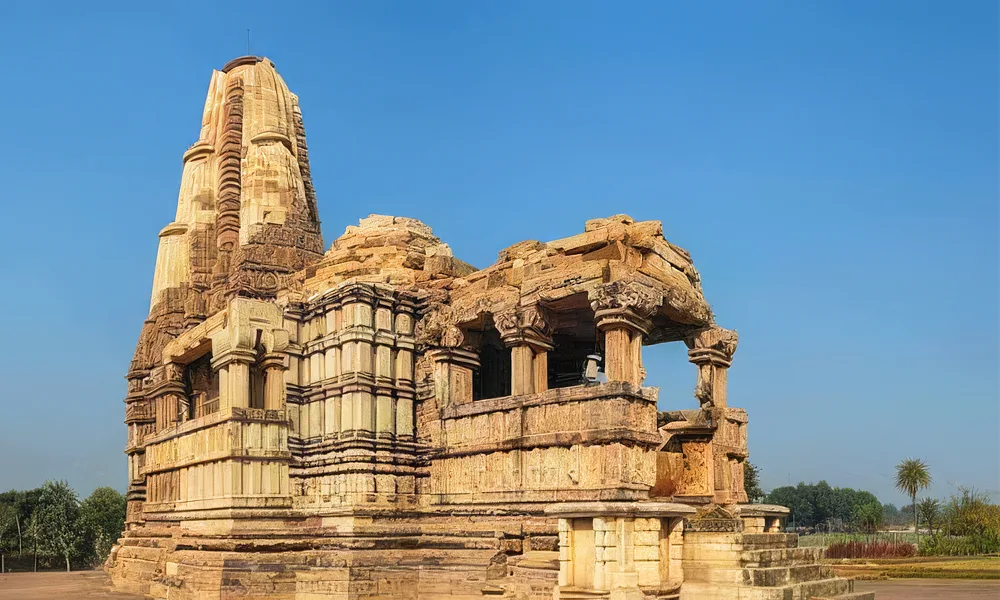
The smallest and least-visited group, including the Duladeo and Chaturbhuj Temples — quieter, with fewer crowds than the Western Group.

45 min – 1 hr 📍 Southern Khajuraho 🕗 Sunrise – sunset
Archaeological Museum Museum
05

Archaeological Museum

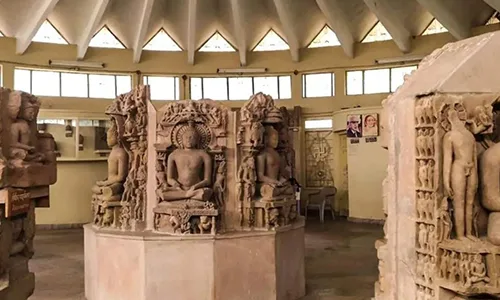
A small but excellent museum displaying sculptures recovered from the wider site, with context on the Chandela dynasty and the temples' construction and rediscovery.

45 min 📍 Near Western Group 🕗 9 AM – 5 PM (closed Fri)
Sound & Light Show Experience
06

Sound & Light Show

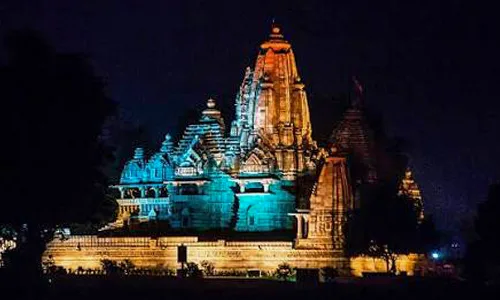
An evening narration of Khajuraho's history projected against the illuminated Western Group temples — a popular and atmospheric way to end a day of sightseeing.

45 min 📍 Western Group lawns 🕗 One evening show daily, timing varies by season
Explore by Area

Explore Khajuraho further

Western Group
Eastern Group
Southern Group

The Western Group

This is Khajuraho's headline attraction — the largest, most ornate, and best-preserved temples, set within a landscaped enclosure with an entry fee.

Allow at least two hours to properly appreciate the sculptural detail across multiple temples within the complex.

  • Kandariya Mahadeva Temple
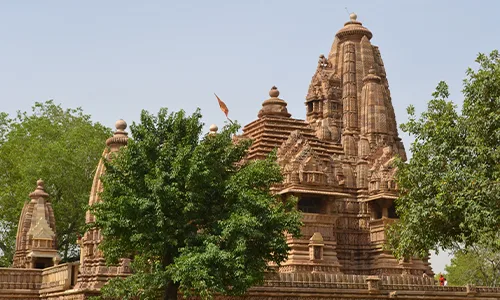
  • Lakshmana Temple
  • Devi Jagadambi Temple
  • Evening sound & light show
The Western Group

The Eastern Group

A more scattered cluster including significant Jain temples, reflecting Khajuraho's role as a centre for multiple religious traditions during the Chandela era.

These temples are free to visit and considerably quieter than the Western Group.

  • Parsvanath Temple
  • Adinath Temple
  • Vamana Temple
  • Local village walk
The Eastern Group

The Southern Group

The smallest and least visited of the three groups, offering a peaceful final stop for visitors who want to see Khajuraho's full range without the crowds.

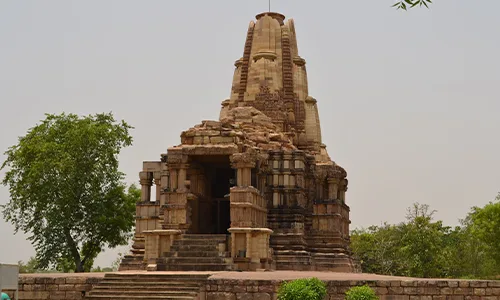
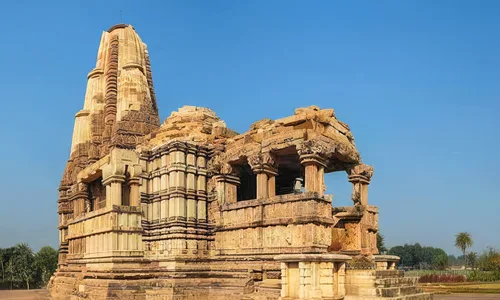
Duladeo Temple here is notable for some of the site's most elaborate, almost lace-like stone carving.

  • Duladeo Temple
  • Chaturbhuj Temple
  • Quiet exploration
  • Sunset photography
The Southern Group
Getting There

How to reach Khajuraho

Khajuraho has its own small airport, but most travellers combine it with a wider central India or Golden Triangle circuit by rail or road.

✈️

By Air

Khajuraho Airport (HJR) has direct flights from Delhi and Varanasi, making air travel a practical option for this otherwise somewhat remote destination.

  • From Delhi: ~1.5 hr flight
  • From Varanasi: ~1 hr flight
  • Airport to temples: 15–20 min by taxi
🚆

By Rail

Khajuraho's railway station has improving connectivity, though many travellers still route via Jhansi for broader rail network access.

  • From Delhi: ~10–12 hrs (limited direct trains)
  • From Varanasi: ~10–11 hrs
  • Via Jhansi: ~5–6 hrs, then onward connection
🚗

By Road

A private vehicle journey from Jhansi or Orchha is a popular way to combine Khajuraho with Gwalior and Agra on a wider central India route.

  • From Orchha: 175 km · ~3.5 hrs
  • From Jhansi: 175 km · ~3.5 hrs
  • From Satna: 120 km · ~2.5 hrs

Food & Etiquette

What to eat, and a few customs worth knowing, before you arrive

🍛

Bundelkhandi Cuisine

A regional style of cooking using local lentils and grains, distinct from the better-known cuisines of North India.

🥘

Poha & Jalebi

A popular Madhya Pradesh breakfast pairing, found at local eateries around the temple complex area.

🍵

Masala Chai Stalls

Small stalls near the Western Group offer a welcome chai break between temple visits.

🤔

Understand the Carvings in Context

The explicit sculptures represent a small fraction of the overall artwork — approach the site as a serious devotional and artistic achievement.

👗

Dress Modestly

While not strictly enforced for the (largely non-active) temples, modest dress is respectful given the site's religious origins.

📸

Photography is Welcomed

Photography (without flash inside enclosed spaces) is generally permitted — a guide can point out details easily missed.

Essential travel tips

A few practical things worth knowing before you arrive in Khajuraho.

🗺️

Hire a Knowledgeable Guide

A good guide transforms a Khajuraho visit, explaining the iconography, mythology, and architectural logic behind the carvings.

🎫

One Ticket, Multiple Visits

The Western Group ticket is often valid for same-day re-entry — useful if you want to return for the sound and light show.

🌅

Visit Early Morning

Arriving at opening time offers the softest light for photography and the smallest crowds, especially in the Western Group.

✈️

Fly In, Fly Out

Given the relatively limited rail connectivity, flying via Delhi or Varanasi is often the most time-efficient way to visit.

📚

Read Up Beforehand

A little background on Chandela history and Hindu temple iconography significantly deepens appreciation of what you're seeing.

🌙

Don't Skip the Light Show

The evening sound and light show provides excellent historical context and is a memorable way to see the temples illuminated.

🛍️

Shop Carefully

Stone and wood handicrafts are sold around the site — compare a few shops before purchasing for the best value.

🛡️

Stay Safe

Khajuraho is generally safe and welcoming to travellers; as everywhere, agree any guide fees clearly before a tour begins.

Khajuraho & Central India Itineraries View All →

9 Nights

Golden Triangle with Khajuraho & Varanasi

From ₹ On Request
10 Nights

North India Heritage Trail

From ₹ On Request
10 Nights

Spiritual & Heritage North India

From ₹ On Request
11 Nights

The Tiger Trail

From ₹ On Request

Plan your Khajuraho visit

Get a Custom Itinerary