India's Spiritual Heart, Its Finest Temple Art, and the Grandeur of Empire
Eleven days that move through some of the most significant spiritual and architectural sites in North India — beginning in Varanasi, one of the world's oldest continuously inhabited cities, and concluding in Delhi, layered with three thousand years of imperial history.
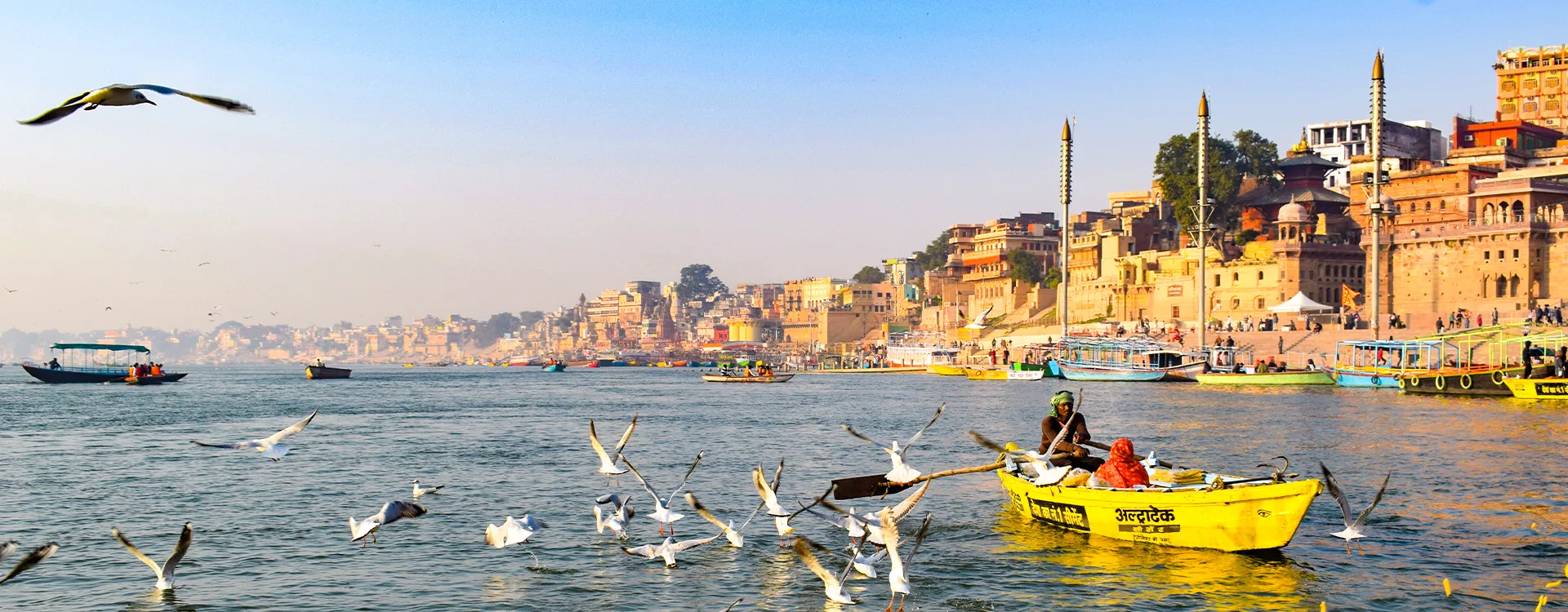
The tour opens with two days in Varanasi: the dawn boat ride past the ghats, the evening Ganga Aarti fire ceremony at Dashashwamedh Ghat, and a half-day excursion to Sarnath, where the Buddha delivered his first sermon. From here, a short flight brings you to Khajuraho for two days exploring the UNESCO World Heritage temple complexes, renowned for their extraordinarily intricate medieval stone carving.
An often-overlooked highlight follows: a night in Orchha, a quietly extraordinary 16th-century Bundela capital on the Betwa River, where riverside cenotaphs and Jahangir Mahal reward unhurried, uncrowded exploration — a genuine contrast to the busier sites elsewhere on this itinerary.
The journey then turns toward the Golden Triangle: the Taj Mahal at sunrise in Agra, Jaipur's royal forts and palaces, and finally two days in Delhi, tying together Mughal, colonial, and contemporary India before your departure.
What makes this journey special
Your journey, unfolded
Welcome to Varanasi — one of the world's oldest continuously inhabited cities. Transfer to your hotel. Evening: witness the Ganga Aarti at Dashashwamedh Ghat, a choreographed fire ceremony performed by priests for thousands of onlookers on the steps and in boats on the river.
Dawn boat ride along the ghats — pilgrims performing ritual bathing, sadhus in meditation, and the city waking, widely considered Varanasi's signature experience. Visit Kashi Vishwanath Temple, one of the twelve Jyotirlingas of Shiva. Afternoon: excursion to Sarnath (10 km), where the Buddha delivered his first sermon — the Dhamek Stupa and an excellent archaeological museum mark this pivotal Buddhist site.
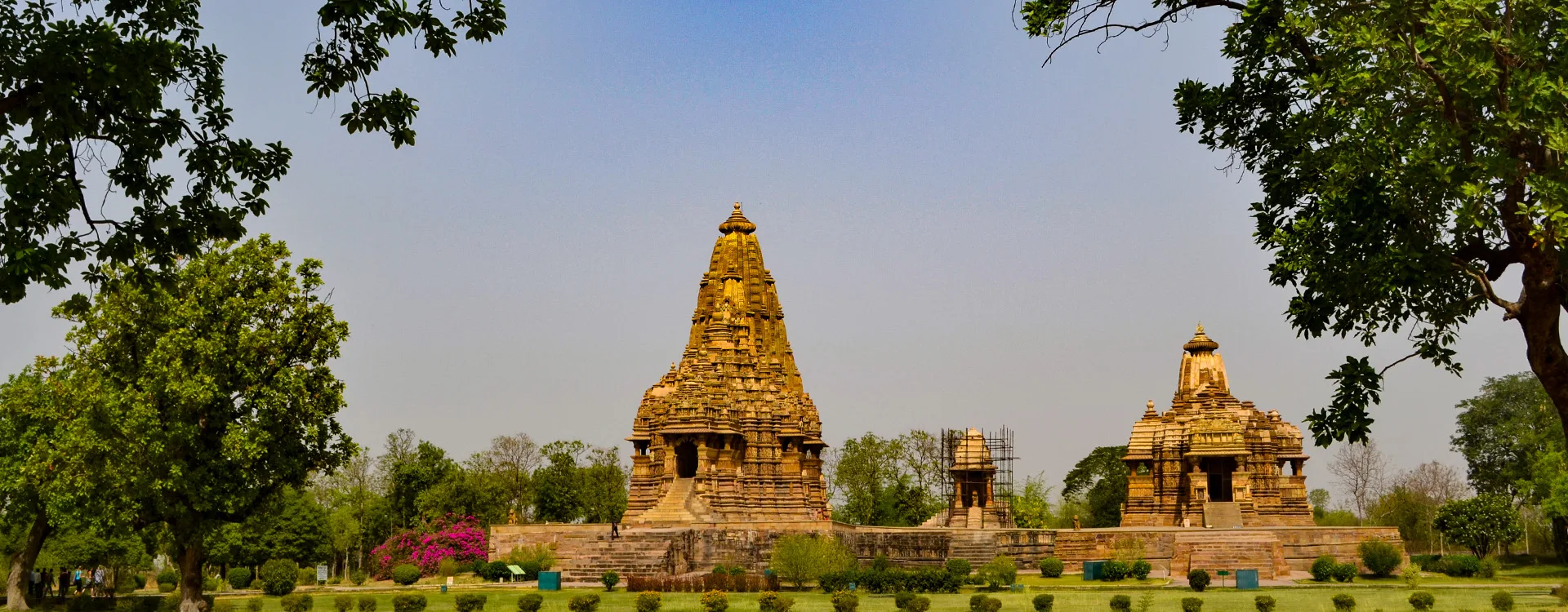
Morning flight from Varanasi to Khajuraho (~1 hr). Check in. Afternoon: the Western Group of Temples (UNESCO World Heritage) — the largest, best-preserved cluster, including the Kandariya Mahadeva Temple, Khajuraho's largest, with over 900 individual sculptures across its soaring tower.
Morning: the Eastern Group of Temples, including the Parsvanath Temple, the largest Jain temple at the site. The Southern Group's Duladeo Temple, quieter and less visited. Visit the Archaeological Museum for context on the Chandela dynasty. Evening: the sound and light show, narrating Khajuraho's history against the illuminated Western Group temples.
Drive from Khajuraho to Orchha (175 km, ~3.5 hrs) — a quietly extraordinary 16th-century Bundela capital on the Betwa River, far less visited than Khajuraho despite its remarkable heritage. Check in. Evening: the riverside Chhatris — fourteen monumental cenotaphs lined along the Betwa's bank, their reflections in the water at sunset among the most underrated images in Indian heritage travel.
Morning: Jahangir Mahal, an elegant fusion of Rajput and Mughal architecture built to honour a visit from Emperor Jahangir. The Ram Raja Temple — the only temple in India where Rama is worshipped as a reigning king rather than purely as a deity. Drive to Agra (via Jhansi/Gwalior, ~6 hrs) and check in.
Rise early for the Taj Mahal at dawn — the most celebrated view in India. Visit Agra Fort, the Mughal Empire's red sandstone stronghold. Drive to Jaipur (240 km, ~5 hrs) and check in.
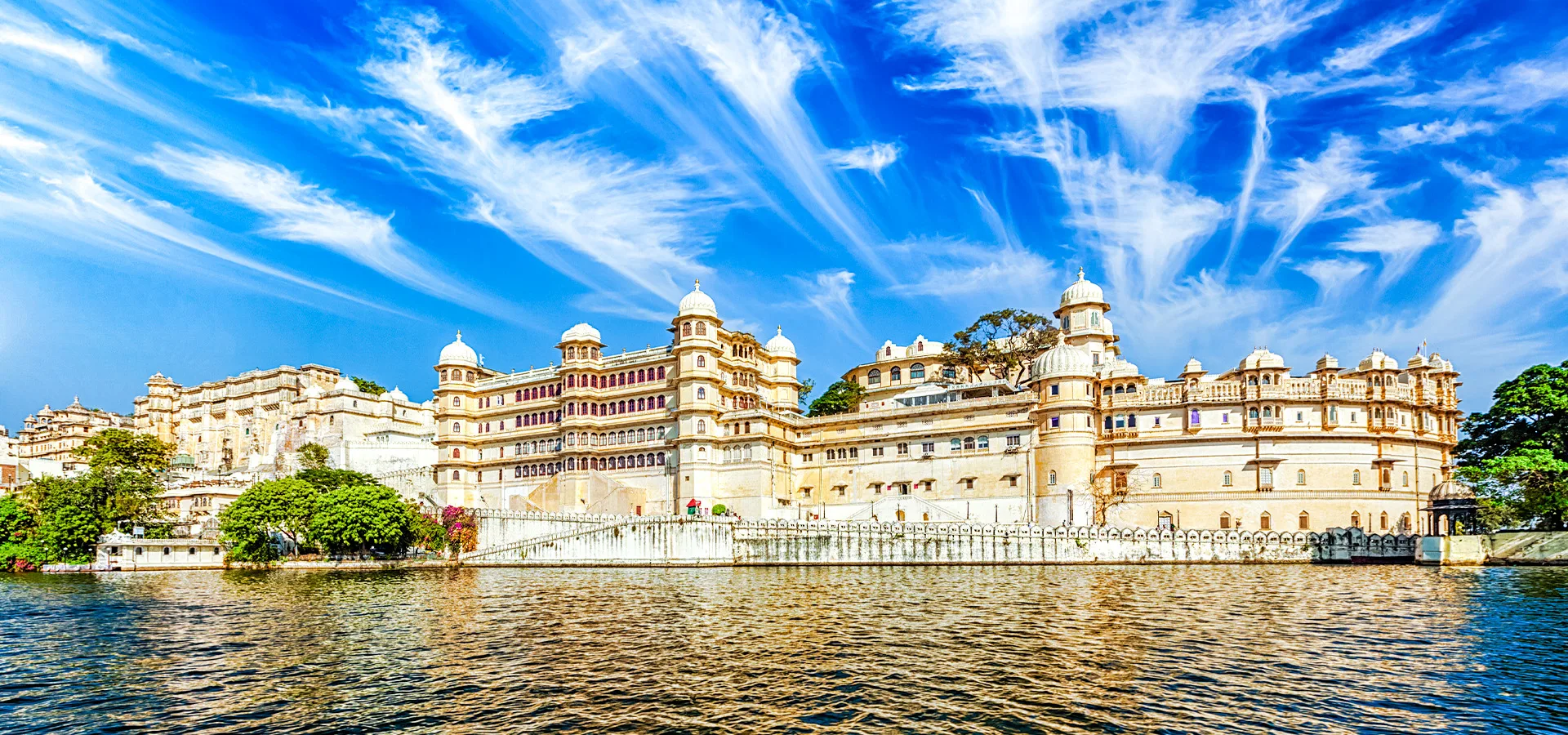
A full day in the Pink City. Amber Fort by jeep for the Sheesh Mahal and royal gardens. The City Palace, still home to the Jaipur royal family. The iconic Hawa Mahal. Evening: folk dance, puppet shows, and a traditional Rajasthani dinner at Chokhi Dhani village.
Morning at leisure for any last-minute Jaipur shopping. Drive to Delhi (280 km, ~5.5 hrs). Check in to your hotel. Evening free to explore Connaught Place.
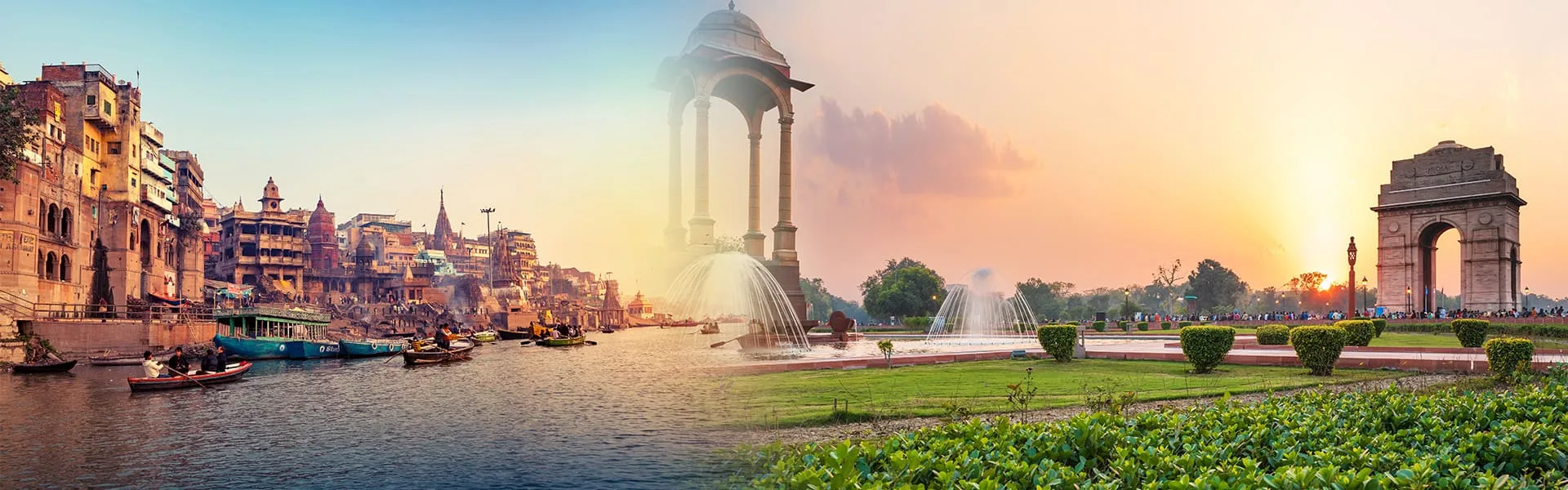
A full day across Old and New Delhi. The Red Fort — a UNESCO World Heritage Mughal fortress. Qutub Minar — a 73-metre 12th-century minaret. Humayun's Tomb — the architectural blueprint for the Taj Mahal. A rickshaw ride through Chandni Chowk's bazaars.
A relaxed final morning — perhaps last-minute shopping at one of Delhi's government emporiums for authentic, fixed-price crafts. Transfer to Indira Gandhi International Airport for your departure flight. Tour concludes.
Inclusions & Exclusions
Included ✓
- ✓ 10 nights accommodation in handpicked hotels
- ✓ Daily breakfast throughout; dinner on Jaipur night
- ✓ Domestic flight, Varanasi to Khajuraho
- ✓ Private air-conditioned vehicle for all road transfers & sightseeing
- ✓ English-speaking driver-guide throughout
- ✓ Sunrise boat ride on the Ganges, Varanasi
- ✓ All monument & temple entry fees
- ✓ Khajuraho sound & light show
- ✓ Chokhi Dhani village evening experience
- ✓ All applicable taxes
Not Included ✗
- ✗ International flights to / from Varanasi or Delhi
- ✗ Travel insurance (strongly recommended)
- ✗ Lunches throughout
- ✗ Camera fees at monuments (nominal)
- ✗ Personal expenses & shopping
- ✗ Gratuities for driver-guide
Your questions, answered
Correct — we noticed this gap and corrected it. Orchha sits directly on the most logical road route between Khajuraho and Agra (via Jhansi), and its riverside cenotaphs and Jahangir Mahal genuinely merit an overnight rather than a rushed drive-through. Adding this night extends the tour from 10 to 11 days but ensures Orchha — explicitly named in this tour's title — is properly experienced rather than skipped.
A flight is strongly recommended for this leg — the road journey between Varanasi and Khajuraho takes 10-11 hours and offers little scenic reward, while the flight takes approximately one hour. This time saving is reinvested into a fuller, more relaxed experience at both Varanasi and Khajuraho.
Yes — the itinerary works equally well in reverse, which can be more convenient if your international flights route more easily through Delhi at both ends, with a single internal flight or train to reach Varanasi separately. Submit an enquiry to discuss the best routing for your specific travel plans.
October to March is ideal — comfortable temperatures (15–28°C), clear skies, and the best conditions for sightseeing, fort treks, and wildlife safaris. April–June brings intense heat (up to 45°C); July–September is monsoon, with some relief from the heat but reduced safari access in the tiger reserves.
Absolutely. Every Discover India tour is fully private and built around your preferences. We can adjust the duration, swap destinations, change hotel categories, or add extensions. Submit an enquiry and our specialists will redesign the itinerary for you at no obligation.
We include carefully selected 4-star and 5-star hotels throughout — heritage havelis, palace hotels, and well-appointed properties near the wildlife reserves, all personally vetted by our team. Upgrades to palace hotels or luxury tented camps are available on request.
Most nationalities can apply for an Indian e-Visa online at indianvisaonline.gov.in. Processing typically takes 3–5 business days and costs $25–$80 USD depending on your nationality. Apply at least 2 weeks before travel.
Cancellations 60+ days before departure receive a full refund minus a small admin fee. 30–59 days: 75% refund. 15–29 days: 50% refund. Under 15 days: no refund. We strongly recommend comprehensive travel insurance.