A Thousand Years of Temple-Building, and a Sun God's Stone Chariot
A fuller, more unhurried five-day version of Odisha's classic Golden Triangle — Bhubaneswar, the 'Temple City' said to once have held 7,000 shrines; Puri, home to the sacred Jagannath Temple and a long Bay of Bengal coastline; and Konark, where the 13th-century Sun Temple stands as one of India's most extraordinary architectural achievements.
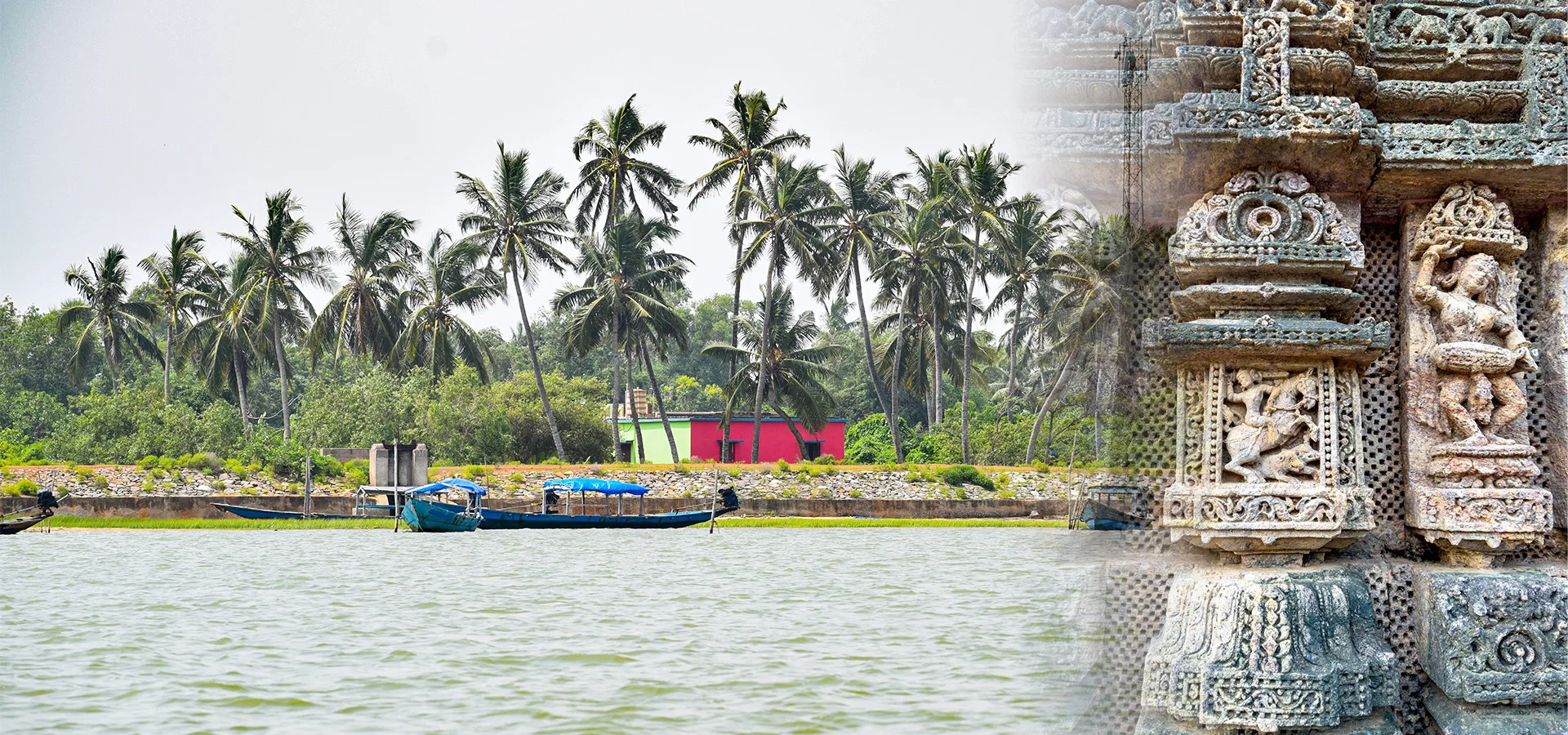
Two nights in Bhubaneswar allow proper time for the Lingaraj Temple, the Udayagiri and Khandagiri Jain caves (carved around the 1st century BCE), and the Rajarani and Mukteswar temples — a genuine cross-section of a thousand years of Kalinga-Odisha temple architectural evolution.
From Bhubaneswar, the route continues to Puri via Dhauli (where Emperor Ashoka is believed to have embraced Buddhism after the Kalinga War), Raghurajpur's Pattachitra painting village, and Pipli's appliqué craft town, before two nights in Puri itself — morning darshan at the Jagannath Temple, the Grand Road, and a relaxed beach evening.
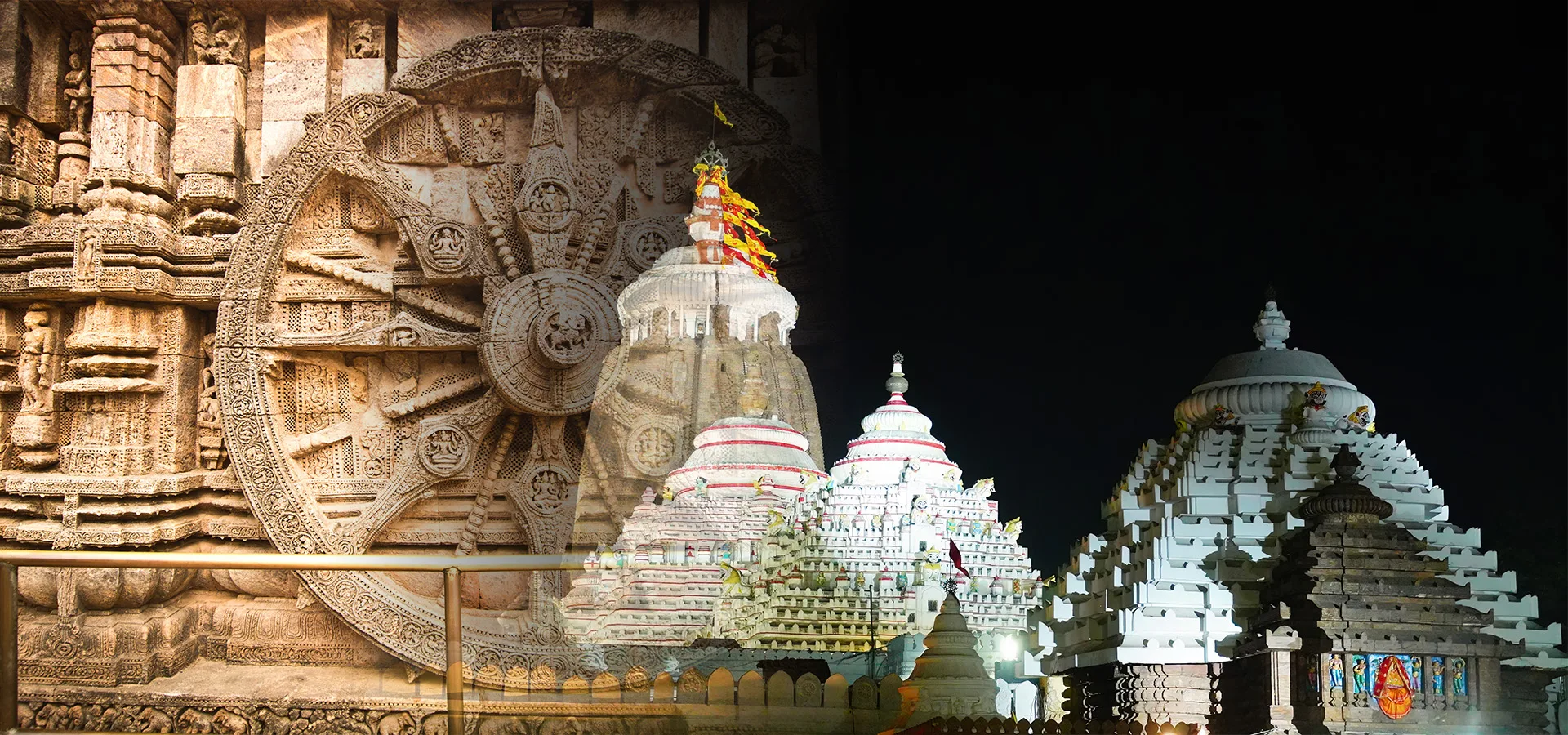
The final day brings the UNESCO World Heritage Konark Sun Temple, built in the form of a giant stone chariot dedicated to the Sun God, before the drive back to Bhubaneswar for departure — five days giving real depth to what many visitors otherwise rush through in two.
What makes this journey special
Your journey, unfolded
Welcome to Bhubaneswar! On arrival, transfer to your hotel. In the afternoon, explore the city's remarkable concentration of ancient temples — the Khandagiri and Udayagiri Jain caves, carved into rock over 2,000 years ago, and the Lingaraj, Parashurameswar, and Mukteswar Temples. Spend the evening at Ekamra Haat, a lively crafts market with local handicrafts and Odia street food.
After breakfast, a fuller day exploring Bhubaneswar's temple architecture. The Rajarani Temple, an 11th-century temple known for its ornate sculpture, though without an active deity today. Mukteswar Temple, an exquisite 10th-century shrine often called the 'gem of Odishan architecture'. Bindu Sarovar, a sacred tank surrounded by smaller shrines. Optional visit to the State Museum for Odisha's archaeological and tribal art collections.
After breakfast, check out and drive to Puri (approximately 65 km, ~1.5 hours). En route, stop at Dhauli — the site where Emperor Ashoka is said to have embraced Buddhism following the Kalinga War — and Raghurajpur, a heritage crafts village renowned for its Pattachitra scroll paintings. Stop at Pipli, a village famous for its distinctive appliqué handicrafts. On reaching Puri, check in to your hotel. In the evening, stroll Puri's lively beach market.
Early morning, visit the Jagannath Temple to witness the morning Aarti — one of the four sacred Char Dham of Hinduism. Walk the Grand Road and visit the Gundicha Temple, an important stop on the annual Rath Yatra chariot procession route. After breakfast, drive to Konark (approximately 35 km) to visit the Sun Temple — built in the 13th century CE in the form of a giant stone chariot dedicated to the Sun God, and inscribed as a UNESCO World Heritage Site. Return to Puri for the evening, with time for a relaxed beach walk.
A relaxed final morning on Puri Beach. After breakfast, check out and drive back to Bhubaneswar (approximately 65 km, ~1.5 hours). On arrival, you will be dropped at Bhubaneswar Airport or railway station for your onward journey. Tour concludes.
Inclusions & Exclusions
Included ✓
- ✓ 4 nights accommodation on twin/triple-share basis
- ✓ Buffet meals as specified in the itinerary
- ✓ Private chauffeur-driven AC vehicle for all transfers & sightseeing
- ✓ 1 bottle of mineral water per person per day
- ✓ All applicable Indian GST
Not Included ✗
- ✗ International/domestic airfare or train fare to/from Bhubaneswar
- ✗ Visa charges
- ✗ Entrance fees / camera charges at monuments and attractions
- ✗ Tipping — an entirely personal gesture
- ✗ Laundry, drinks, and items of a personal nature
Your questions, answered
October to February offers the most comfortable temperatures (18–28°C) for temple visits, lagoon cruises, and wildlife sightings. March–May is hot and humid (up to 40°C); the monsoon (June–September) brings heavy rain to the coast and can affect access to Bhitarkanika and the hill stations, though Daringbadi's waterfalls are at their fullest during this period.
Absolutely. Every Discover India tour is fully private and built around your preferences. We can adjust the duration, add Nandankanan Zoological Park, or extend any coastal or wildlife stop. Submit an enquiry and our specialists will tailor it for you at no obligation.
Cancellations 60+ days before departure receive a full refund minus a small admin fee. 30–59 days: 75% refund. 15–29 days: 50% refund. Under 15 days: no refund. We strongly recommend comprehensive travel insurance.
October to March offers the most comfortable temperatures (15–28°C) for the ghats, boat rides, and temple queues. April–June is hot on the Gangetic plain (up to 42°C); the monsoon (July–September) raises the Ganges considerably, which can affect ghat access in both cities.
The new Ram Janmabhoomi Mandir draws very large crowds, particularly on weekends and during festivals such as Ram Navami and Diwali. We schedule darshan with queue time built into the itinerary; carrying a valid photo ID is recommended, as security screening is in place at the main temple complex.
Absolutely. Every Discover India tour is fully private and built around your preferences. We can adjust the duration, add Lucknow, or swap Chitrakoot for additional time in Prayagraj. Submit an enquiry and our specialists will tailor it for you at no obligation.
Cancellations 60+ days before departure receive a full refund minus a small admin fee. 30–59 days: 75% refund. 15–29 days: 50% refund. Under 15 days: no refund. We strongly recommend comprehensive travel insurance.