Ancient Cave Temples, Vineyard Country & India's City of Dreams
Five days that move from the deepest cultural heritage of the Deccan to the modern energy of India's financial capital — beginning with two of the most extraordinary rock-cut cave complexes on earth, continuing through Maharashtra's wine country, and concluding in Mumbai.
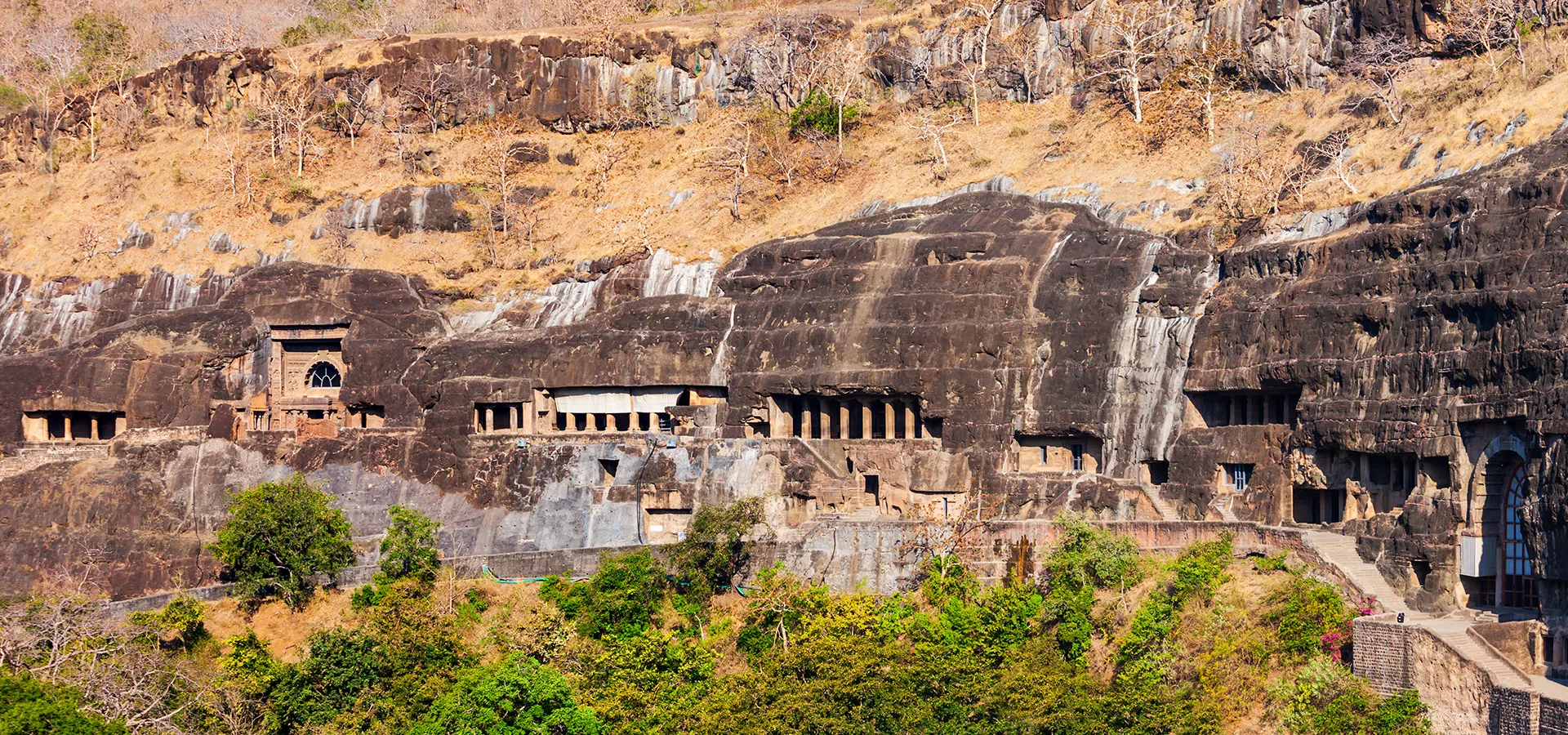
Chhatrapati Sambhajinagar (formerly Aurangabad) is the gateway to the UNESCO World Heritage caves of Ajanta and Ellora — Ajanta's 2nd-century-BCE Buddhist cave paintings are among the finest surviving examples of ancient Indian art, while Ellora's 34 rock-cut temples include the Kailasa Temple, carved top-down from a single basalt hill and considered one of the greatest achievements of ancient engineering anywhere in the world. The city itself adds the Bibi Ka Maqbara (a smaller echo of the Taj Mahal) and the formidable Daulatabad Fort.
Nashik — on the banks of the sacred Godavari River — is one of Hinduism's four Kumbh Mela cities and simultaneously the centre of India's modern wine industry, with the Nashik Valley (often called the 'Napa Valley of India') producing the majority of the country's wine grapes. The Panchavati ghats, the Sula and Sone vineyards, and the Trimbakeshwar Jyotirlinga temple give Nashik a rare combination of ancient pilgrimage and contemporary leisure.
The tour concludes in Mumbai — India's largest city and financial capital — with a day to see the Gateway of India, the Chhatrapati Shivaji Maharaj Terminus (a UNESCO World Heritage railway station), Marine Drive, and the colonial-era heart of South Mumbai before your onward departure.
What makes this journey special
Your journey, unfolded
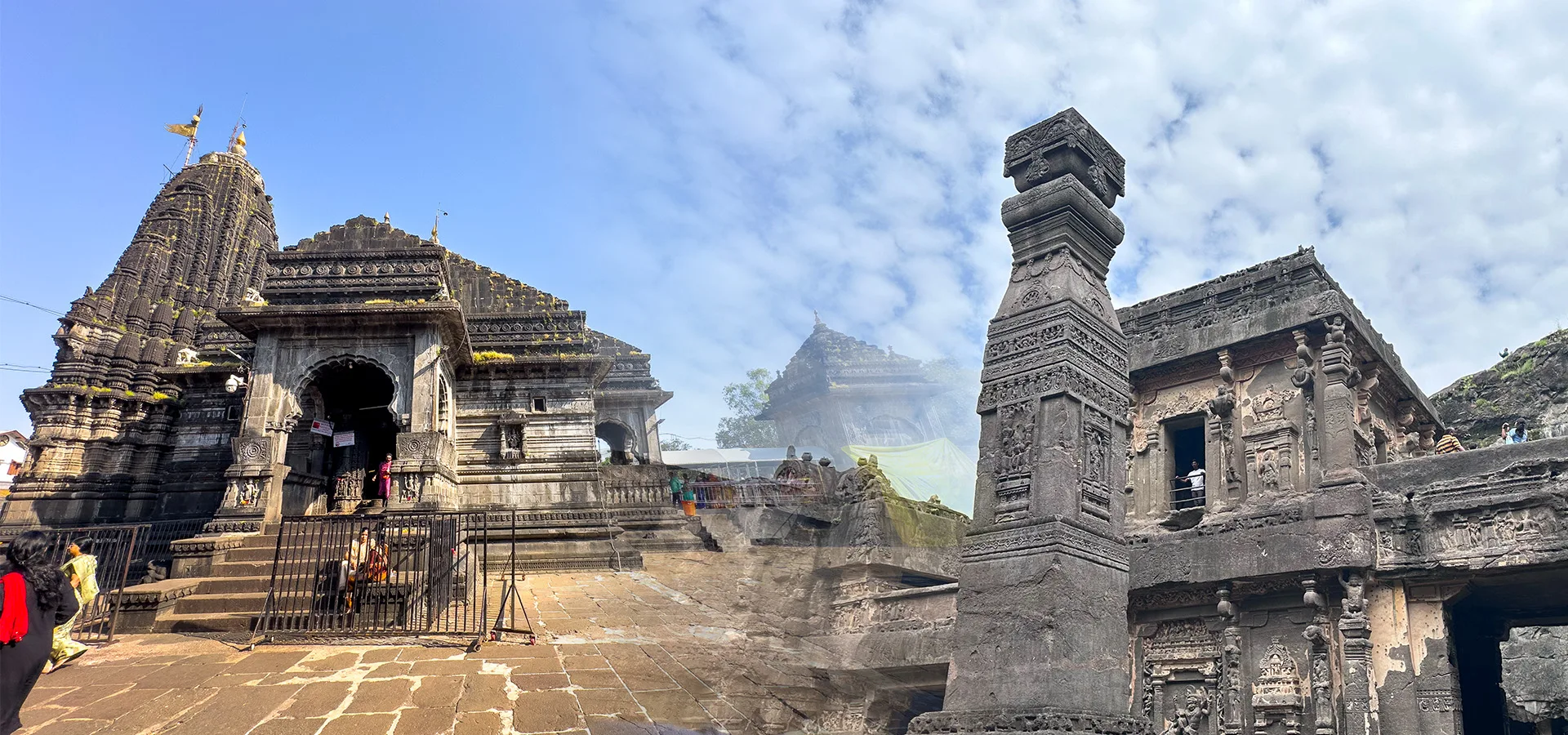
Welcome to Maharashtra! Transfer from the airport to your hotel. Afternoon: visit the Ellora Caves (30 km, UNESCO World Heritage) — 34 rock-cut Buddhist, Hindu, and Jain temples carved into a basalt cliff between the 6th and 10th centuries CE. The centrepiece is the Kailasa Temple (Cave 16) — an entire temple carved top-down out of a single rock face, the largest monolithic structure in the world, dedicated to Lord Shiva and designed to resemble Mount Kailash itself.
En route, stop at Daulatabad Fort — a formidably defended 12th-century hilltop fortress with a deliberately confusing defensive layout, including a pitch-black bat-infested tunnel designed to disorient invading armies.
Full-day excursion to the Ajanta Caves (100 km, ~2 hrs each way, UNESCO World Heritage) — 30 rock-cut Buddhist caves dating from the 2nd century BCE to the 6th century CE, cut into a horseshoe-shaped cliff above the Waghora River. The cave paintings here are among the finest surviving examples of ancient Indian art — depicting the life of the Buddha and Jataka tales in extraordinarily preserved colour and detail, predating European Renaissance painting by a thousand years.
On return, visit Bibi Ka Maqbara — a mausoleum built in 1660 by Aurangzeb's son in memory of his mother, modelled closely on the Taj Mahal and nicknamed the 'Mini Taj' or the 'Taj of the Deccan'.
Drive from Chhatrapati Sambhajinagar to Nashik (210 km, ~4.5 hrs). Check in to your hotel. Afternoon: the Panchavati Ghats on the banks of the sacred Godavari River — one of the most important sites of the Hindu Kumbh Mela, held here once every 12 years. The Kalaram Temple and the Sita Gufa caves, associated with the Ramayana legend that Lord Rama spent part of his exile here, add mythological depth to the riverside walk.
Morning: a guided tour of one of Nashik's celebrated vineyards (Sula Vineyards or similar) — the Nashik Valley is often called the 'Napa Valley of India' and produces the majority of the country's wine grapes; tour the vineyard, the production facility, and enjoy a guided tasting of Indian wines. Afternoon: Trimbakeshwar Temple (28 km) — one of the 12 Jyotirlingas of Lord Shiva in India, and the source of the Godavari River, one of the most sacred rivers in the Deccan. The Brahmagiri Hill behind the temple is considered the river's mythological origin point.
Drive from Nashik to Mumbai (170 km, ~4 hrs). Afternoon city tour: the Gateway of India — Mumbai's most iconic monument, built in 1924 to commemorate the visit of King George V; the Chhatrapati Shivaji Maharaj Terminus (CST, formerly Victoria Terminus) — a UNESCO World Heritage Gothic Revival railway station still in daily use by millions of commuters; and a drive along Marine Drive, the city's famous seafront promenade known as the 'Queen's Necklace' for its curving string of lights at night. Transfer to Mumbai Airport for your departure flight.
Inclusions & Exclusions
Included ✓
- ✓ 4 nights accommodation in handpicked hotels
- ✓ Daily breakfast throughout
- ✓ Private air-conditioned vehicle for all transfers & sightseeing
- ✓ English-speaking driver-guide throughout
- ✓ Ajanta & Ellora Caves entry fees
- ✓ Vineyard tour & wine tasting in Nashik
- ✓ Airport pickup at Chhatrapati Sambhajinagar & drop at Mumbai
- ✓ All applicable taxes
Not Included ✗
- ✗ Flights to Chhatrapati Sambhajinagar / from Mumbai
- ✗ Travel insurance
- ✗ Lunches & dinners
- ✗ Personal expenses & shopping
- ✗ Gratuities for driver-guide
- ✗ Camera fees at monuments (nominal)
Your questions, answered
We recommend a full day for each — Ajanta involves a 100 km round trip with a fairly steep walk up to the caves (or a shuttle bus from the car park), while Ellora's 34 caves spread across 2 km genuinely reward unhurried exploration, especially the Kailasa Temple, which alone merits an hour or more. Combining both into a single rushed day is possible but does not do justice to either UNESCO site; this itinerary deliberately gives each its own day.
This itinerary treats Mumbai as a half-day stop en route to departure rather than a full city break — enough time for the essential Gateway of India / CST / Marine Drive circuit before your flight. If you would like a proper Mumbai exploration (Elephanta Caves, Crawford Market, Bollywood studio visits, Chowpatty Beach), we recommend adding 1-2 extra nights in Mumbai at the end of this itinerary — easily arranged on request.
October to March is ideal — comfortable temperatures throughout (18–30°C), clear skies, and the best conditions for sightseeing. April–June is hot on the Deccan plateau (35°C+) but manageable. The monsoon (July–September) makes the Western Ghats spectacularly green and the Ajanta/Ellora caves dramatic with waterfalls nearby, but heavy rain can affect outdoor sightseeing and road conditions.
Absolutely. Every Discover India tour is fully private and built around your preferences. We can adjust duration, swap destinations, change hotel categories, or add extensions. Submit an enquiry and our specialists will redesign the itinerary for you at no obligation.
Cancellations 60+ days before departure receive a full refund minus a small admin fee. 30–59 days: 75% refund. 15–29 days: 50% refund. Under 15 days: no refund. We strongly recommend comprehensive travel insurance.