Eight Ancient Self-Manifested Shrines, One of Maharashtra's Most Sacred Journeys
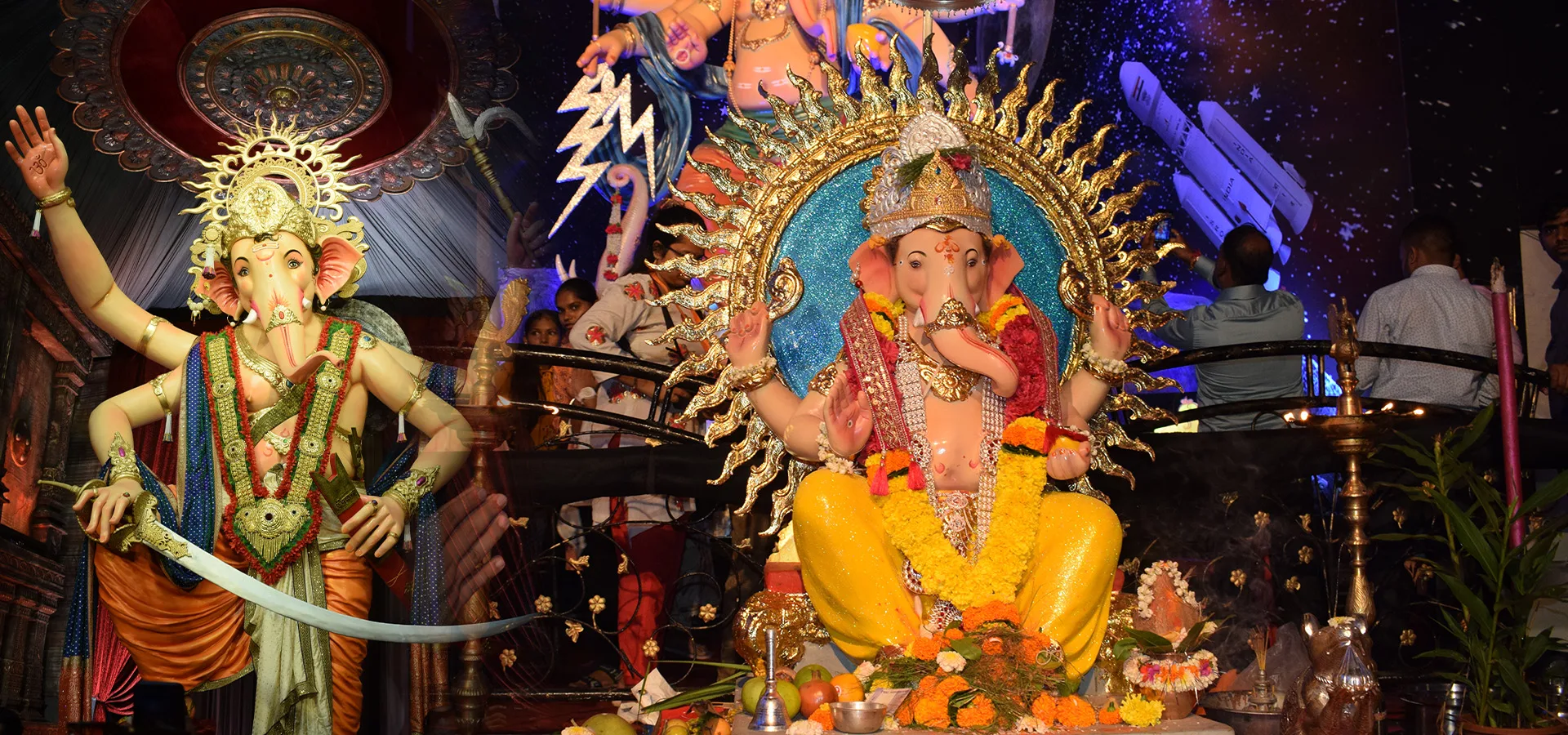
The Ashtavinayak Yatra is one of the most cherished pilgrimages in Maharashtra — a circuit of eight ancient Ganesha temples, each housing a Swayambhu (self-manifested, not man-made) idol, each with its own unique legend, and each considered essential to visit in the correct traditional sequence for the pilgrimage to be complete.
All eight temples lie within roughly 110 km of Pune, across the Pune, Raigad, and Ahmednagar districts, making this an eminently achievable journey by private vehicle. Tradition (the Shastrokta route) holds that the yatra should begin and end at the same temple — most commonly Moreshwar Temple at Morgaon, considered the first and most important of the eight — completing a sacred circle.
We recommend 2 nights / 3 days for this pilgrimage. While determined pilgrims occasionally attempt all eight temples in a single very long day, or a rushed overnight, this pace involves significant fatigue, late-night driving, and rushed darshan at each shrine — which diminishes rather than enhances the spiritual experience. A 3-day pace allows a calm, properly sequenced darshan at each of the eight temples, with comfortable overnight stays roughly at the journey's midpoint and toward its end, without ever feeling rushed.
What makes this journey special
Your journey, unfolded
Depart Pune early morning. Begin at Theur (35 km) — the Chintamani Temple, where legend holds that Ganesha recovered the precious wish-fulfilling Chintamani jewel from a greedy king on behalf of the sage Kapila; the temple's vast complex and large courtyard reflect its importance as one of the most visited Ashtavinayak shrines.
Continue to Morgaon (65 km from Pune) — the Moreshwar Temple, considered the first and most significant of the eight, with a striking idol depicting Ganesha with four trunks and ten arms, flanked by mouse-vehicle sculptures and a large temple tank. Traditionally, the yatra begins and ends here.
Drive to Siddhatek (across the Bhima River) — the Siddhivinayak Temple, uniquely positioned so the idol's trunk turns to the right rather than the left, a feature considered to make this form of Ganesha especially powerful and requiring stricter ritual observance from devotees. Check in to your hotel for the night.
Morning darshan at Ranjangaon — the Mahaganapati Temple, believed by many devotees to house the most powerful and significant form of Ganesha among all eight Ashtavinayak shrines, with a grand temple structure and an idol said to be hidden behind a smaller visible one for protection.
Continue to Ozar — the Vighneshwar Temple ('Remover of Obstacles'), one of the most visually striking of the eight, with a gold-faced idol set with diamonds in its eyes and forehead, and an unusually large and ornately decorated temple complex surrounded by a fortified wall.
Drive to Lenyadri — the Girijatmaj Temple, wholly different in character from the other seven: carved directly into a rock-cut cave on a hillside, reached by climbing roughly 300 stone steps, with no separate idol but the cave wall itself naturally forming the deity's image. This is also the only Ashtavinayak temple where Ganesha is depicted with his mother, Parvati (Girija).
Drive to Pali — the Ballaleshwar Temple, the only one of the eight Ashtavinayak temples named directly after a human devotee. Legend tells of a boy named Ballal whose single-minded devotion to Ganesha so angered his father and fellow villagers that he was beaten and abandoned, until Ganesha appeared to save him and granted him a place at the temple forever.
Continue to Mahad — the Varadvinayak Temple, notable for being open to devotees 24 hours a day, every day of the year, with a small oil lamp inside the sanctum said to have remained continuously lit for generations. With all eight temples visited, drive back to Pune, completing the sacred circuit. Tour concludes at Pune.
Inclusions & Exclusions
Included ✓
- ✓ 2 nights accommodation in comfortable hotels en route
- ✓ Daily breakfast throughout
- ✓ Private air-conditioned vehicle for the entire circuit
- ✓ Experienced driver familiar with the Ashtavinayak route and temple timings
- ✓ Guidance through the correct Shastrokta sequence at each temple
- ✓ All applicable taxes & tolls
Not Included ✗
- ✗ Lunches & dinners
- ✗ Temple offerings, prasad, and donations (personal)
- ✗ Personal expenses & shopping
- ✗ Gratuities for the driver
- ✗ Pooja/abhishek fees if opted for at any temple (payable directly at temple counters)
Your questions, answered
Many operators offer a rushed single overnight (or even a single very long day) covering all eight temples, with several hours of night driving between shrines. While this is achievable, it tends to produce a tired, rushed pilgrimage where darshan at several temples is reduced to a hurried few minutes, and the spiritual purpose of the yatra is somewhat undermined by exhaustion. Spreading the circuit across 3 days and 2 nights allows a calm, unhurried darshan at every temple, comfortable rest each night, and a much more meaningful overall experience — which is why we recommend it as the default pace for this pilgrimage.
According to scripture and tradition, yes — the Shastrokta sequence is considered the spiritually complete way to undertake the Ashtavinayak Yatra, traditionally beginning and ending at the Moreshwar Temple in Morgaon. Our itinerary follows a practical and efficient route that respects this overall principle (starting and effectively concluding the circuit at temples connected to Morgaon's tradition) while optimising the actual driving sequence for comfort. If you wish to follow the exact Shastrokta order with absolute precision regardless of driving efficiency, please let us know when booking and we will adjust the itinerary accordingly.
Yes, with one consideration: the Girijatmaj Temple at Lenyadri requires climbing approximately 300 stone steps to reach the cave temple (there is no vehicle or alternative access), which can be tiring for those with mobility limitations. All other seven temples have straightforward, level, or minimally stepped access. We recommend informing us in advance if anyone in your group has mobility concerns so we can plan rest stops and pacing accordingly; palanquin-style carry services are sometimes informally available at Lenyadri for an additional local fee.
October to March is ideal — comfortable temperatures throughout (18–30°C), clear skies, and the best conditions for sightseeing. April–June is hot on the Deccan plateau (35°C+) but manageable. The monsoon (July–September) makes the Western Ghats spectacularly green and the Ajanta/Ellora caves dramatic with waterfalls nearby, but heavy rain can affect outdoor sightseeing and road conditions.
Absolutely. Every Discover India tour is fully private and built around your preferences. We can adjust duration, swap destinations, change hotel categories, or add extensions. Submit an enquiry and our specialists will redesign the itinerary for you at no obligation.
Cancellations 60+ days before departure receive a full refund minus a small admin fee. 30–59 days: 75% refund. 15–29 days: 50% refund. Under 15 days: no refund. We strongly recommend comprehensive travel insurance.