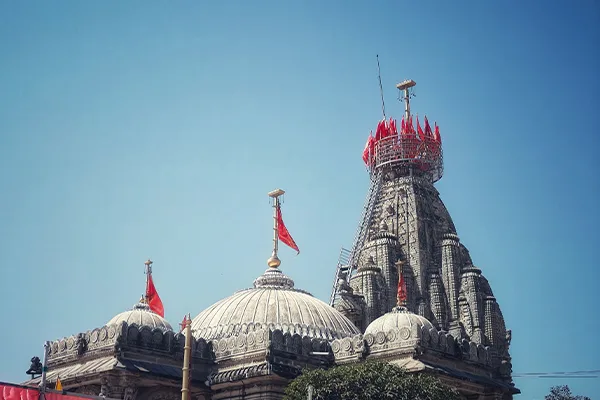
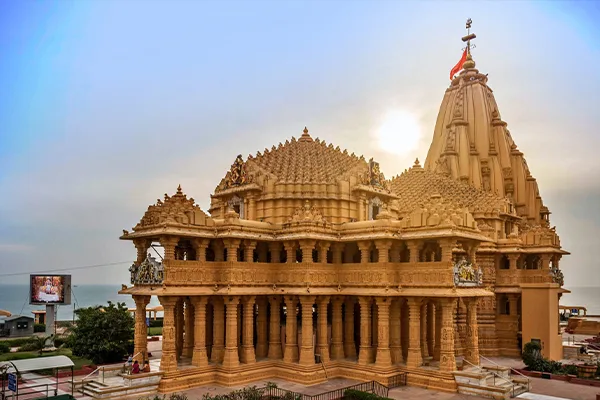
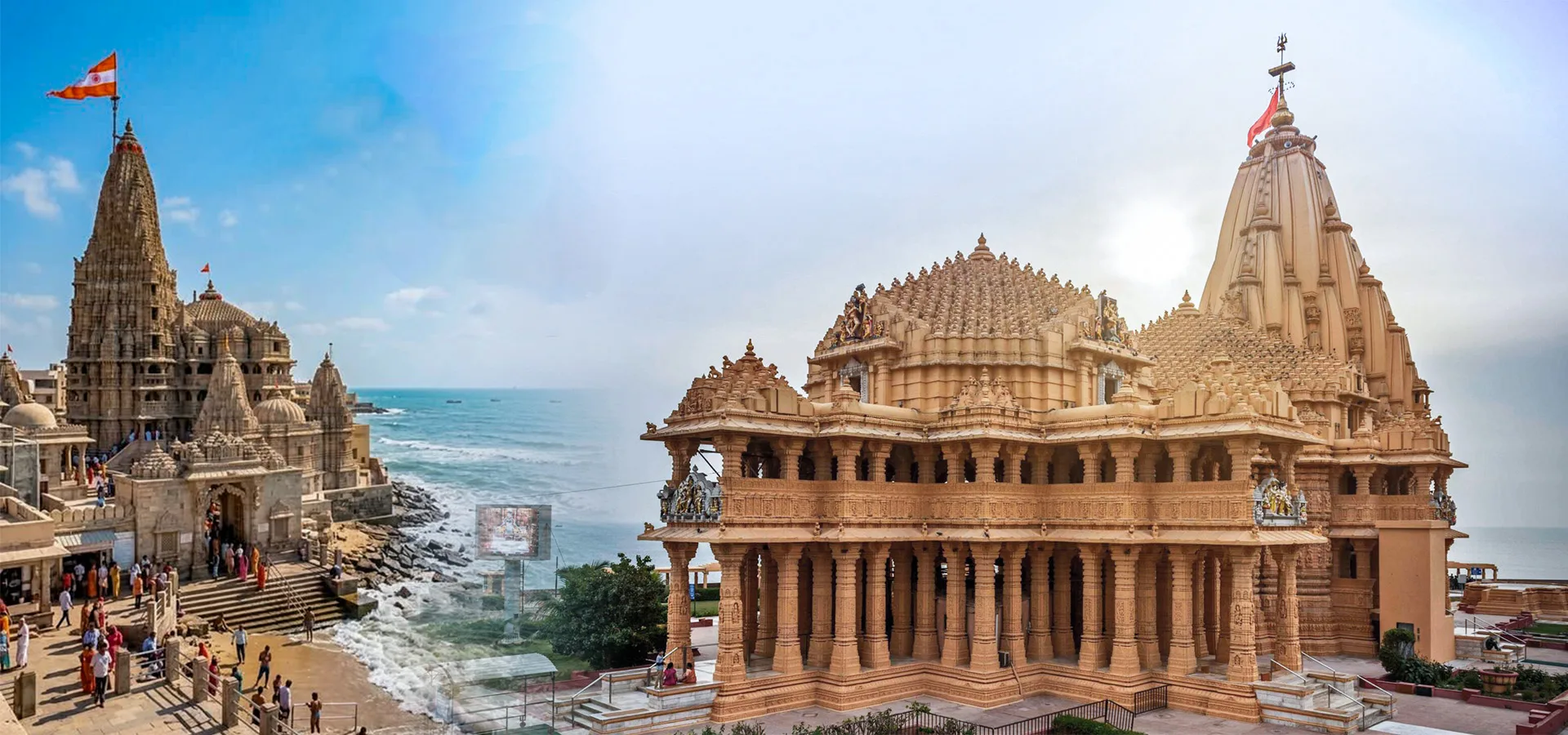
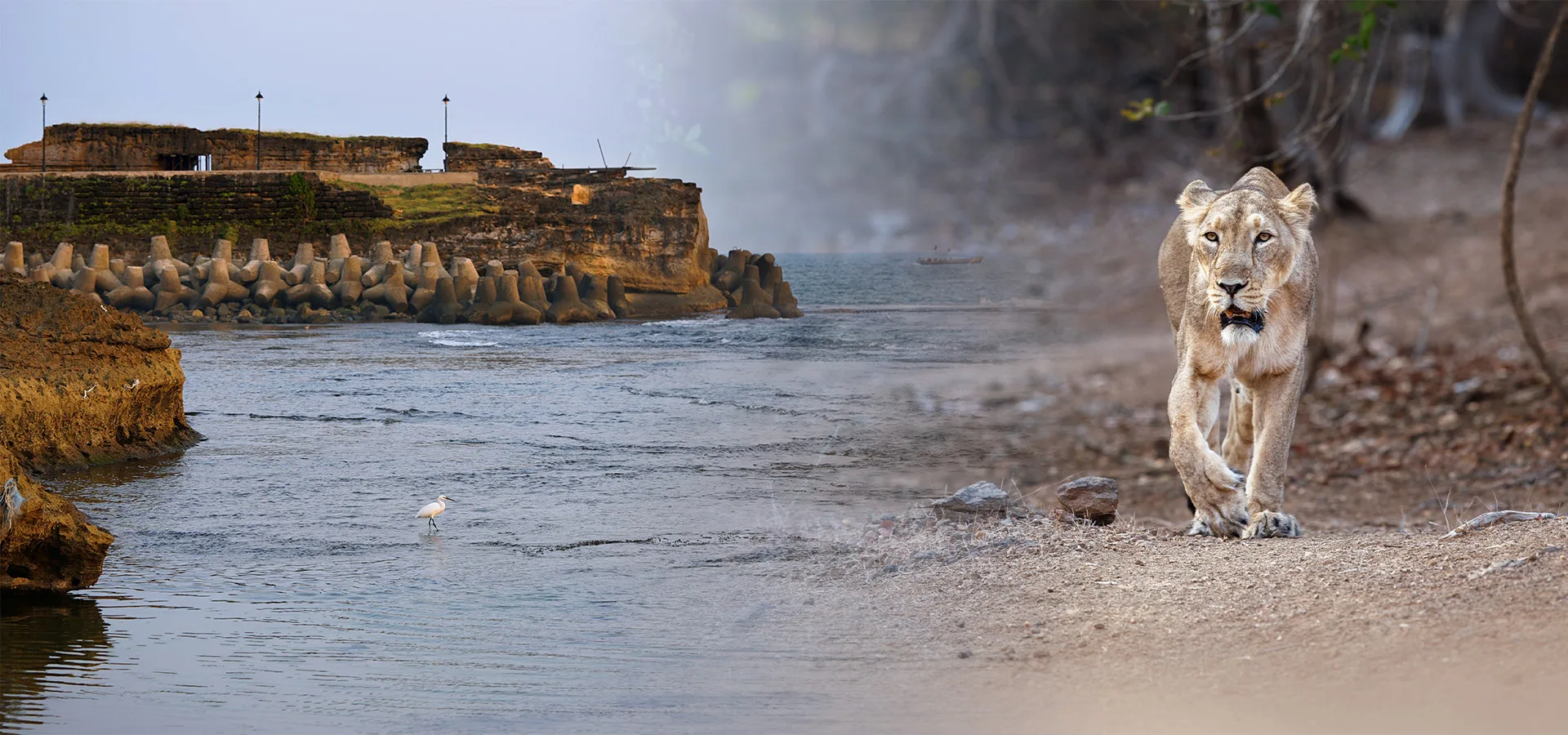
Gujarat's Saurashtra coast holds two of Hinduism's most significant pilgrimage sites — Dwarka, the legendary capital of Lord Krishna and one of the four Char Dham, and Somnath, home to the first of the twelve Jyotirlingas of Lord Shiva, its temple rebuilt many times after repeated historical destruction.
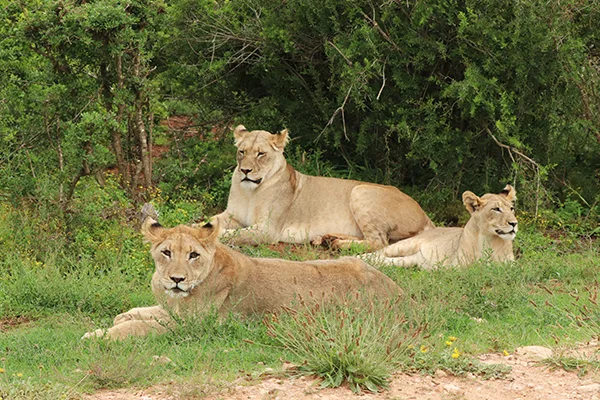
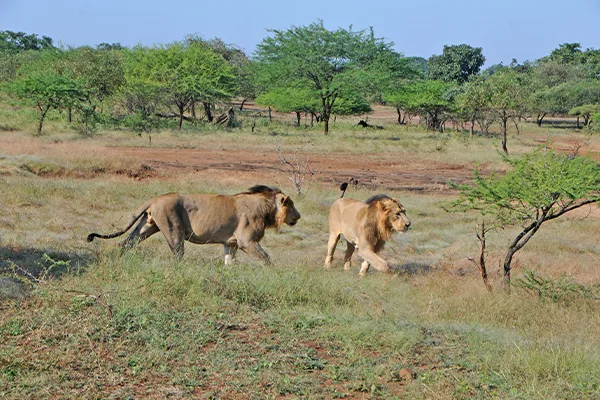
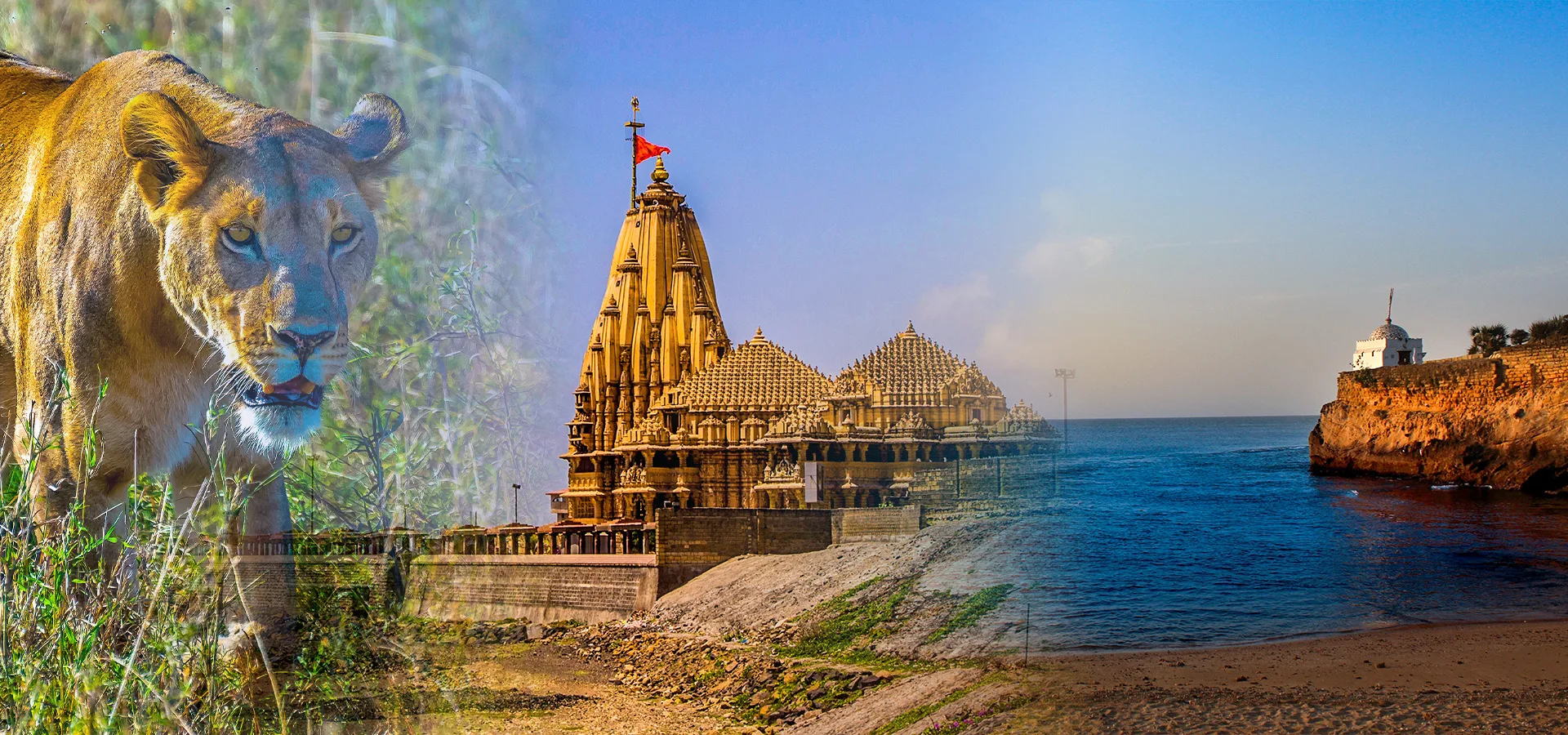
Inland, Gir National Park remains the last place on earth where the Asiatic lion survives in the wild — a species found nowhere else outside this one protected forest, now recovering steadily after decades of conservation effort.
Diu, a former Portuguese colony until 1961, offers an entirely different character from the rest of Gujarat — Portuguese-era forts and churches, relaxed beaches, and, notably, no restrictions on alcohol, making it a popular final stop on any Saurashtra circuit.
Six reasons Gujarat's Saurashtra coast rewards the journey
The legendary capital of Lord Krishna and one of the four Char Dham of Hinduism, its gold-topped sanctum reflected in the Gomti River.
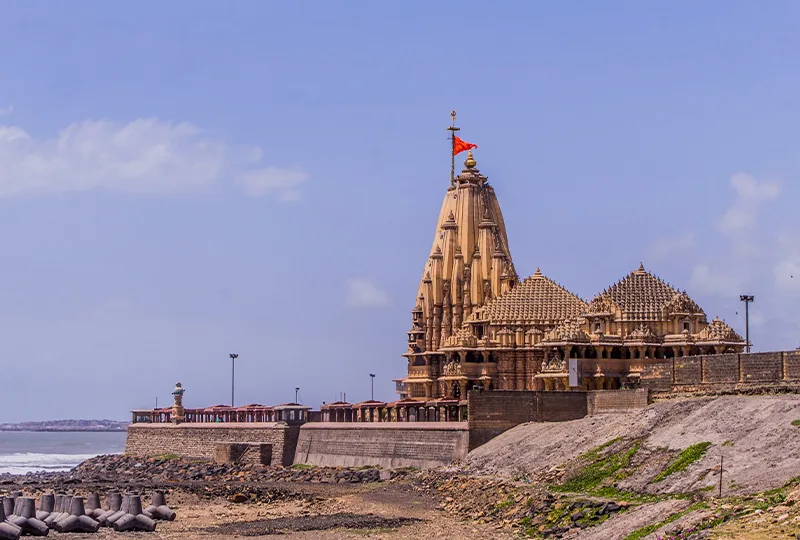
The first of the twelve Jyotirlingas of Lord Shiva, rebuilt several times through history — its evening light and sound show narrates an extraordinary story of resilience.
The last place on earth where the Asiatic lion survives in the wild — found nowhere else outside this one protected Gujarat forest.
Kirti Mandir marks the birthplace of Mahatma Gandhi, alongside the Sudama Temple — the only temple in India dedicated to Krishna's childhood friend.
A former Portuguese colony until 1961, with colonial-era forts, churches, and a character entirely distinct from mainland Gujarat.
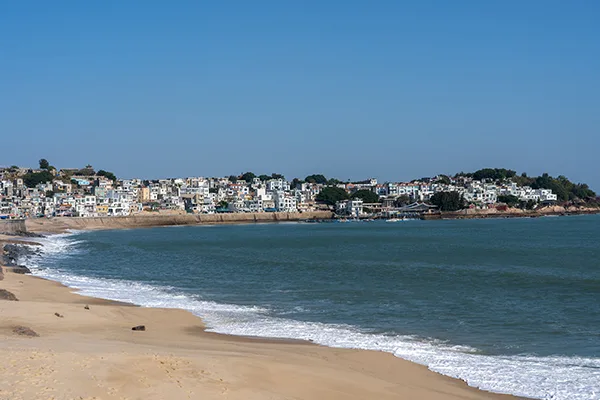
Diu's most popular horseshoe-shaped bay, relaxed and family-friendly, a fitting coastal close to a Saurashtra pilgrimage-and-wildlife circuit.
Gujarat's Saurashtra coast and Gir forest both favour the cooler winter months, which also align with Gir National Park's open season.
Pleasant, dry conditions across Dwarka, Somnath, and Gir — daytime temperatures of 18–30°C, ideal for both temple visits and wildlife safaris.
Still comfortable at the edges of peak season; Gir remains open and increasingly good for lion sightings as the dry season progresses.
Gir National Park closes annually from mid-June to mid-October for the monsoon breeding season — safaris are unavailable, and coastal humidity rises significantly.
One of the four Char Dham of Hinduism, and the legendary capital of Lord Krishna — the Dwarkadhish Temple's sanctum sits beside the Gomti River, where it meets the Arabian Sea.
Rukmini Devi Temple and Shivrajpur Beach nearby round out a town whose spiritual significance has drawn pilgrims for centuries.
Home to the first of the twelve Jyotirlingas of Lord Shiva, its temple standing directly on the Arabian Sea coast after being rebuilt several times through history.
The evening light and sound show narrates Somnath's extraordinary story of destruction and resilience across the centuries.
The only place on earth where the Asiatic lion survives in the wild, its population steadily recovering after decades of dedicated conservation work.
Jeep safaris across dry deciduous forest also reveal leopards, deer, and an exceptional variety of birdlife alongside the park's famous lions.
A former Portuguese colony until 1961, with a character entirely distinct from mainland Gujarat — colonial-era forts, churches, and relaxed beaches.
Nagoa Beach, the INS Khukri memorial, and the Naida Caves make Diu a fitting, easy-going final stop on a Saurashtra circuit.