Varanasi — also known as Kashi or Banaras — is widely considered one of the oldest continuously inhabited cities on earth, with archaeological and textual evidence pointing to settlement going back at least 3,000 years. Mark Twain famously wrote that it looked 'older than history, older than tradition, older even than legend.'
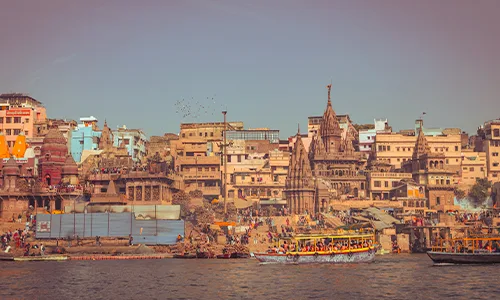
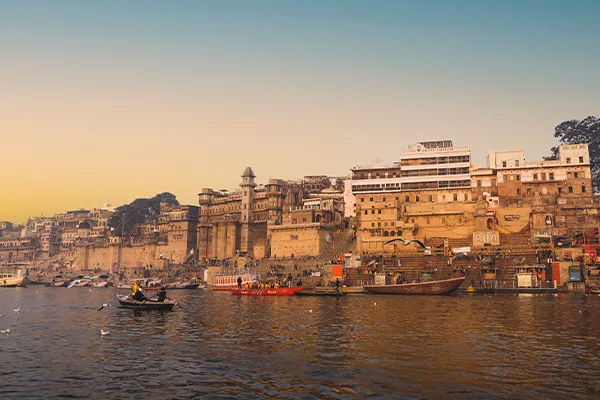
The city's identity is inseparable from the Ganges River — over 80 ghats (riverside steps) line its western bank, used for everything from ritual bathing to cremation, with Hindu tradition holding that dying in Varanasi or having one's ashes scattered in the Ganges here grants moksha, liberation from the cycle of rebirth.
Tourism in Varanasi centres on witnessing this living spiritual practice — a dawn boat ride past the ghats as the city performs its morning rituals, and the evening Ganga Aarti fire ceremony, are the two experiences almost every visitor builds their stay around, alongside the city's ancient temples and centuries-old silk weaving tradition.
Varanasi's Gangetic plain climate brings hot summers and pleasant winters, with the river's mood shifting noticeably by season.
Cool and comfortable (10–25°C), ideal for early-morning boat rides and extended ghat walks — by far the most popular season to visit.
Post-monsoon, with the Ganges running fuller and temperatures beginning to ease toward more comfortable levels.
Extreme heat regularly exceeding 42–45°C, with high humidity — outdoor sightseeing best confined to early morning and evening.
Eight landmarks — ghats, temples, and the river itself — that define a visit to this ancient, sacred city.
Ghat
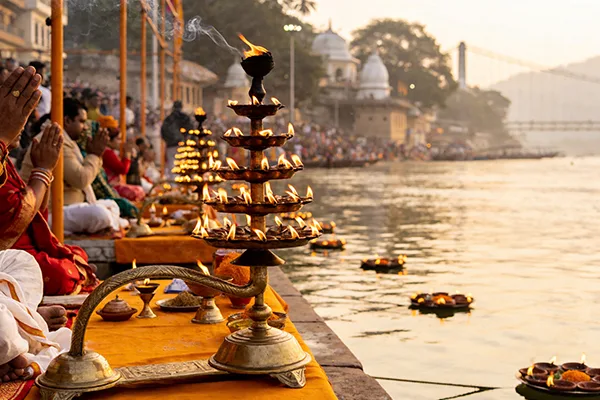
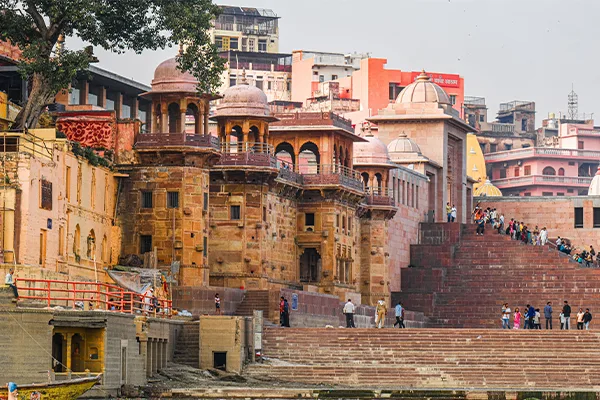
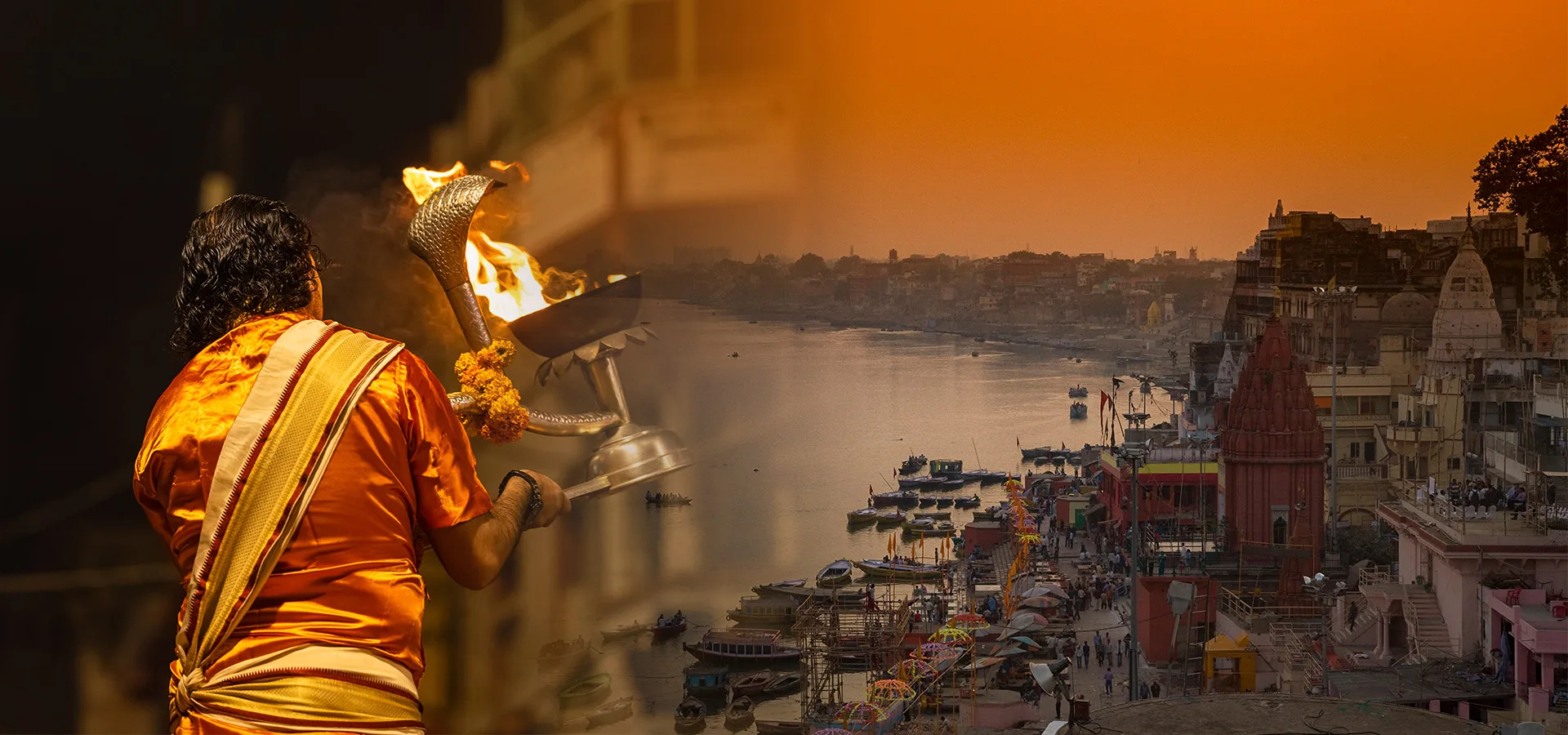
Varanasi's principal ghat and the site of the nightly Ganga Aarti — a choreographed fire ceremony performed by priests for thousands of onlookers on the steps and in boats on the river.
Experience
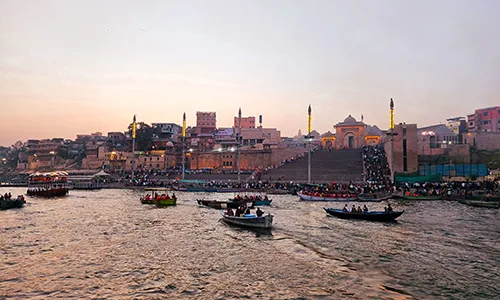
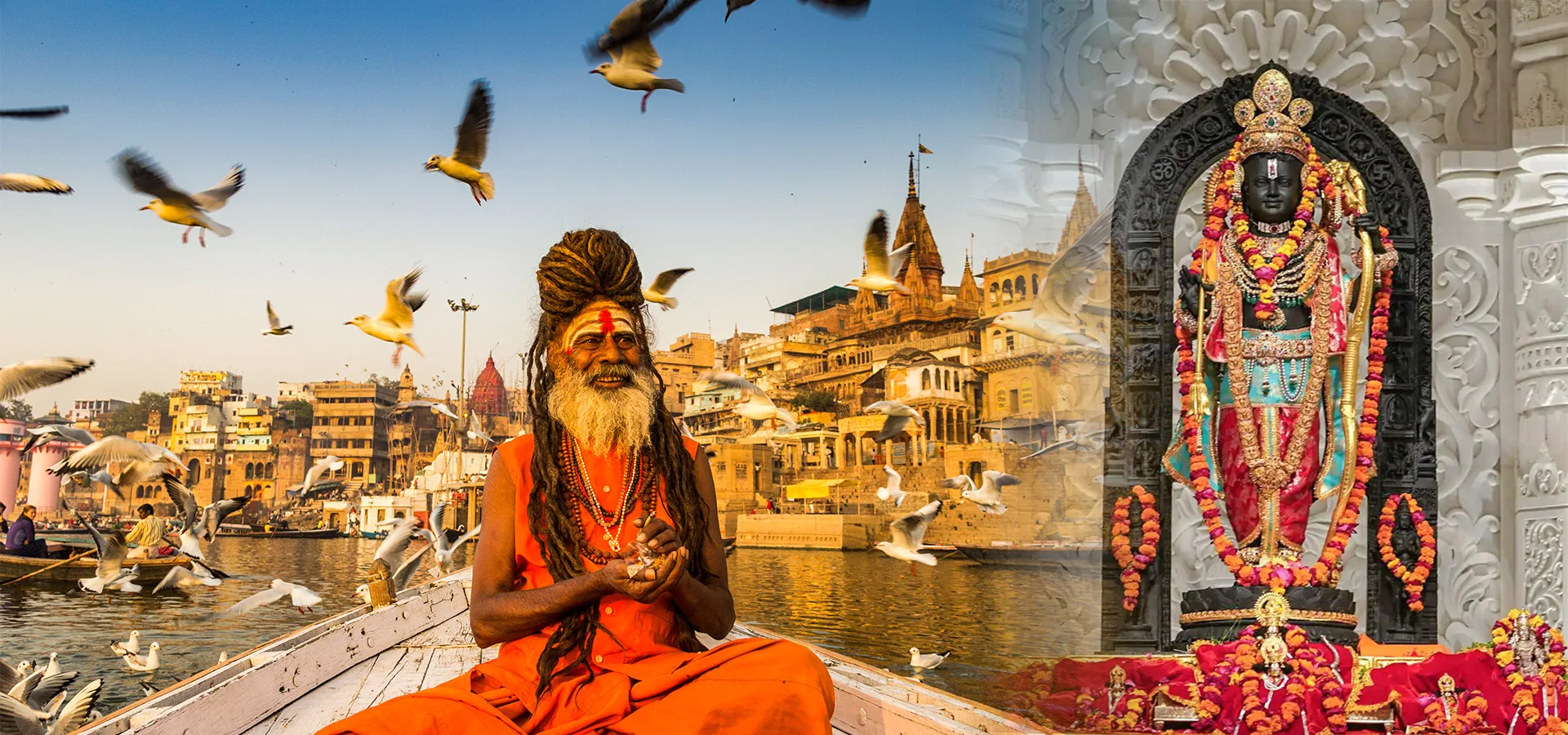
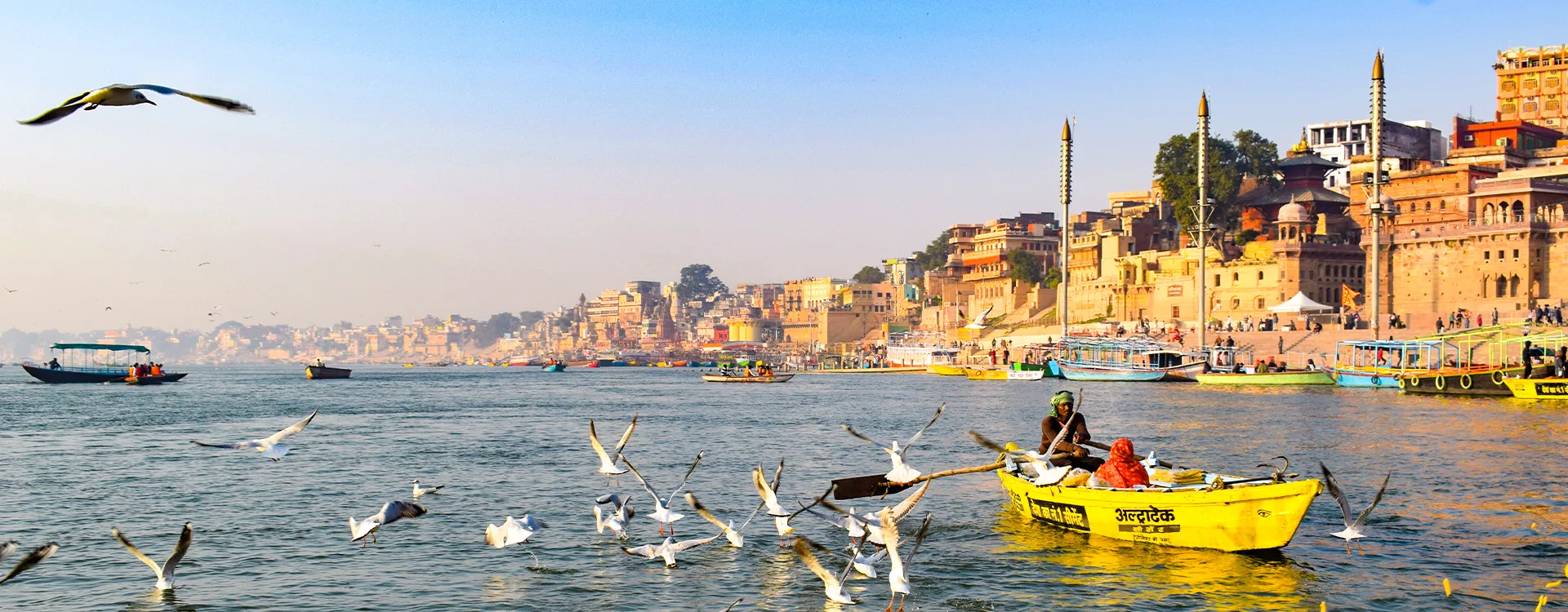
A rowing boat ride along the ghats at sunrise, passing pilgrims performing ritual bathing and yoga, sadhus in meditation, and the city waking — widely considered Varanasi's signature experience.
Temple
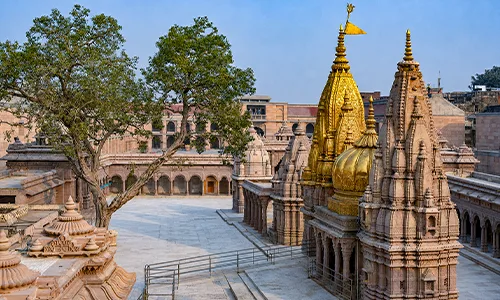
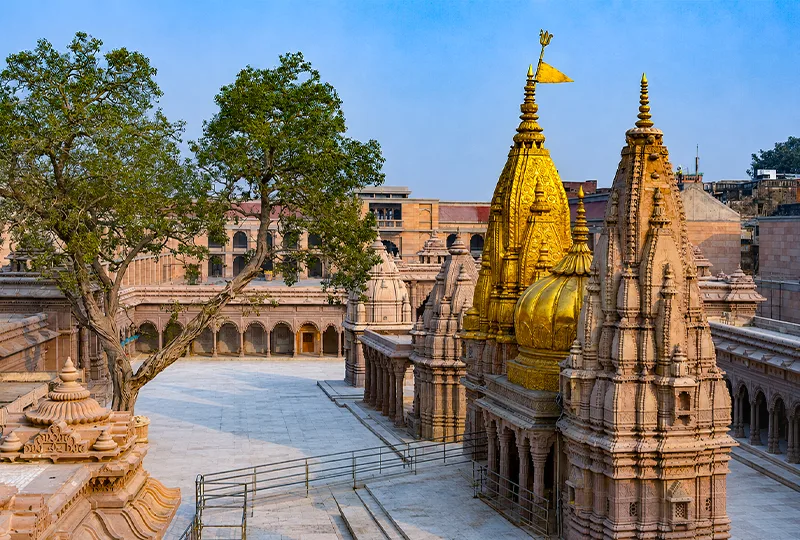
One of the twelve Jyotirlingas of Shiva and among the holiest Hindu temples in India, its golden spire visible from much of the old city — the current structure dates to 1780.
Cremation Ghat
Varanasi's principal cremation ghat, where fires reportedly haven't gone out in centuries — a profound, sobering sight best approached respectfully and ideally with a knowledgeable guide.
Buddhist Site
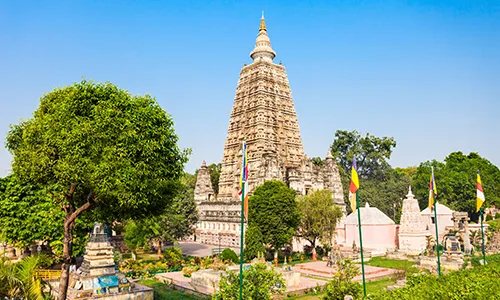
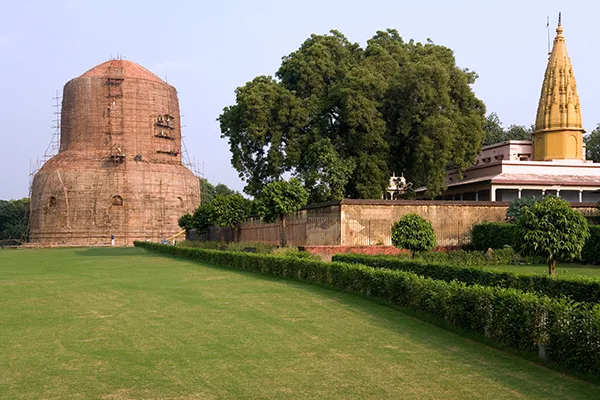
The deer park 10 km from Varanasi where the Buddha delivered his first sermon after enlightenment — the Dhamek Stupa and an excellent archaeological museum mark this pivotal Buddhist pilgrimage site.
Heritage
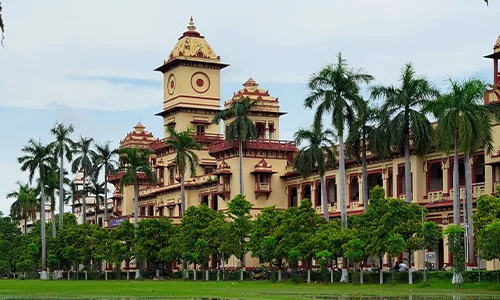
One of Asia's largest residential universities, founded in 1916, with a grand campus including the New Vishwanath Temple and an art museum (Bharat Kala Bhavan) of regional antiquities.
Fort
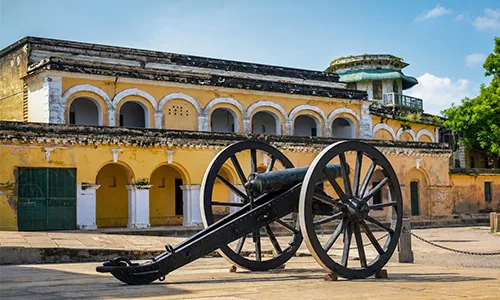
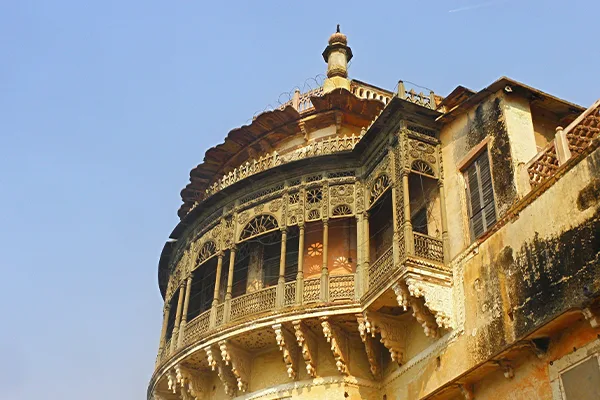
The 17th-century residence of the Maharaja of Varanasi, across the Ganges from the main ghats, with a museum of vintage cars, royal weapons, and astronomical instruments.
Craft
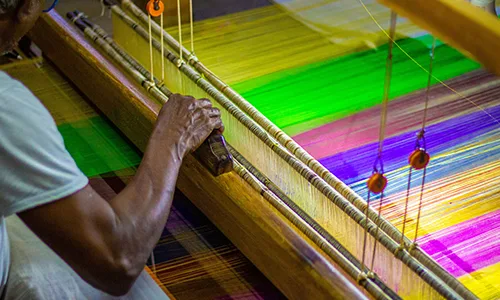
Varanasi (Banaras) silk sarees, woven with gold and silver zari thread, represent a centuries-old craft tradition — small family workshops welcome visitors to watch the weaving process.
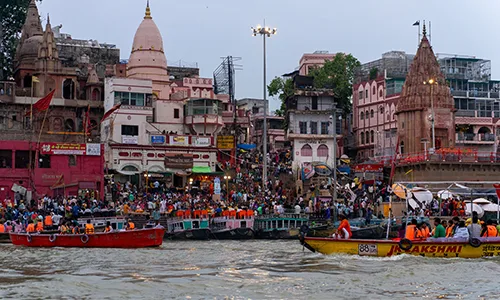
Over 80 ghats line the Ganges' western bank, each with its own character and ritual significance — Dashashwamedh for the evening Aarti, Manikarnika for cremation, and dozens more for bathing and prayer.
A boat ride remains the best way to appreciate the full sweep of ghats and the constant flow of ritual life along them.
The old city's narrow lanes hold Kashi Vishwanath and dozens of smaller shrines, alongside silk weaving workshops and traditional sweet shops.
Getting lost here, deliberately, is one of the better ways to experience Varanasi's lived-in spiritual texture.
A short drive from Varanasi, Sarnath offers an entirely different, more contemplative pilgrimage experience centred on the Buddha's first sermon.
The site's archaeological museum is among the finest in North India for early Buddhist sculpture.
Ramnagar Fort offers a quieter, less-visited royal history counterpoint to the spiritual intensity of the main ghats.
A boat trip across the river to reach it also provides an excellent reverse view of the entire ghat skyline.
Varanasi is well connected by air, rail, and road, and is a natural addition to a Golden Triangle or Khajuraho-based itinerary.
Lal Bahadur Shastri Airport (VNS) has direct flights from Delhi, Mumbai, Khajuraho, and other major Indian cities, plus limited international connections.
Varanasi Junction is a major railhead on the Delhi-Kolkata line, with extensive connections across India, including overnight services from Delhi and Agra.
Varanasi is a longer drive from most Golden Triangle cities — most travellers connect by air or rail for this leg of a North India itinerary.
What to eat, and a few customs worth knowing, before you arrive
A betel-leaf preparation famous nationwide as Varanasi's signature after-meal tradition — sweet versions are approachable for first-time tasters.
A delicate, frothy winter-only dessert made from dew-collected milk foam — a Varanasi seasonal speciality similar to Delhi's Daulat ki Chaat.
A classic Varanasi breakfast — fried bread served with a spiced vegetable curry, found at popular old-city breakfast stalls.
Photography at Manikarnika Ghat is a sensitive matter — always ask permission and consider not photographing at all out of respect for grieving families.
Cover shoulders and knees at temples and along the ghats — respectful given the area's deep religious significance.
Purchase silk sarees from established weavers or recognised shops, and ask to see the handloom process to verify authenticity.
A few practical things worth knowing before you arrive in Varanasi.
Arrange your dawn boat ride the evening before through your hotel or a trusted boatman — prices and routes vary, so confirm both clearly.
The morning boat ride and the evening Ganga Aarti offer completely different experiences — try to fit in both during your stay.
Varanasi can feel intense for first-time visitors — the cremation ghats, crowds, and constant activity reward a patient, respectful mindset.
The old city's narrow gali (lanes) are best explored slowly on foot — a local guide helps navigate what can otherwise feel like a maze.
Varanasi's street food is excellent but choose busy, visibly clean stalls, and consider bottled water over tap or river water entirely.
A single ticket typically covers the Sarnath archaeological site and museum — confirm current options at the entrance.
If your dates allow, the Dev Deepawali festival (November, full moon after Diwali) sees all 80+ ghats illuminated with lamps — extraordinary but very crowded.
The ghats and old city are generally safe but very crowded — keep valuables secure and agree boat/guide prices clearly before starting.