Prayagraj — known as Allahabad for much of the colonial and post-independence period before reverting to its older name in 2018 — owes its profound religious significance to the Triveni Sangam, the confluence of the Ganges, Yamuna, and the mythical, invisible Sarasvati rivers.
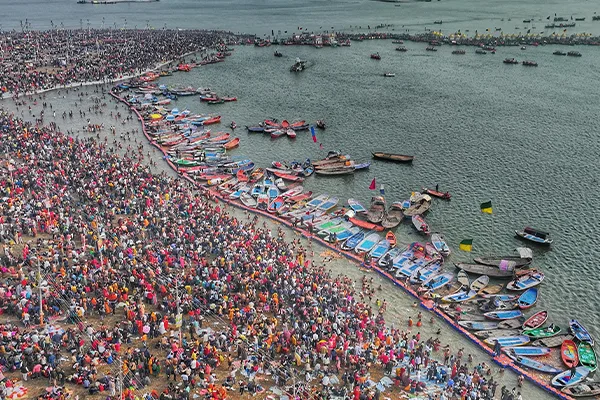
This confluence makes Prayagraj one of the four sites of the Kumbh Mela, the world's largest religious gathering, held here roughly every 12 years (with the full Maha Kumbh occurring every 144 years) and drawing tens of millions of pilgrims for ritual bathing believed to wash away sins across lifetimes.
Beyond the Sangam, the city holds Akbar's imposing 16th-century fort (still partly an active military area, with limited public access), and significant Nehru-Gandhi family heritage — Jawaharlal Nehru's family home, Anand Bhavan, is now a museum documenting India's independence movement.
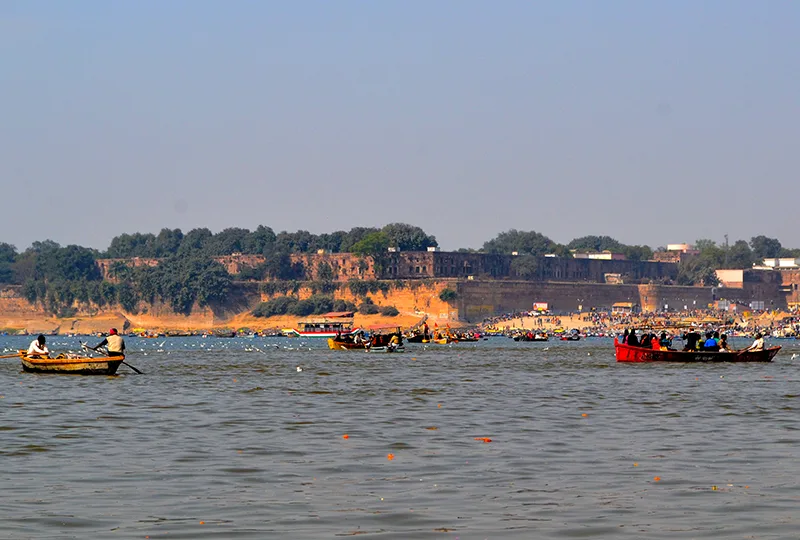
Prayagraj's climate follows the broader Gangetic plain pattern, with the Sangam itself most photogenic and accessible by boat in the cooler months.
Cool and comfortable (10–25°C), with calmer river conditions ideal for boat trips to the Sangam — also the season for the annual smaller Magh Mela gathering.
Post-monsoon, with the rivers running fuller and dramatic, though water levels can affect boat access to the exact confluence point.
Extreme heat regularly exceeding 42–45°C, with high humidity making extended outdoor sightseeing uncomfortable.
Six landmarks — the sacred confluence, forts, and heritage sites — that define a visit to Prayagraj.
Sacred Confluence
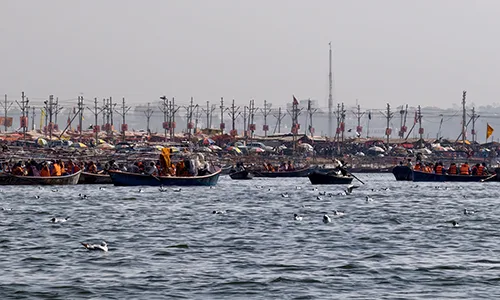
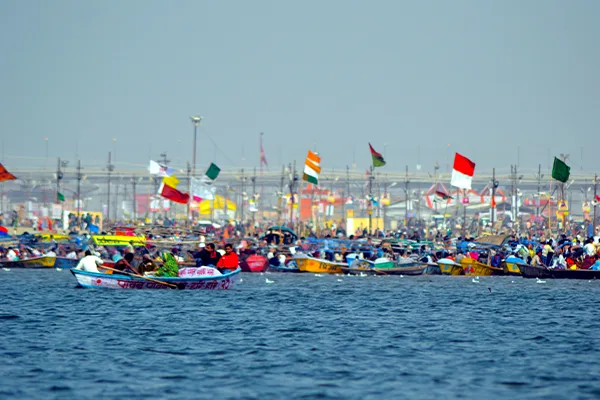
The confluence of the Ganges, Yamuna, and the mythical Sarasvati rivers, reached by a short boat ride — Hinduism's most significant river confluence and the site of the Kumbh Mela.
Fort
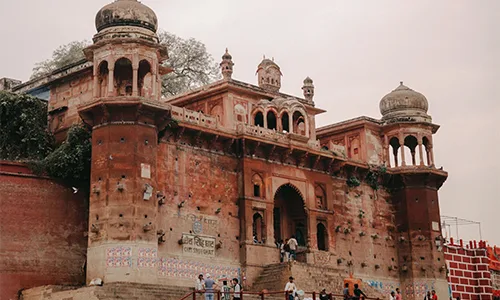
A massive 16th-century fort built by Emperor Akbar at the Sangam's edge, still partly used by the Indian military — public access is limited to a small section including the Akshaya Vat tree and Saraswati Koop well.
Museum
The ancestral home of the Nehru-Gandhi family, now a museum documenting Jawaharlal Nehru's life and India's independence movement, with personal artefacts and a planetarium.
Garden & Tombs
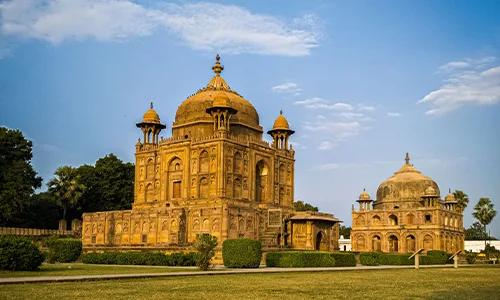
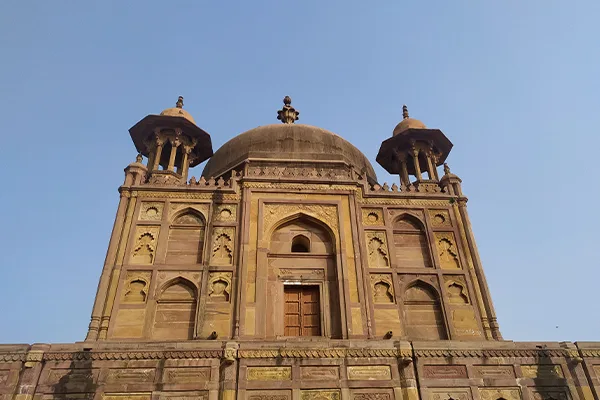
A walled Mughal garden containing the tombs of Prince Khusrau (Emperor Jahangir's rebellious son) and other Mughal-era family members, peaceful and relatively undervisited.
Heritage
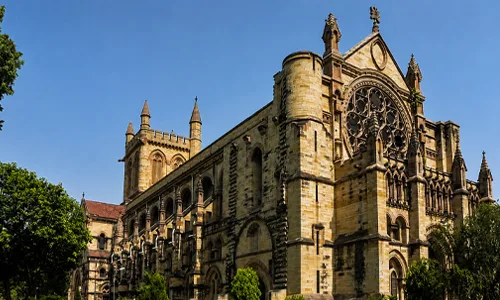
A striking Gothic Revival cathedral completed in 1887, designed by Sir William Emerson (later architect of the Victoria Memorial in Kolkata) — one of Asia's largest cathedrals.
Park
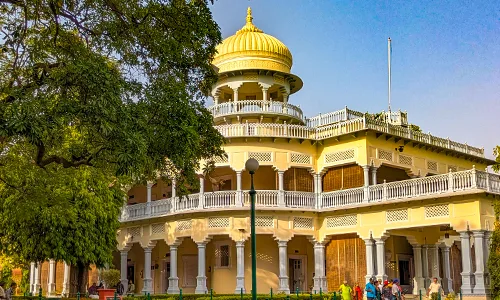
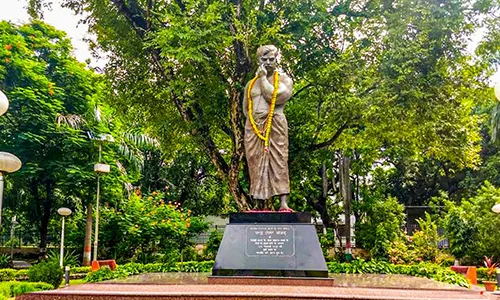
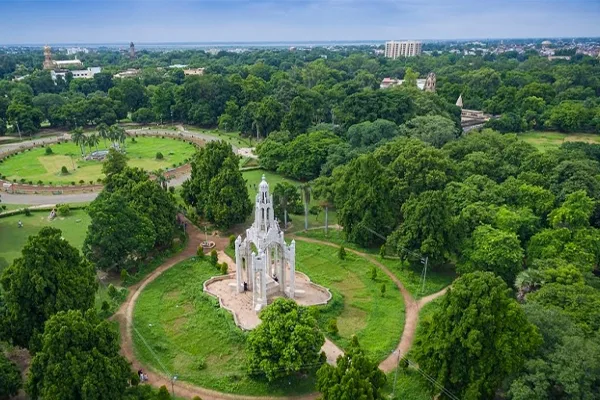
A large colonial-era park (formerly Alfred Park) where freedom fighter Chandrashekhar Azad died in a 1931 standoff with British police — now a popular green space with a small museum.
A boat ride to the exact confluence point remains the highlight of any Prayagraj visit — pilgrims perform ritual bathing here year-round, not only during the Kumbh Mela.
The adjoining Akbar's Fort, though only partly accessible, frames the confluence with genuine Mughal historical weight.
Prayagraj played an outsized role in India's independence movement, reflected in Anand Bhavan and several colonial-era landmarks across the city.
All Saints Cathedral and the wider Civil Lines area showcase the city's substantial British administrative-era architecture.
Khusro Bagh's tombs and gardens offer a quieter, less-visited counterpoint to the more famous Sangam and fort sites.
These reflect Prayagraj's significant role under the Mughal Empire, predating its later colonial and independence-era prominence.
Prayagraj sits midway between Varanasi and Lucknow, making it easy to combine with either as part of a wider Uttar Pradesh itinerary.
Prayagraj Airport (IXD) has limited but growing connectivity, primarily to Delhi and a few other major Indian cities.
Prayagraj Junction (and several other city stations) sit on major rail corridors connecting Delhi, Varanasi, and Lucknow.
Prayagraj is well connected by road to both Varanasi and Lucknow, making it a natural stop on a wider Uttar Pradesh circuit.
What to eat, and a few customs worth knowing, before you arrive
The city has its own distinct chaat tradition, found at long-established stalls in the Civil Lines and old city areas.
Prayagraj's food culture shows some overlap with nearby Lucknow's Awadhi tradition, particularly in kebabs and biryanis.
Small stalls near the Sangam serve chai with views of the confluence — a simple, memorable pause during a Sangam visit.
Observe pilgrims performing ritual bathing at the Sangam respectfully, and ask before photographing individuals closely.
Cover shoulders and knees at religious sites and the Sangam itself, out of general respect for the area's significance.
Boat fares to the Sangam are usually negotiable — settle on a clear price with the boatman before departure.
A few practical things worth knowing before you arrive in Prayagraj.
The full Kumbh Mela occurs roughly every 12 years (Maha Kumbh every 144); the smaller annual Magh Mela still draws large January-February crowds — plan accordingly either way.
Early morning or late afternoon offer the most pleasant boat conditions and light for photography at the confluence.
Allahabad Fort's military status means public access is limited and rules can change — confirm current visiting arrangements before planning around it.
Prayagraj's central position makes it simple to add as a stop on a route connecting these two larger Uttar Pradesh cities.
A guide adds useful context to the Sangam's religious significance and the city's substantial independence-movement history.
Summer heat is intense — schedule outdoor sightseeing, especially the Sangam boat ride, for early morning.
If visiting during the Magh or Kumbh Mela, crowds are extremely dense — keep valuables secure and stay with your group.