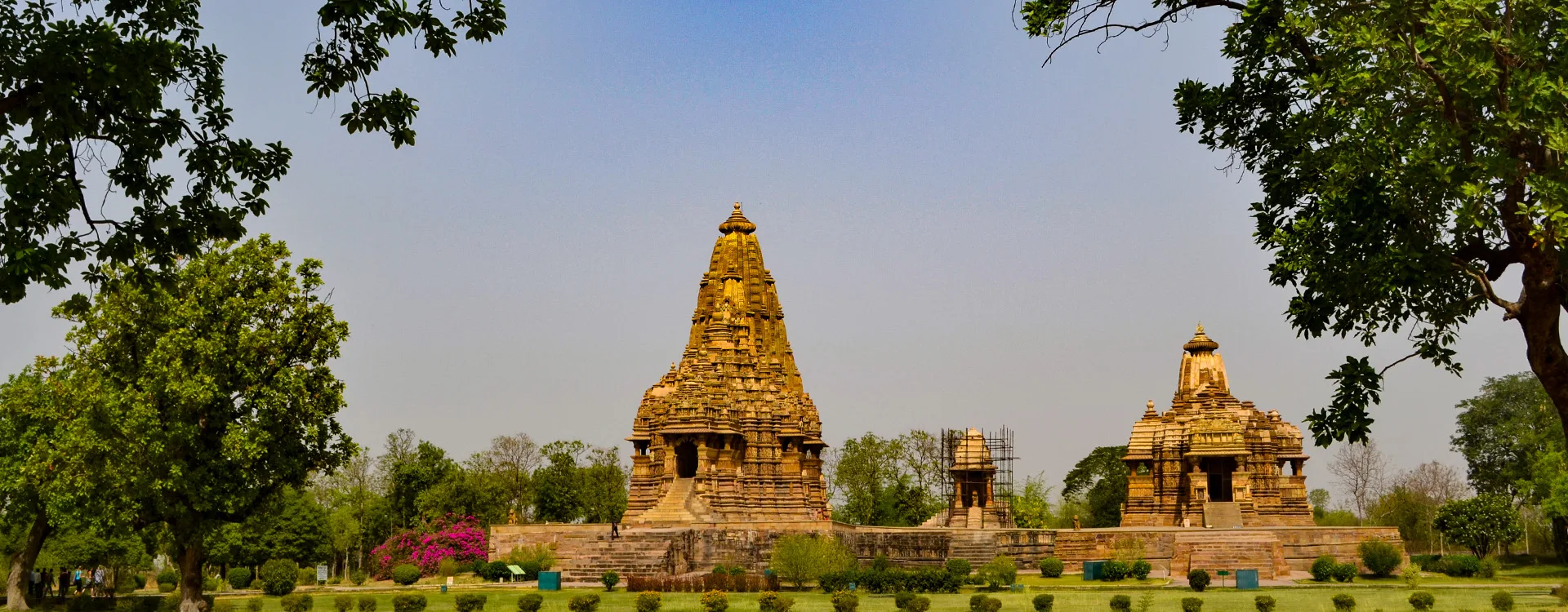
Orchha was founded in 1501 by Rudra Pratap Singh, the first Bundela king, on the banks of the Betwa River — and for over two centuries served as the capital of a kingdom whose rulers left behind one of central India's most architecturally rich but least-visited heritage towns.
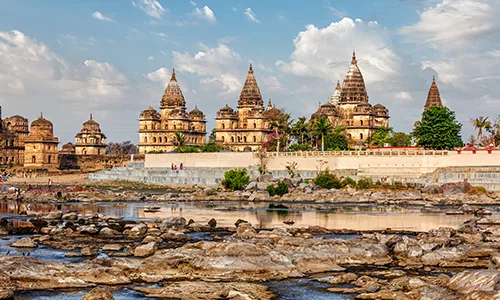
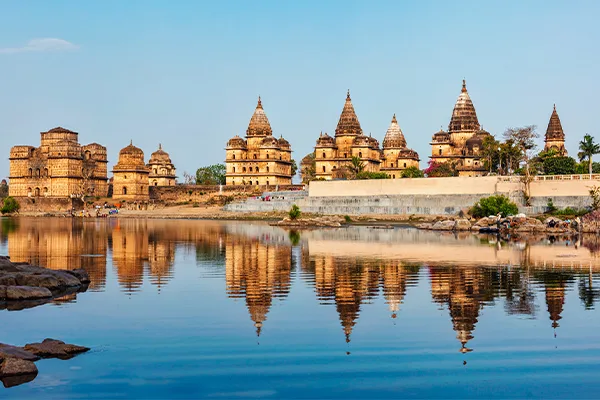
The town's riverside Chhatris (cenotaphs) — fourteen monumental memorial towers commemorating Bundela rulers — line the Betwa's banks in a row, their reflection in the water at sunrise or sunset among the most striking, underrated images in Indian heritage travel.
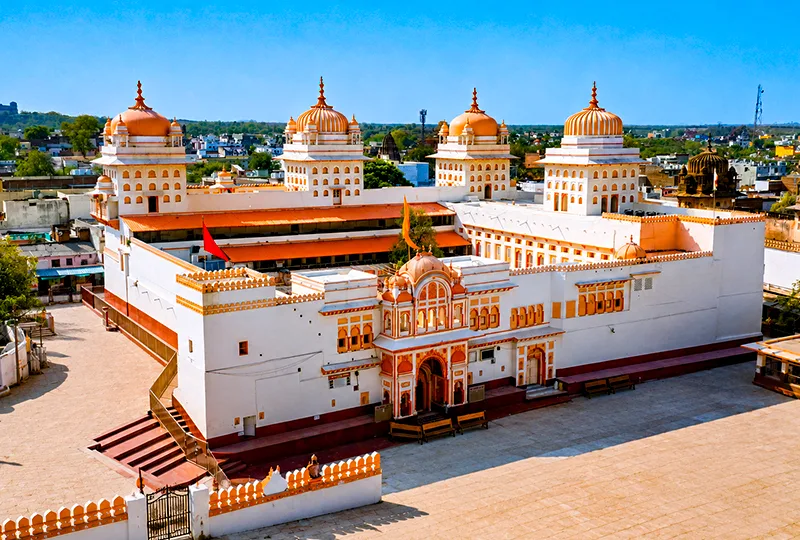
Unlike many comparably significant Indian heritage sites, Orchha remains genuinely uncrowded — Jahangir Mahal and Raja Mahal palace complexes, the soaring Ram Raja Temple (the only temple in India where Rama is worshipped as a reigning king rather than a deity), and the riverside setting combine to reward unhurried, peaceful exploration.
Orchha's riverside setting in central India gives it a climate broadly similar to the wider region, with comfortable winters and hot summers.
Cool and pleasant (10–26°C), with the Betwa River at attractive levels for the riverside cenotaph views.
Post-monsoon, with the surrounding countryside green and the river fuller than in peak dry season.
Very hot, regularly exceeding 42°C — exploring the largely unshaded palace complexes becomes genuinely difficult.
Six landmarks — palaces, temples, and riverside cenotaphs — that define a visit to this quietly extraordinary town.
Fort & Palace
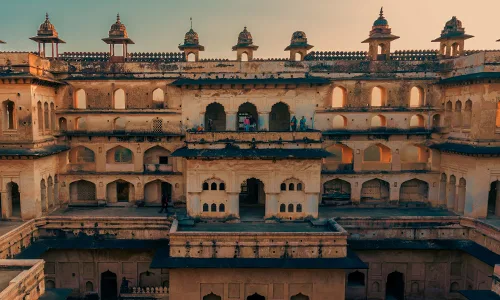
A complex of palaces including Raja Mahal and Rai Praveen Mahal, surrounded by a fortified wall on an island formed by the Betwa River — the seat of Bundela power for two centuries.
Palace
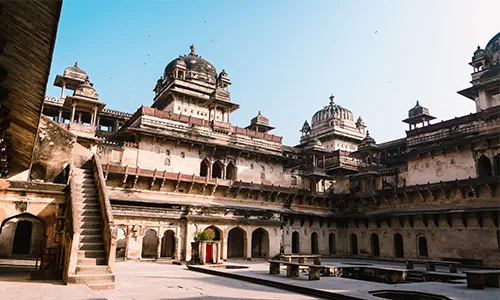
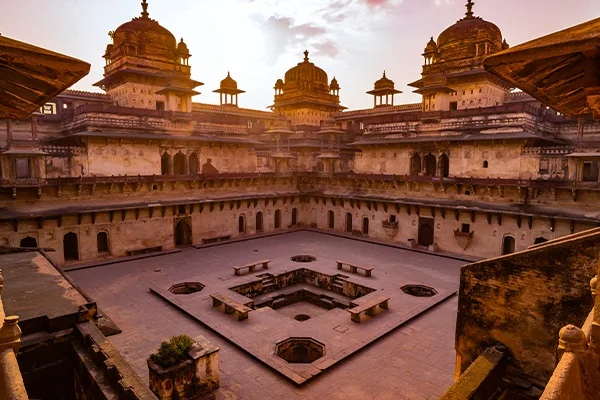
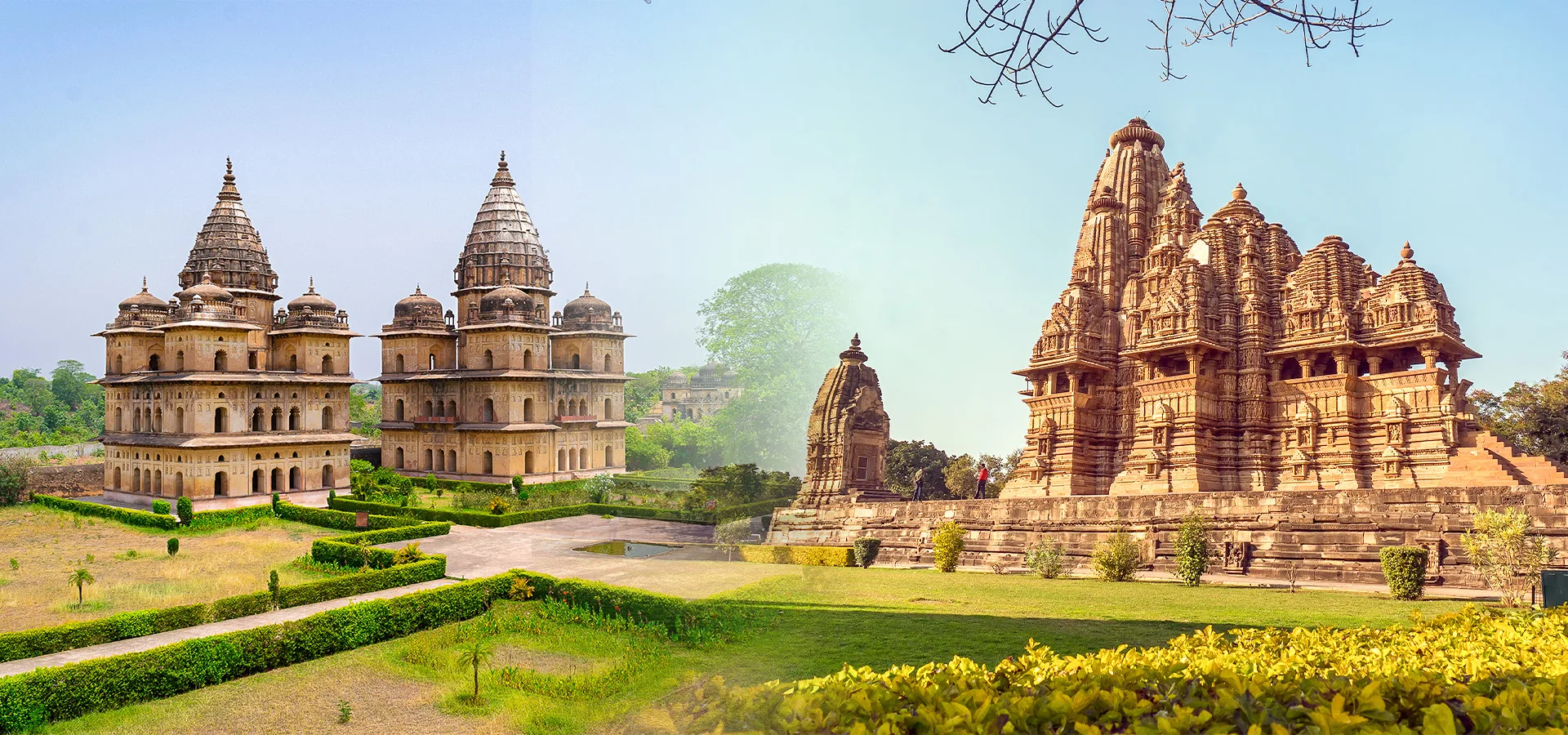
An elegant palace built by Raja Bir Singh Deo to honour a visit from Emperor Jahangir in 1606 — a fusion of Rajput and Mughal architectural styles around symmetrical courtyards.
Memorial
Fourteen monumental memorial towers commemorating Bundela rulers, lined up along the Betwa River's bank — their reflections in the water at sunrise or sunset are among Orchha's most photographed scenes.
Temple
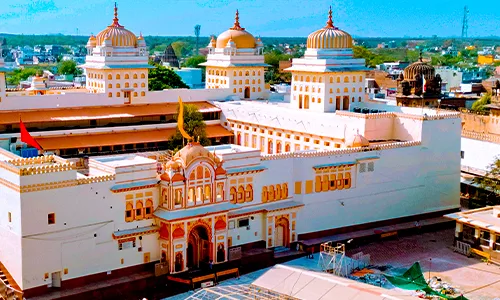
The only temple in India where Lord Rama is worshipped as a reigning king rather than purely as a deity — according to legend, an idol temporarily placed here refused to be moved.
Temple
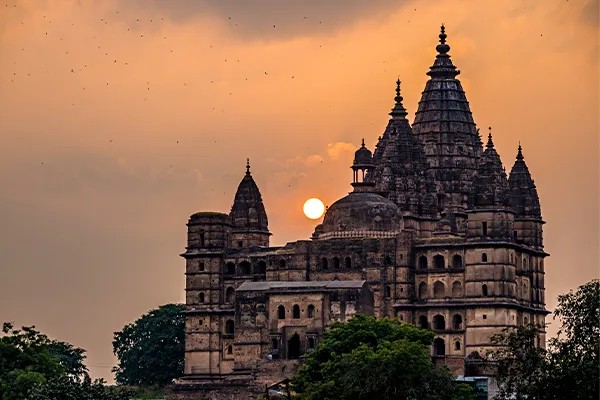
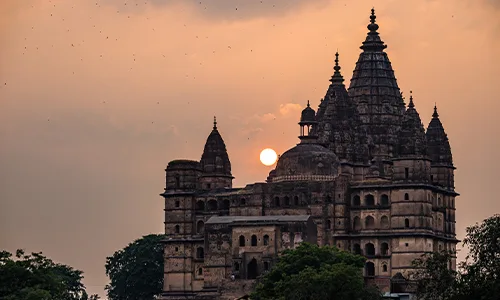
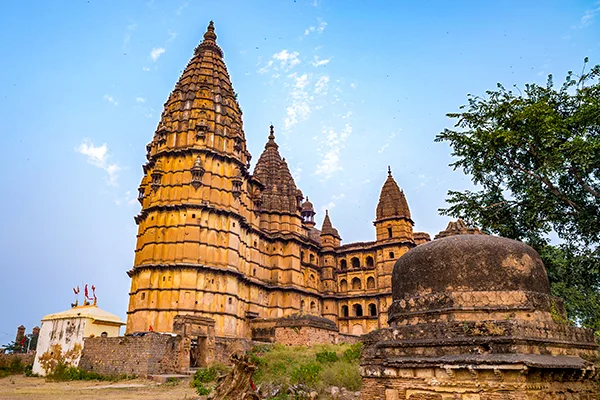
A towering 16th-century temple built to house an idol of Rama before it was unexpectedly retained by the Ram Raja Temple — its soaring spire dominates Orchha's skyline.
Nature
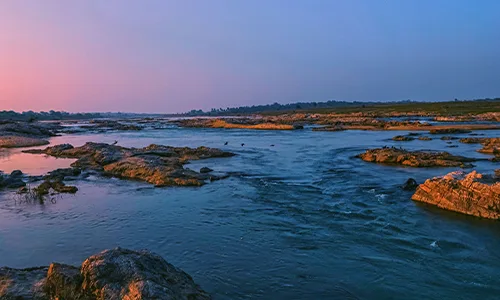
A peaceful walk or rock-pool swim along the Betwa River below the cenotaphs, with the chance of spotting kingfishers and other riverside birdlife.
Jahangir Mahal and Raja Mahal together represent two centuries of Bundela architectural ambition, both worth unhurried exploration of their courtyards and viewpoints.
Climbing to the upper levels of either palace offers sweeping views over the town and surrounding countryside.
The Ram Raja Temple's unique status — Rama worshipped as king rather than deity — makes it a genuinely unusual pilgrimage site within Indian Hindu tradition.
Chaturbhuj Temple's soaring spire, originally built for the same idol, stands as an evocative architectural footnote to that history.
The riverside Chhatris are Orchha's signature image — best experienced slowly, with time to watch the light change across the towers and their reflections.
The river itself offers a peaceful natural counterpoint to the town's dense architectural heritage.
Orchha sits a short drive from Jhansi, making it an easy addition to a Khajuraho, Gwalior, or wider central India itinerary.
The nearest airports are Gwalior and Khajuraho, both roughly 2.5–3 hours away by road; most travellers combine Orchha with one of these stops.
Jhansi Junction, about 16 km from Orchha, is a major railhead on the Delhi-Chennai line with excellent connections.
Orchha is most commonly visited as a day trip or overnight stop between Khajuraho and Gwalior/Agra.
What to eat, and a few customs worth knowing, before you arrive
A regional style featuring lentil and gram-flour dishes distinct from both North Indian and Madhya Pradesh's more familiar fare.
A regional cousin of Rajasthan's dal baati — steamed-then-fried wheat dumplings served with spiced lentils.
Small stalls along the Betwa serve chai with views of the cenotaphs — a simple but memorable way to pause during your visit.
Cover shoulders and knees at the Ram Raja and Chaturbhuj Temples — respectful, and sometimes required.
The palace complexes involve considerable walking on uneven stone — sturdy footwear helps significantly.
Both sunrise and sunset transform the riverside cenotaphs — plan to be there for at least one of these windows.
A few practical things worth knowing before you arrive in Orchha.
If your schedule allows, see the Chhatris at both sunrise and sunset — the light transforms them completely between the two.
A combined ticket typically covers Jahangir Mahal, Raja Mahal, and several other monuments — ask at the first site you visit.
Orchha sees far fewer visitors than Khajuraho or Agra — take advantage of the relative peace for unhurried photography and exploration.
Orchha works well either as a day trip from Jhansi/Gwalior or as a peaceful overnight stop on a longer central India route.
The Betwa riverside is good for birdwatching, particularly kingfishers and waterbirds in the cooler months.
The palace complexes offer little shade — schedule the most demanding walking for early morning or late afternoon.
Orchha is small, quiet, and generally very safe; as everywhere, agree any guide pricing clearly before a tour begins.