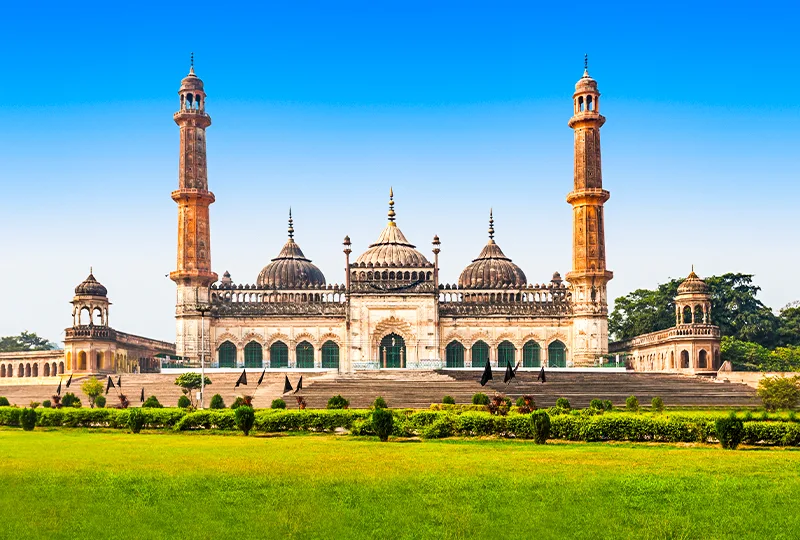
Lucknow rose to prominence as the capital of the Nawabs of Awadh in the 18th century, who, freed from direct Mughal control, poured their wealth into a building boom of palaces, gateways, and mosques that gave the city its distinctive Indo-Islamic architectural character — and its enduring reputation for refined manners and gracious hospitality, embodied in the local phrase 'Pehle aap' ('after you').
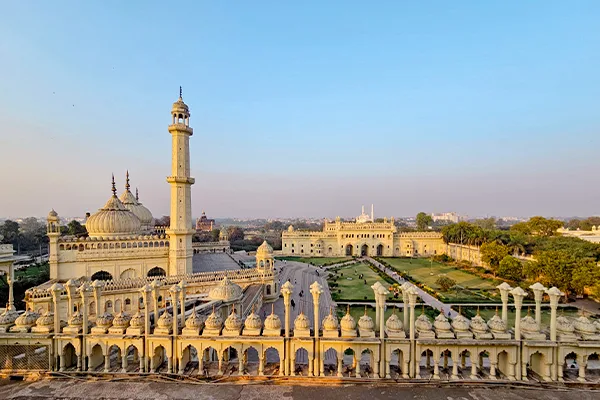
The Bara Imambara, completed in 1784, remains the city's architectural centrepiece — its Asia Ki Sabse Badi Baoli (one of the largest vaulted halls without external support beams) and the famously disorienting Bhul Bhulaiya labyrinth above it draw visitors as much for the experience as the history.
Lucknow is equally celebrated for its Awadhi cuisine — slow-cooked kebabs and biryanis developed in Nawabi kitchens — and for chikankari, a delicate white-thread embroidery tradition that remains a thriving craft industry and a popular reason for visitors to shop in the city's old bazaars.
Lucknow's Gangetic plain climate brings hot summers and pleasant winters, broadly similar to Delhi and Agra.
Cool and comfortable (10–25°C), ideal for exploring the Imambara complexes and old city bazaars at a relaxed pace.
Post-monsoon, with temperatures beginning to ease and fewer visitors than peak winter season.
Extreme heat regularly exceeding 42–44°C — outdoor sightseeing becomes genuinely difficult outside early morning.
Seven landmarks — Nawabi palaces, gateways, and bazaars — that define a visit to this city of refined heritage.
Heritage Monument
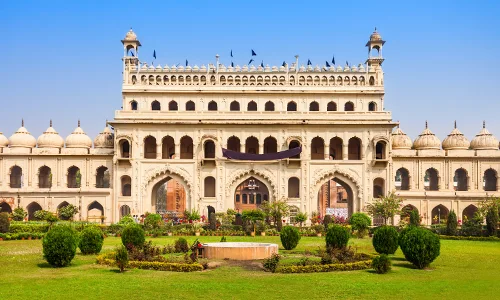
Completed in 1784, this congregation hall features one of the world's largest vaulted galleries without external support beams, plus the famously labyrinthine Bhul Bhulaiya passages above.
Heritage Monument
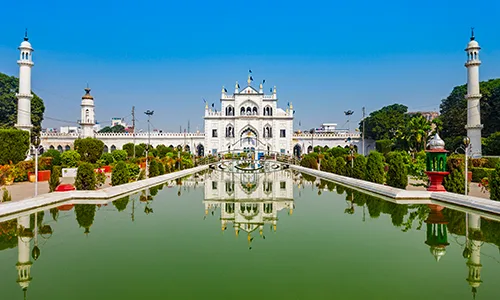
A smaller but exquisitely decorated 19th-century mausoleum and congregation hall, its interior adorned with chandeliers, mirrors, and gilded calligraphy.
Gateway
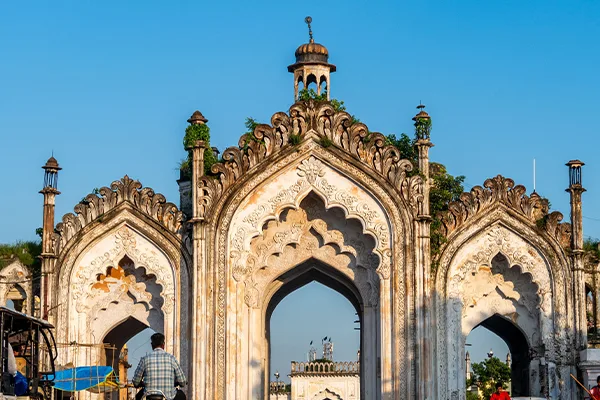
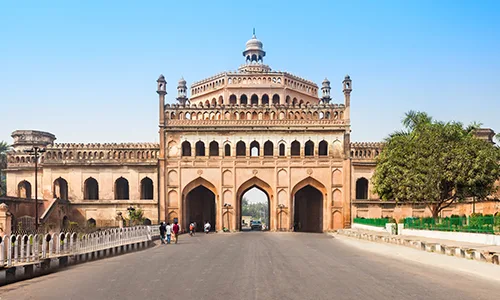
A 60-foot gateway built in 1784, modelled on a gate in Istanbul and considered one of the finest examples of Awadhi architecture — now an iconic symbol of Lucknow itself.
Heritage Site
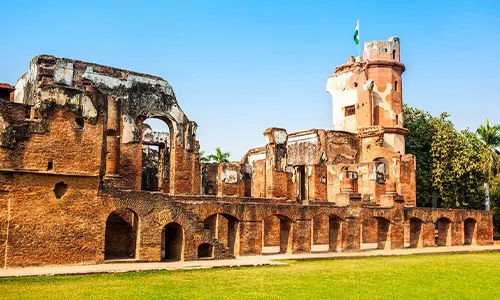
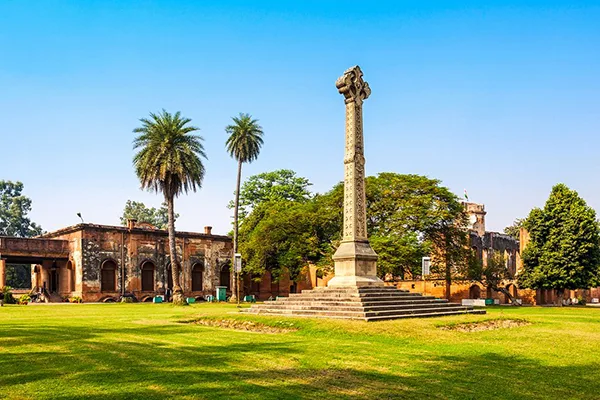
The ruins of the British Residency, site of a prolonged and dramatic siege during the 1857 uprising — bullet-scarred walls remain deliberately unrestored as a memorial.
Craft & Shopping
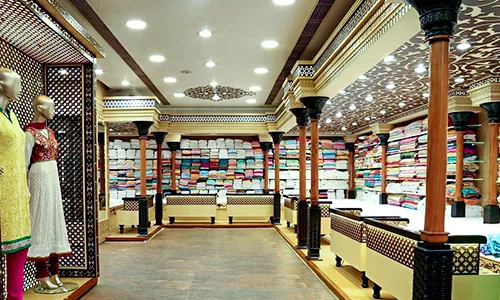
Lucknow's centuries-old white-thread embroidery tradition, still hand-stitched by artisans across the city — Chowk and Aminabad markets are the best places to browse and buy.
Park
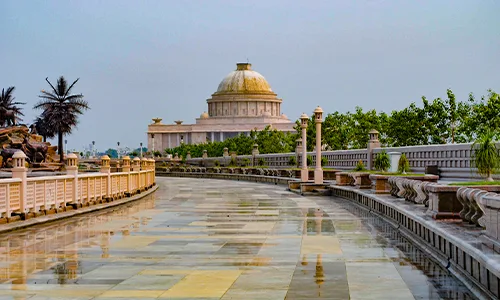
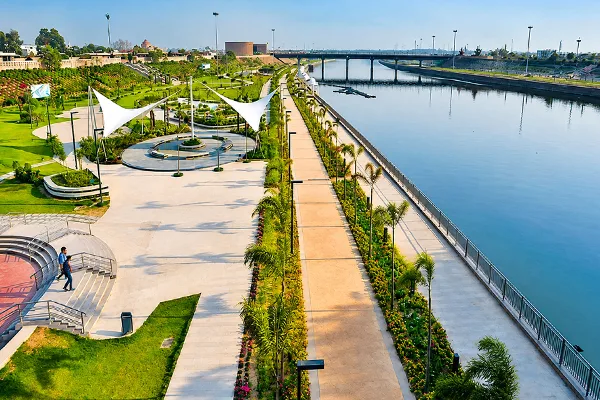
A vast, modern memorial park with monumental architecture and elephant statues — a striking contemporary counterpoint to Lucknow's Nawabi-era heritage.
Market & Promenade
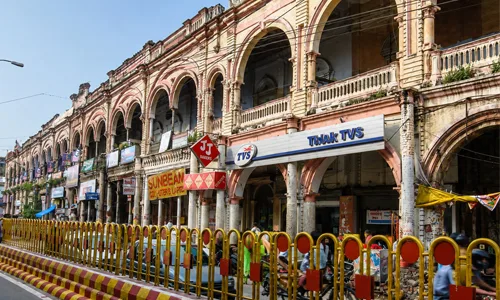
Lucknow's most fashionable shopping street since the British era, lined with colonial-era buildings, cafés, and shops — a pleasant evening stroll and people-watching spot.
The Bara and Chota Imambaras, Rumi Darwaza, and the surrounding Chowk bazaar together represent the densest concentration of Nawabi-era heritage in the city.
This area rewards unhurried exploration on foot, ideally with a knowledgeable guide for the Imambara complexes' history.
The Residency ruins offer a sobering counterpoint to Lucknow's more celebratory Nawabi architecture, preserving the scars of the 1857 uprising deliberately.
Hazratganj's colonial-era shopping street remains a fashionable city centre destination today.
Ambedkar Memorial Park and the wider Gomti Nagar area showcase Lucknow's substantial recent development, distinct from its older heritage core.
This area offers a useful contrast for travellers wanting to see the city's contemporary growth alongside its history.
Lucknow is a major Uttar Pradesh hub, well connected by air, rail, and road, and a natural addition to a Varanasi, Ayodhya, or Khajuraho-based itinerary.
Chaudhary Charan Singh Airport (LKO) has extensive domestic connectivity and limited international flights to the Middle East.
Lucknow has multiple major stations (Charbagh, Lucknow Junction) with extensive connections across India, including fast services to Delhi.
Lucknow is well connected by expressway to Delhi and Agra, and by highway to Varanasi and Ayodhya, making it a flexible hub for Uttar Pradesh travel.
What to eat, and a few customs worth knowing, before you arrive
Lucknow's most famous kebab — a melt-in-the-mouth minced meat preparation said to use a secret blend of over a hundred spices.
A fragrant, slow-cooked biryani tradition distinct from Hyderabadi or Kolkata styles — a defining dish of the city's Nawabi culinary legacy.
A winter-only, cloud-light dessert made from whipped milk foam, similar to Delhi's Daulat ki Chaat but with its own Lucknow character.
Purchase embroidered garments from established shops in Chowk or Aminabad, checking stitch quality closely for authenticity.
Lucknow's famous courtesy culture (literally 'after you') is genuinely still practised — gracious, unhurried manners are appreciated everywhere.
Cover shoulders and knees when visiting the Bara and Chota Imambaras — respectful, and sometimes required.
A few practical things worth knowing before you arrive in Lucknow.
A knowledgeable guide makes the Bhul Bhulaiya labyrinth and the Imambara complexes' history far more rewarding to explore.
The original Tunday Kababi outlet gets very busy at peak meal times — arrive early or expect to queue.
Quality and pricing vary significantly — visit a few established shops before committing to a purchase.
Lucknow's central position and good connectivity make it a practical base for exploring Ayodhya, Varanasi, and Kanpur on a wider trip.
Summer heat is intense — schedule outdoor sightseeing, especially around the Imambaras, for early morning or late afternoon.
The Imambaras hold particular significance during Muharram, when major processions and rituals take place — a culturally rich but very crowded time to visit.
Lucknow is generally safe and famously courteous to visitors; as everywhere, agree any guide or taxi pricing clearly in advance.