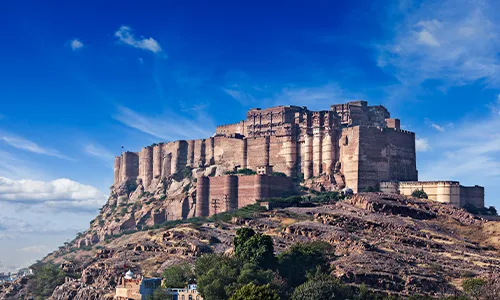
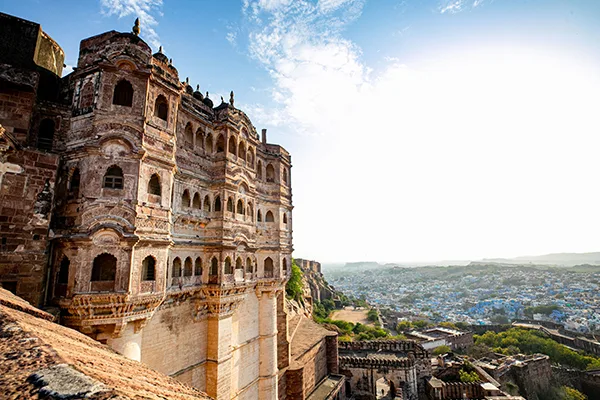
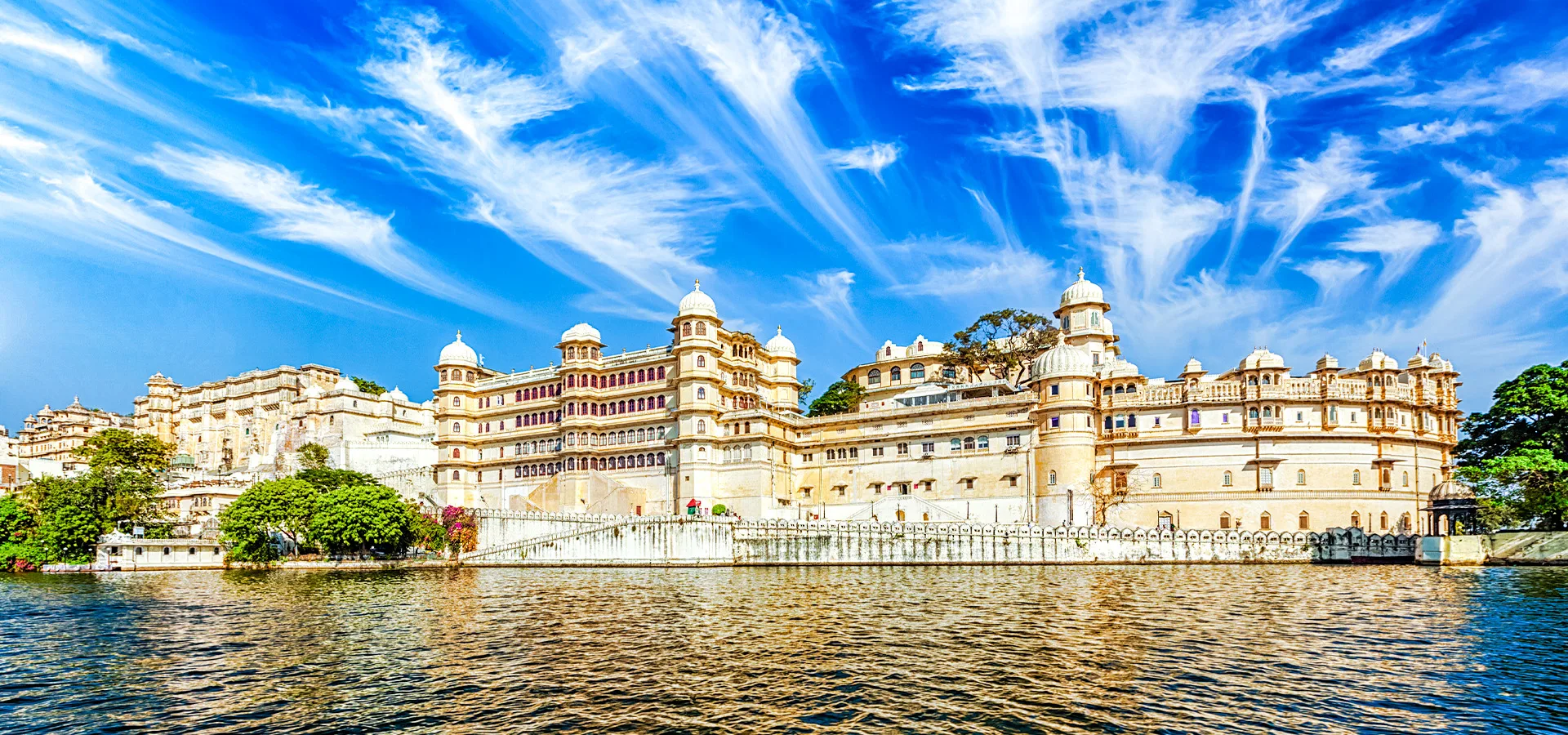
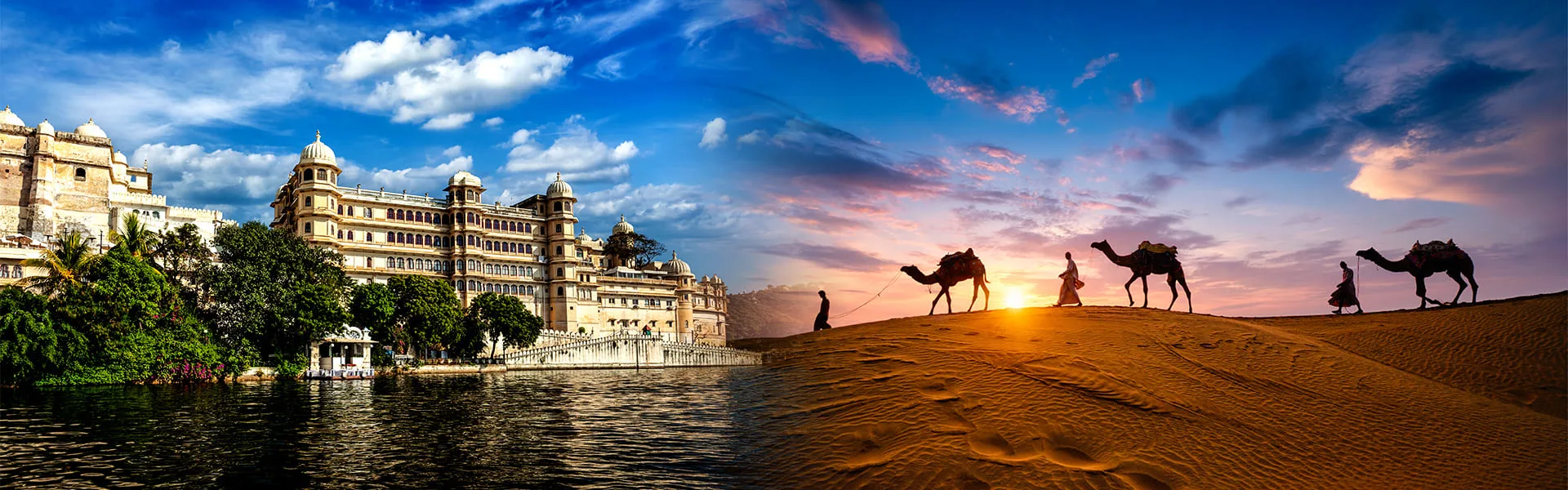
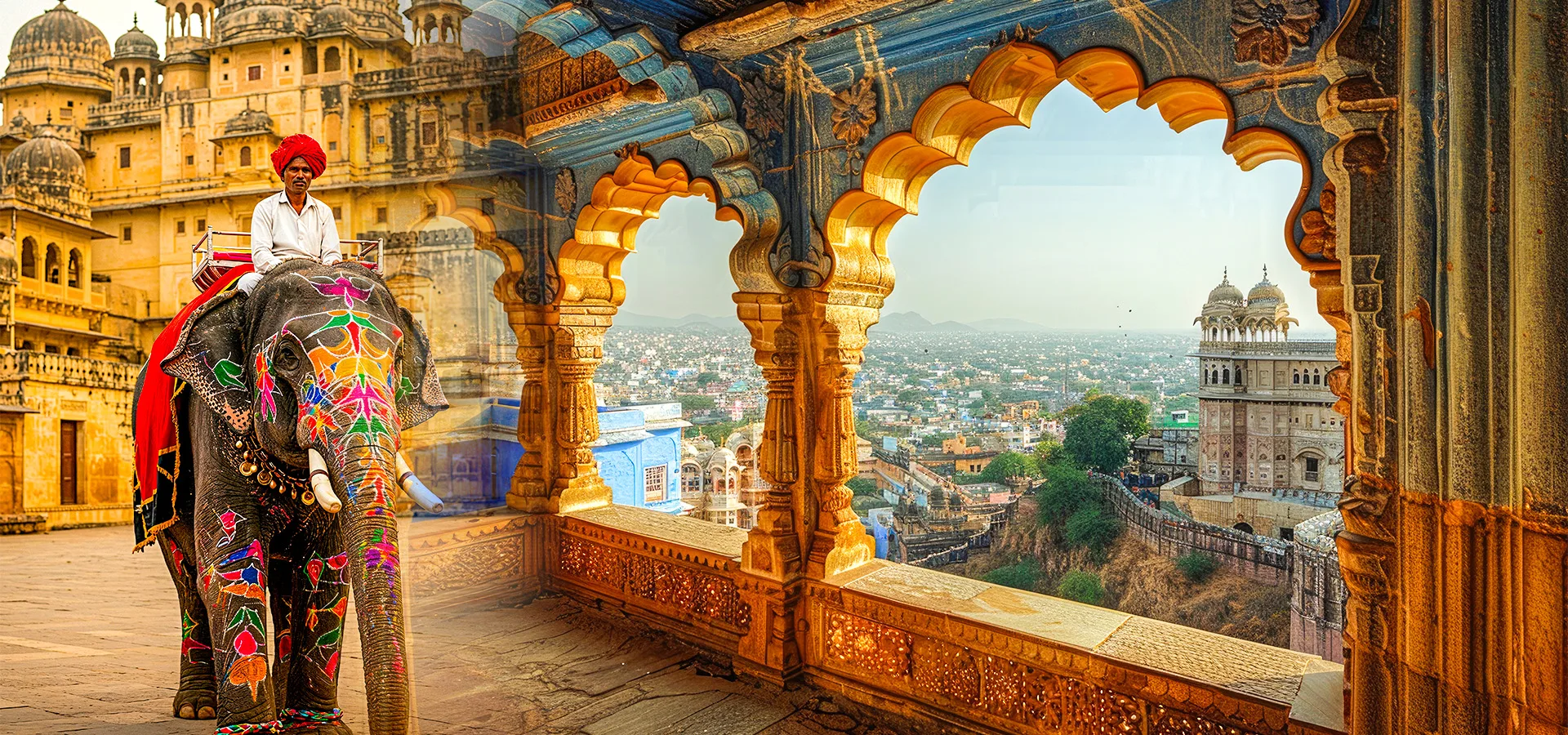
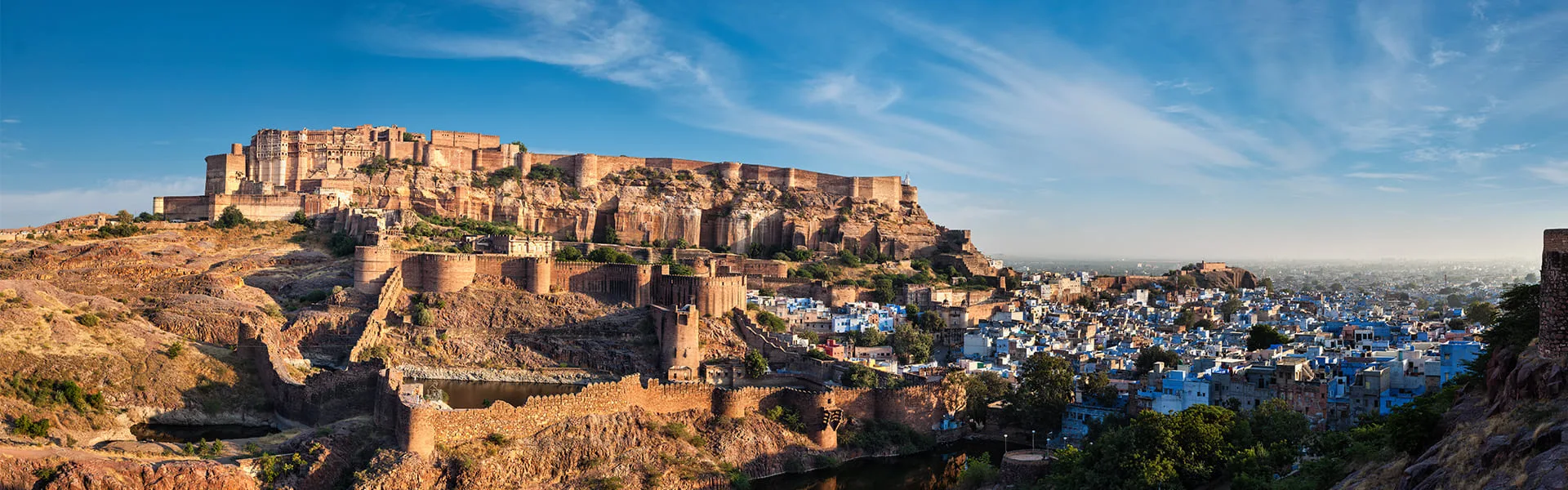
Jodhpur was founded in 1459 by Rao Jodha, chief of the Rathore clan, who built his new capital around a hilltop strategic enough to deter invaders — the result, Mehrangarh Fort, still dominates the skyline 560 years later and is widely considered the most imposing fort in India.
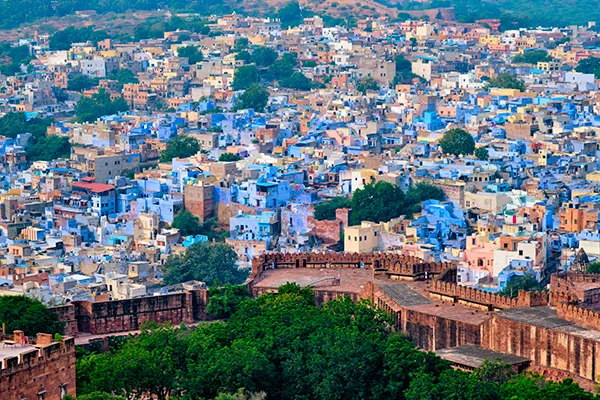
Beneath it spreads the old city's famous blue — originally a Brahmin caste colour believed to repel heat and insects, later adopted more broadly until entire neighbourhoods turned indigo. Seen from Mehrangarh's ramparts at sunrise, the effect is genuinely startling.
Jodhpur also gave the world its name for a riding trouser (the jodhpur), and remains a major centre for handicrafts, antique furniture, and leatherwork, alongside its role as the natural gateway to the Thar Desert and Jaisalmer beyond.
Jodhpur sits at the edge of the Thar Desert, making its climate one of the most extreme in Rajasthan — plan around the heat carefully.
Cool, dry, and comfortable (12–25°C) — the only realistic season for extended walking around Mehrangarh and the old city.
Post-monsoon greenery on the surrounding hills, warm but increasingly bearable temperatures as the month progresses.
Among the hottest cities in India in peak summer, regularly exceeding 45°C — sightseeing becomes genuinely hazardous outside early morning.
Eight landmarks — forts, palaces, and bazaars — that define a visit to the Blue City.
Fort
Rising 125m above the city on a sheer rock face, Mehrangarh is widely regarded as India's most dramatic fort — its museum holds royal palanquins, armour, and a spectacular collection of miniature paintings.
Cenotaph
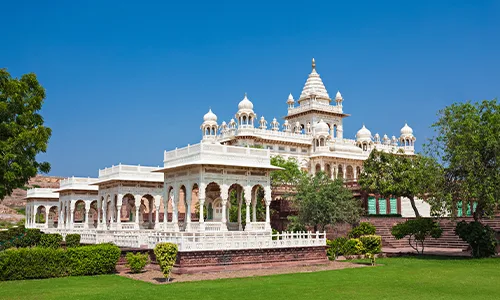
A white marble memorial built in 1899 for Maharaja Jaswant Singh II, its translucent marble walls glowing faintly when sunlight strikes them — Jodhpur's own 'Taj Mahal'.
Palace
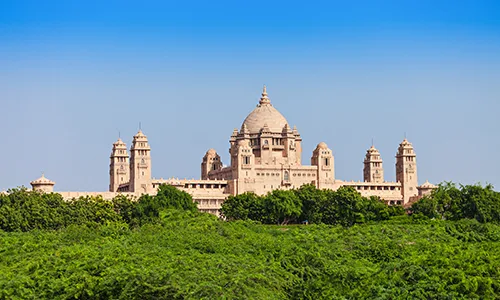
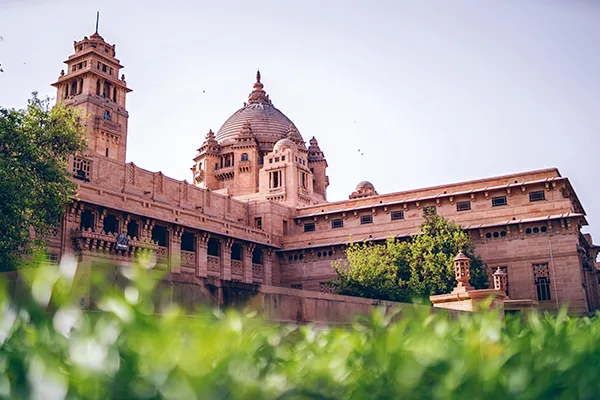
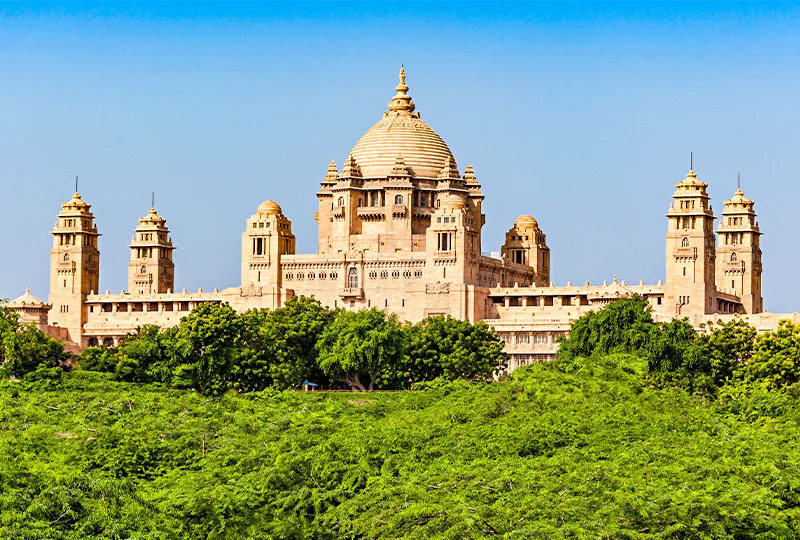
One of the world's largest private residences, built in the 1920s-40s and still home to the Jodhpur royal family, with a museum wing of vintage cars and royal memorabilia.
Bazaar
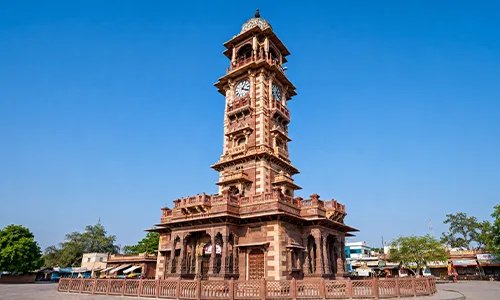
The old city's bustling commercial heart, centred on a 1880s clock tower — spice stalls, textiles, and silver jewellery in a genuinely chaotic, photogenic tangle of lanes.
Stepwell
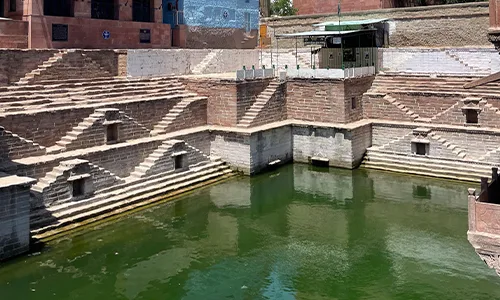
An 18th-century stepwell restored to its original glory, its carved sandstone tiers descending into cool water — now surrounded by cafés popular with both locals and visitors.
Garden
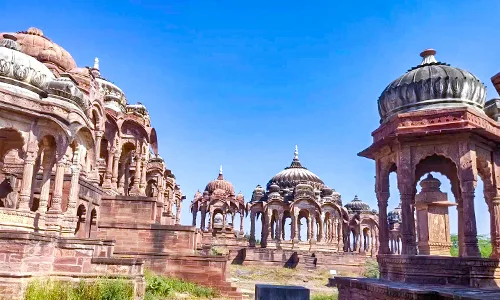
The former seat of Marwar rulers before Jodhpur's founding, now a garden of cenotaphs, rock-cut temples, and the unusual Hall of Heroes carved from a single rock face.
Excursion
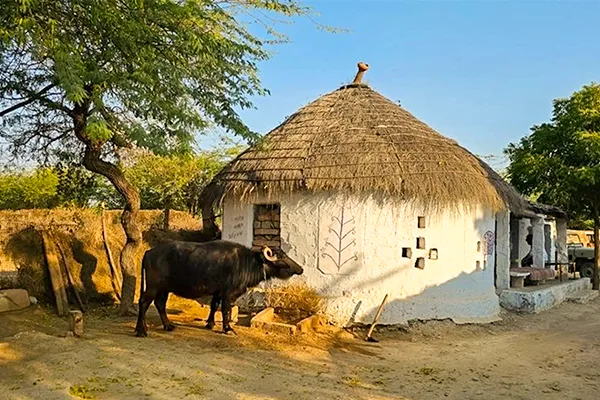
A half-day excursion into villages of the Bishnoi community, renowned for centuries of strict environmental conservation and wildlife protection — meet weavers, potters, and opium-ceremony hosts.
Nature
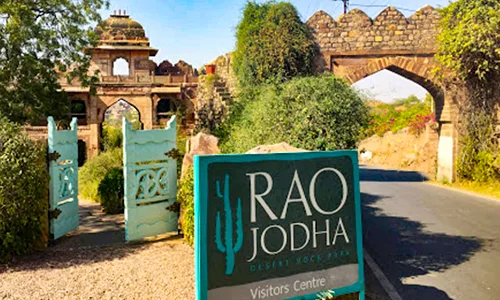
A restored rocky wasteland below Mehrangarh, now a native desert ecology park with walking trails through reclaimed scrubland — a quiet, green-minded counterpoint to the fort above.
The fort dominates everything below it — the blue-washed old city wraps around the base of the rock in a maze of lanes, temples, and havelis.
This is the area to simply get lost in for an afternoon, camera ready for the next blue alleyway.
A different, more modern Jodhpur — the art deco grandeur of Umaid Bhawan Palace anchors the newer southern part of the city.
Wide streets and palace gardens make this area a calmer counterpoint to the old city's energy.
A short drive into the desert countryside introduces the Bishnoi community, whose 500-year-old environmental code protects local wildlife and trees.
Visits typically combine village life, weaving demonstrations, and wildlife spotting (blackbuck and chinkara gazelle are common).
Mandore Gardens, the old Marwar capital, sits a short drive north of Jodhpur and pairs well with a visit to the Rao Jodha Desert Rock Park.
Both offer a green, quieter side of Jodhpur away from the fort and bazaars.
Jodhpur is the natural gateway to western Rajasthan and the Thar Desert, well connected from Delhi, Jaipur, and Mumbai.
Jodhpur Airport (JDH) is 5 km from the city centre, with direct flights from Delhi, Mumbai, and Jaipur.
Jodhpur Junction is a major railhead with direct trains from Delhi, Jaipur, Udaipur, and Jaisalmer, including the heritage Palace on Wheels.
Well-maintained highways connect Jodhpur to Jaipur, Udaipur, and Jaisalmer, making it a natural stop on any western Rajasthan circuit.
What to eat, and a few customs worth knowing, before you arrive
Jodhpur's iconic street food — spicy stuffed chilli fritters and onion-filled pastries, best from the stalls near Sardar Market.
A rich, butter-topped lassi that's something of a Jodhpur institution — try it at one of the old city's century-old stalls.
The Rajasthani classic — baked wheat rolls, spiced lentils, and sweet crumbled wheat — found everywhere in the city.
Cover shoulders and knees when visiting temples and royal residences — respectful, and sometimes required for entry.
In Sardar Market and the antique shops, start around half the quoted price and negotiate from there.
Especially in the residential blue-city lanes, where you're often walking past people's homes.
A few practical things worth knowing before you arrive in Jodhpur.
Arrive at opening time to see the blue city below in soft morning light, before the heat and crowds build.
Mehrangarh sells a combined ticket covering the fort museum and an audio guide — well worth the small extra cost.
Even in the cooler months, midday can be intense — schedule walking tours for early morning or late afternoon.
Auto-rickshaws and taxis are the easiest way to move between Mehrangarh, Umaid Bhawan, and the old city, which are spread out.
Jodhpur is known across India for restored antique and reproduction furniture — worth browsing even if shipping isn't practical.
Jodhpur is the natural staging point for onward travel into the Thar Desert and Jaisalmer — plan your route accordingly.
The Rajasthan International Folk Festival (RIFF, October) at Mehrangarh draws international musicians — a wonderful but busier time to visit.
Jodhpur is generally safe for travellers; as everywhere, agree taxi and guide fees clearly before the service begins.