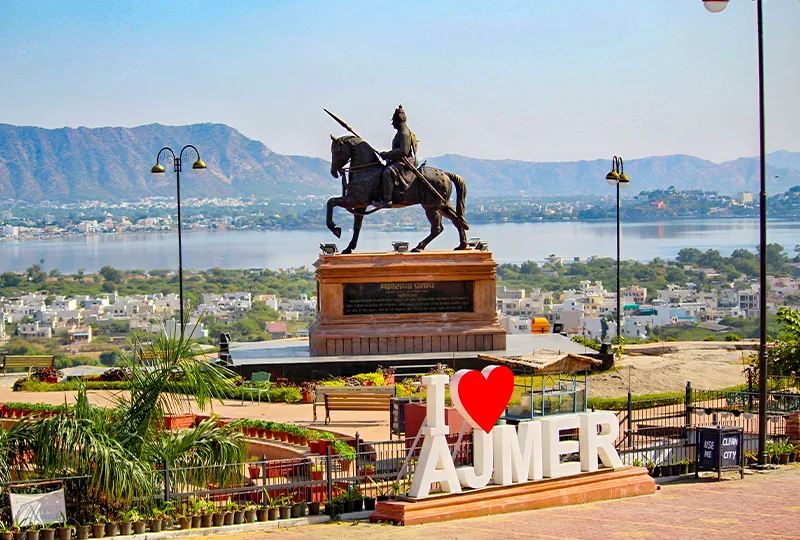
Ajmer and Pushkar sit just 15 km apart, yet represent two entirely different religious worlds. Ajmer is home to the Dargah Sharif, the shrine of the 12th-century Sufi saint Khwaja Moinuddin Chishti — one of the most important Islamic pilgrimage sites in South Asia, drawing devotees of all faiths.
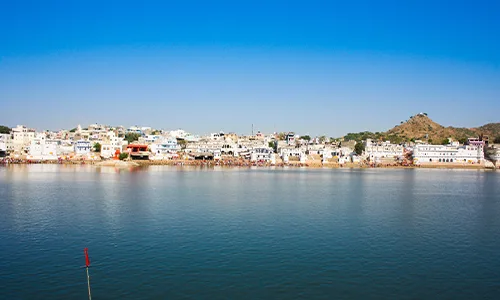
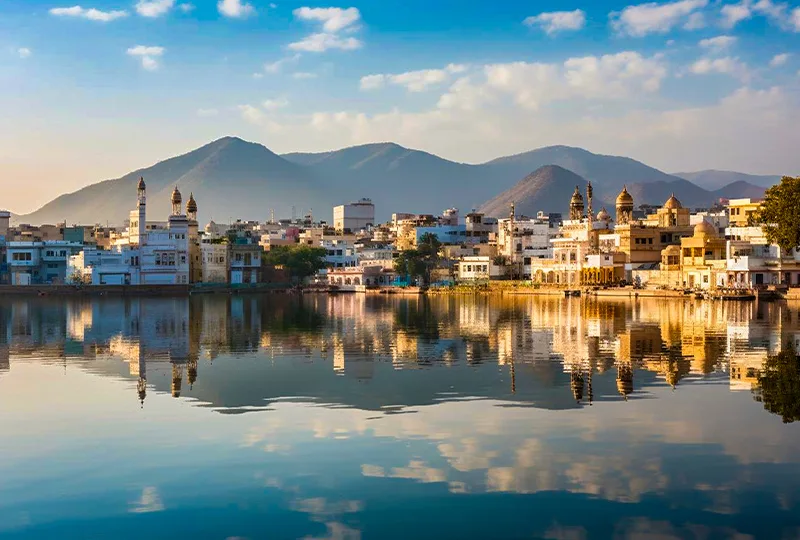
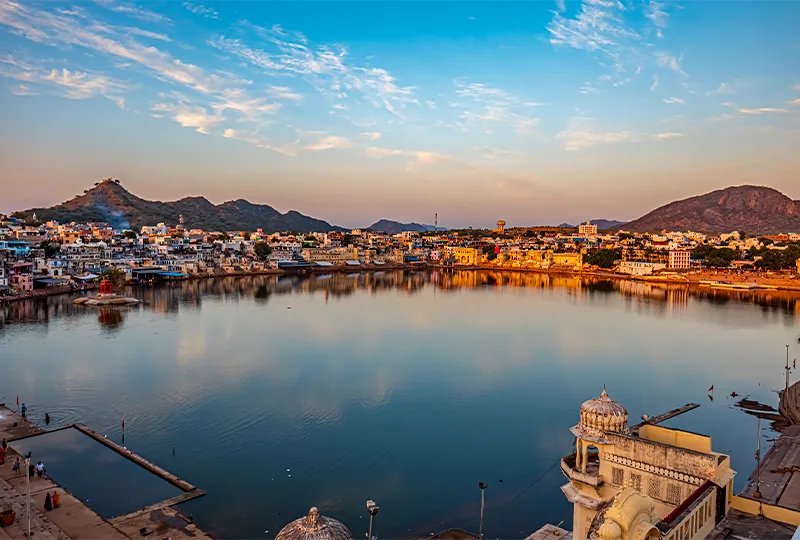
Pushkar, by contrast, is built entirely around its sacred lake, said to have been created when Lord Brahma dropped a lotus petal to earth. The town's Brahma Temple is one of the very few temples in the world dedicated to the creator god, and its 52 ghats see a constant flow of pilgrims performing ritual bathing.
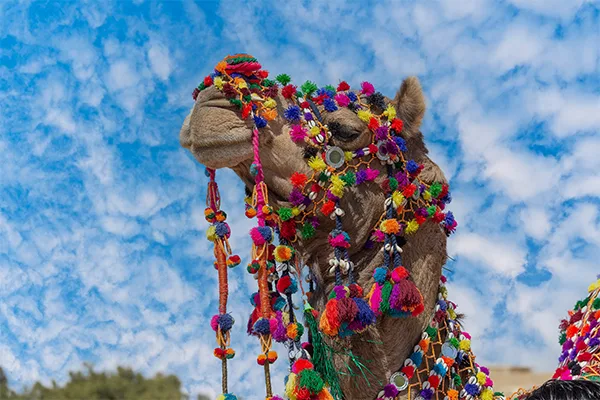
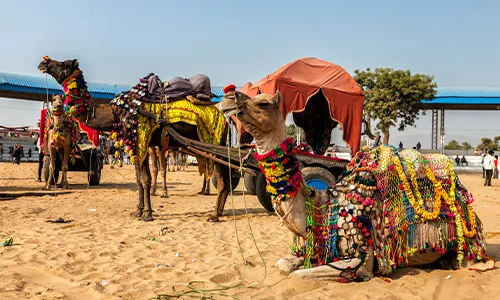
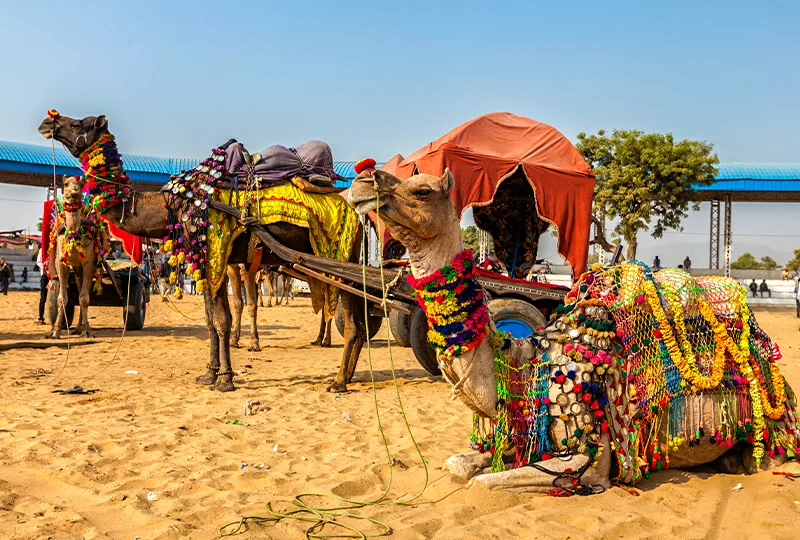
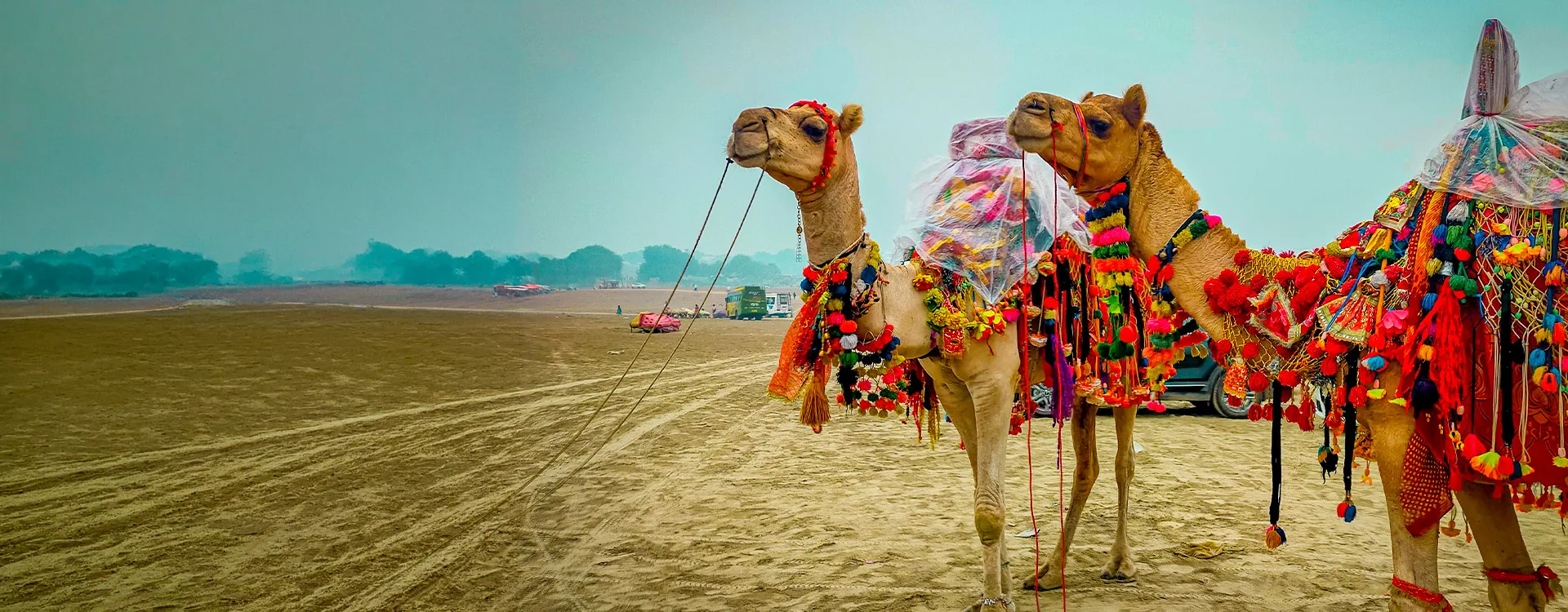
Together, the twin towns offer one of Rajasthan's most concentrated doses of living religious practice — and Pushkar's annual Camel Fair, held each November, has become one of the most photographed cultural events in India, transforming a quiet lakeside town into a temporary city of livestock traders, folk performers, and travellers.
Ajmer-Pushkar's climate follows the broader Rajasthan pattern, with one major event-driven exception.
Cool, comfortable temperatures (12–25°C); the Pushkar Camel Fair (October/November) is the single most popular reason to visit, with the town transformed for several days.
Warming but still pleasant in early morning and evening, with notably fewer crowds at both the Dargah and the ghats.
Intense heat through May-June, with the monsoon bringing some relief but higher humidity around the lake.
Seven landmarks — shrines, ghats, and the desert beyond — across the twin towns of Ajmer and Pushkar.
Shrine
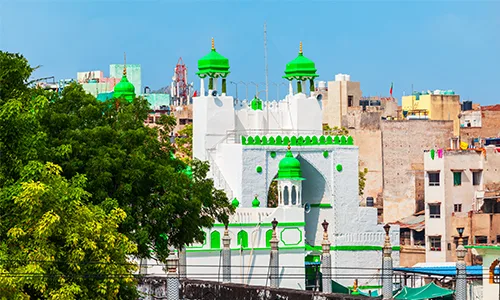
The shrine of Sufi saint Khwaja Moinuddin Chishti, one of the most revered Islamic pilgrimage sites in South Asia — its marble courtyards and giant cooking cauldrons (degs) draw devotees of every faith.
Sacred Lake
A sacred lake ringed by 52 bathing ghats, said to have formed where a lotus petal from Brahma's hand fell to earth — pilgrims perform ritual bathing here year-round.
Temple
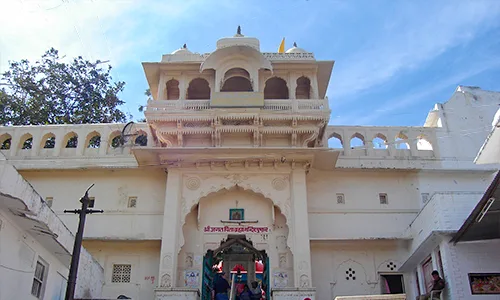
One of the very few temples in the world dedicated to Lord Brahma, the creator god — a modest but deeply significant marble structure near the lake.
Viewpoint
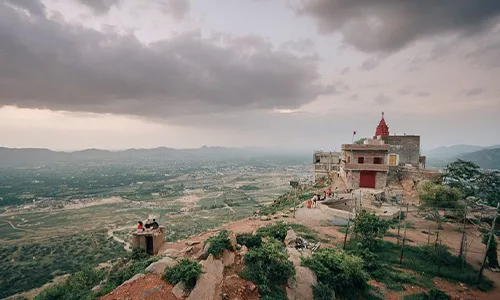
A hilltop temple reached by a steep climb or cable car, offering panoramic sunset views over Pushkar Lake and the surrounding desert hills.
Museum
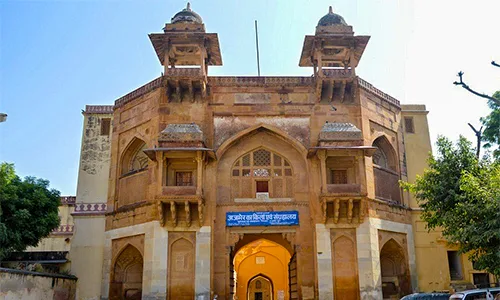
A Mughal-era fort built by Emperor Akbar, now housing a museum of regional sculpture and artefacts spanning several centuries of Ajmer's history.
Festival
The site of one of India's most famous livestock fairs each October/November — camel races, folk performances, and a vast temporary tent city on the dunes outside town.
Lake
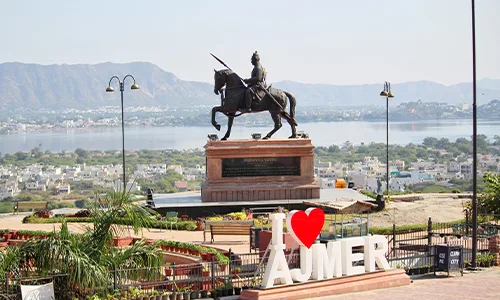
An artificial lake created in the 12th century, with the Mughal-era Daulat Bagh gardens along its shore — a pleasant boating spot and evening walk in Ajmer.
The larger of the twin towns, Ajmer's identity is shaped almost entirely by the Dargah Sharif — its surrounding bazaars sell rose petals, chadors, and devotional items for pilgrims.
Akbar's Fort and Ana Sagar Lake provide a secular counterpoint to the religious focus of the Dargah itself.
A compact, entirely vegetarian and alcohol-free town built around its sacred lake — the ghats, the Brahma Temple, and a lively bazaar of silver jewellery and textiles are all within walking distance.
Pushkar has also developed a strong backpacker and yoga-retreat culture alongside its religious significance.
For a few days each October or November, Pushkar transforms entirely — camel and cattle trading, folk music, turban-tying competitions, and a full moon bathing ritual on the lake.
Accommodation books out months in advance for this period; tented camps spring up on the dunes outside town.
Ajmer-Pushkar sits centrally in Rajasthan, making it an easy addition to a Jaipur or Udaipur-based itinerary.
The nearest airport is Kishangarh (KQH), about 25 km from Ajmer, with limited flights; Jaipur Airport, 145 km away, offers far more connectivity.
Ajmer Junction is a major railhead with frequent connections to Jaipur, Delhi, Udaipur, and Jodhpur; Pushkar has its own smaller station, 11 km away.
A straightforward private vehicle journey connects Ajmer-Pushkar to Jaipur, making it a popular half-day or overnight addition to a Rajasthan circuit.
What to eat, and a few customs worth knowing, before you arrive
Pushkar's sweet specialities — a syrup-soaked pancake and a thickened sweet milk, both found at the town's many small sweet shops.
Pushkar is known for its rose cultivation — rose water, rose-petal sweets, and cosmetics are popular, distinctive souvenirs.
Pushkar is strictly vegetarian and alcohol-free out of respect for its sacred status — plan meals accordingly.
Required at the Dargah Sharif, the Brahma Temple, and around the ghats — bring socks if walking on hot stone in summer.
Cover your head when entering the Dargah Sharif, and dress modestly throughout both towns out of religious respect.
Particularly around the ghats during ritual bathing, where photography can feel intrusive to pilgrims.
A few practical things worth knowing before visiting Ajmer-Pushkar.
Ajmer and Pushkar are close enough to combine in a single day trip, though an overnight in Pushkar allows time for sunset at Savitri Temple.
Chadors (ceremonial cloths) and rose petals are sold near the Dargah for offering — purchase from official stalls inside the complex.
If visiting during the Camel Fair, book accommodation several months ahead — rooms and desert camps sell out completely.
Pushkar's vegetarian, alcohol-free status is taken seriously locally — avoid bringing either into guesthouses or public spaces.
The cable car or climb to Savitri Temple is best timed for sunset — arrive with enough daylight left for the descent.
Both towns are walkable at their centres; auto-rickshaws or a private vehicle are useful for the short hop between Ajmer and Pushkar.
Both towns are generally safe for travellers; as everywhere, agree any guide or vendor pricing clearly before proceeding.