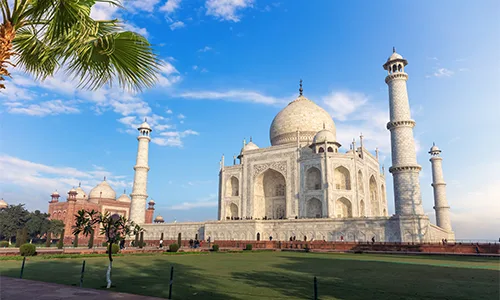
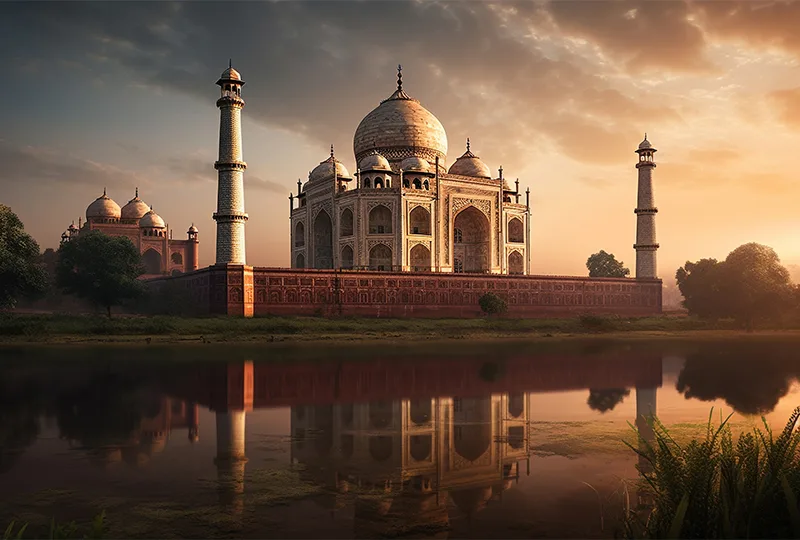
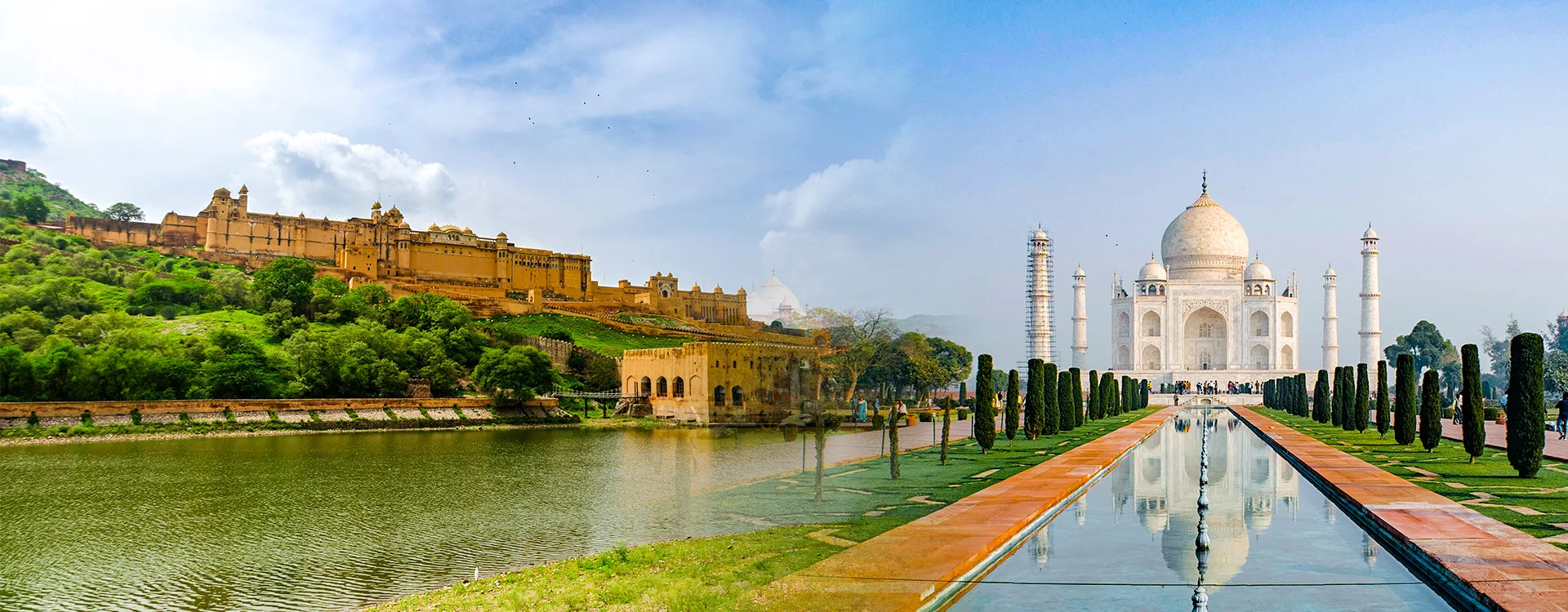
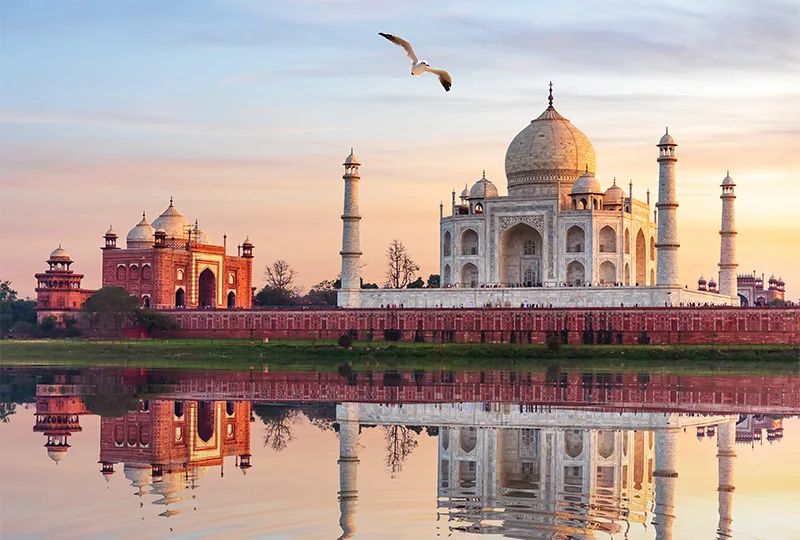
Agra served as the capital of the Mughal Empire for much of the 16th and 17th centuries, and it was here that Emperor Shah Jahan, grieving the death of his wife Mumtaz Mahal in childbirth, commissioned the Taj Mahal in 1631 — a white marble mausoleum that took over 20 years and an estimated 20,000 artisans to complete.
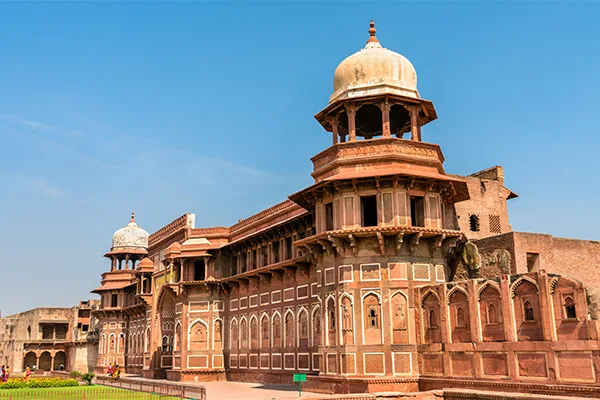
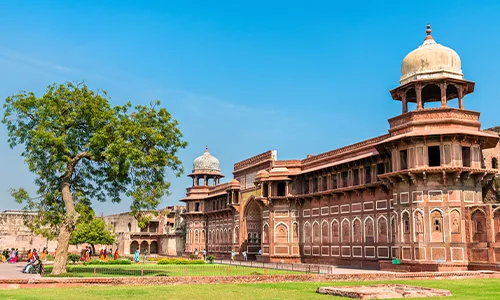
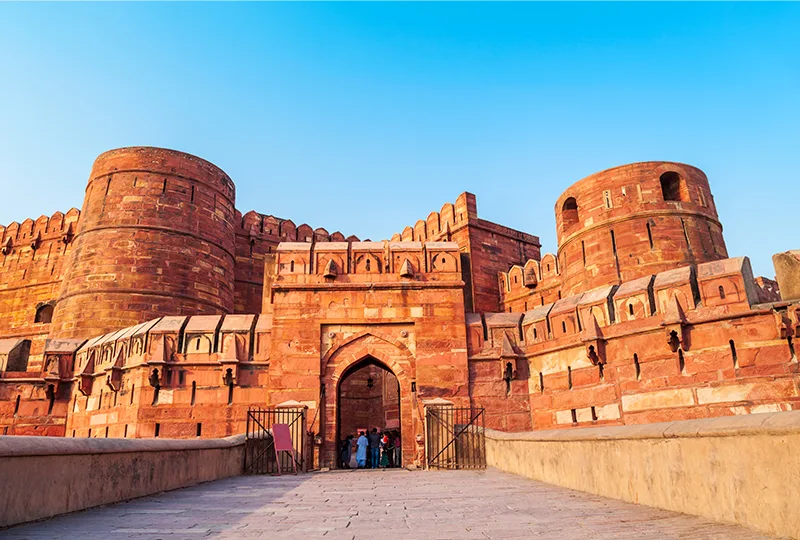
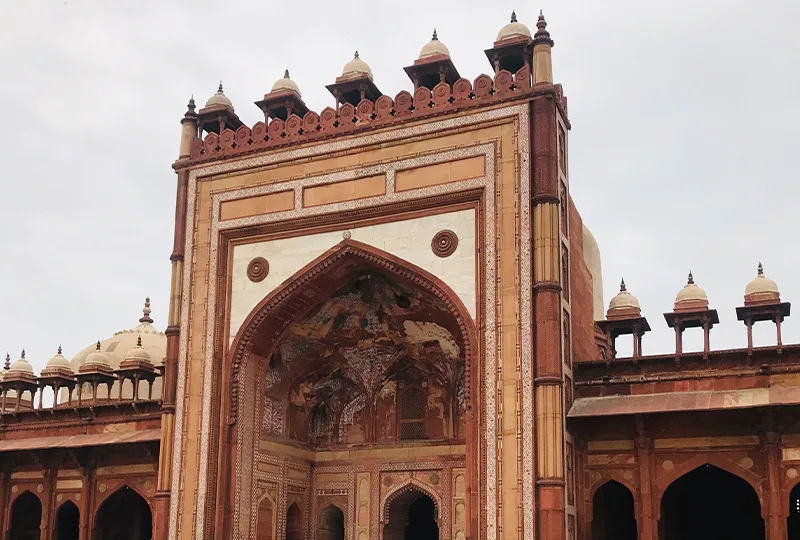
Beyond the Taj, Agra holds two further UNESCO World Heritage Sites within a short distance: Agra Fort, the Mughal Empire's primary stronghold for generations, and Fatehpur Sikri, Emperor Akbar's short-lived but extraordinary planned capital, abandoned within 15 years of its completion.
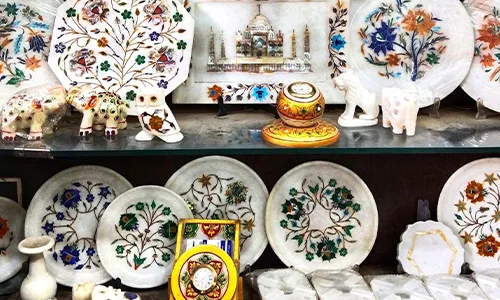
Tourism in Agra is built almost entirely around this Mughal architectural legacy — and around the marble inlay (pietra dura) craft tradition that built the Taj and survives today in workshops across the city, where artisans descended from the original craftsmen still produce intricate tabletops and decorative pieces.
Agra's climate is shaped by the wider Gangetic plain — hot summers, cool winters, and a monsoon that brings welcome but humid relief.
Cool and comfortable (10–25°C), with the clearest skies of the year for Taj Mahal photography — the only genuinely pleasant season for extended sightseeing.
Post-monsoon, with temperatures beginning to ease and fewer crowds than peak winter season.
Extreme heat regularly exceeding 45°C; visit only in the early morning if travelling during this window.
Seven landmarks — three UNESCO World Heritage Sites among them — that define a visit to Agra.
UNESCO Site
Shah Jahan's white marble mausoleum for his wife Mumtaz Mahal, completed in 1653 — widely considered the finest example of Mughal architecture and one of the most recognisable buildings on earth.
UNESCO Site
A red sandstone fortress that served as the main residence of Mughal emperors until 1638, with palaces, mosques, and audience halls reflecting successive rulers' tastes.
UNESCO Site
Emperor Akbar's planned capital, built in red sandstone in the 1570s and abandoned within 15 years due to water shortages — an extraordinarily well-preserved ghost city.
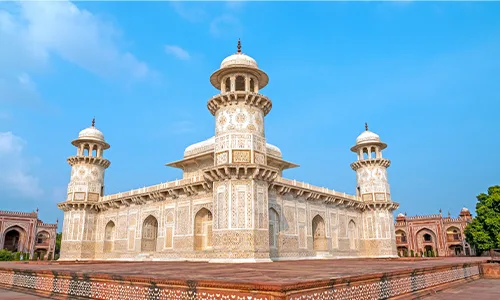
Tomb
A delicate marble tomb built in the 1620s for a senior Mughal official, often called the 'draft' for the Taj Mahal due to its pioneering use of marble inlay work.
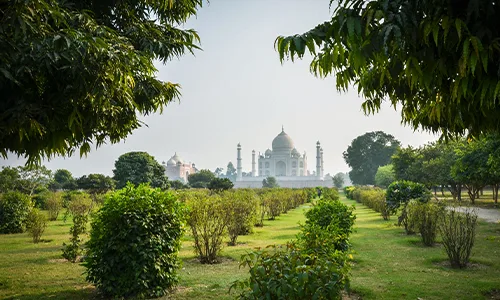
Garden
A Mughal moonlight garden directly across the river from the Taj Mahal, offering one of the finest unobstructed views of the monument, especially at sunset.
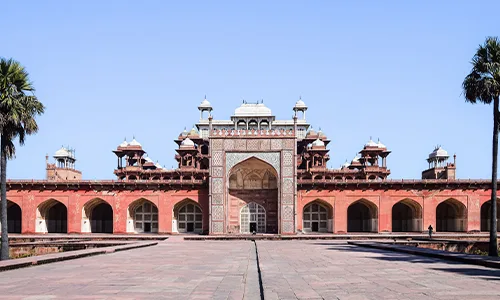
Tomb
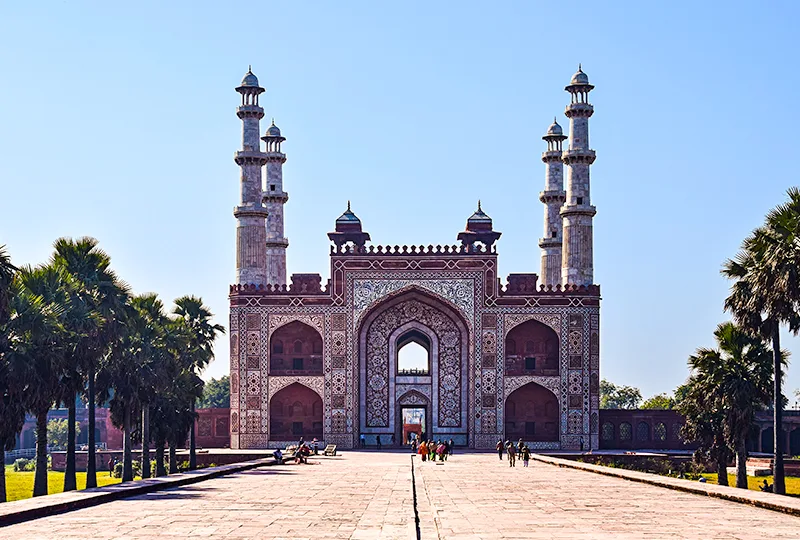
The mausoleum of Emperor Akbar, completed by his son Jahangir in 1613 — a unique fusion of Hindu, Christian, and Islamic architectural motifs reflecting Akbar's syncretic religious policy.
Craft
Family-run workshops where artisans descended from the Taj Mahal's original craftsmen still practise pietra dura marble inlay — fascinating to watch and a genuine Agra souvenir.
The Taj Mahal and its riverside companions — Itimad-ud-Daulah and Mehtab Bagh — together tell the story of how Mughal funerary architecture evolved toward its masterpiece.
Visiting at sunrise avoids both the worst heat and the heaviest crowds, and offers the softest light for photography.
Agra Fort offers a genuinely different perspective — the working seat of Mughal power, rather than a monument to loss, with a partial Taj Mahal view from its walls.
The surrounding city centre holds Agra's marble inlay workshops and bustling local bazaars.
Akbar's abandoned capital, 40 km from Agra, rewards a half-day excursion with some of the best-preserved Mughal civic architecture anywhere in India.
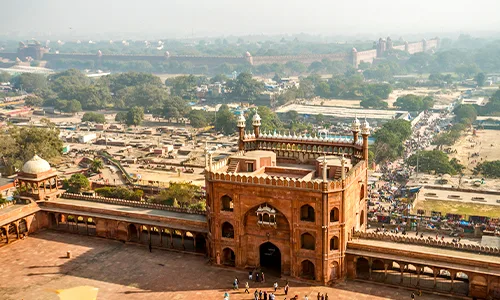
The Jama Masjid and the tomb of Sufi saint Salim Chishti within the complex remain active pilgrimage sites today.
A quieter, less-visited corner of Agra's Mughal heritage, Akbar's tomb complex blends architectural traditions in a way unique among the era's monuments.
Its peaceful gardens make for an unhurried final stop on a Mughal heritage day.
Agra is the second point of the Golden Triangle, easily reached from Delhi by high-speed train or expressway.
Agra Airport (AGR) has limited connectivity; most travellers fly into Delhi and continue by road or rail.
The Gatimaan Express and Shatabdi Express both connect Delhi to Agra in under 2 hours, among India's fastest and most comfortable train journeys.
The Yamuna Expressway makes Agra a smooth, fast drive from Delhi — the most popular way to combine it with Delhi and Jaipur on a Golden Triangle tour.
What to eat, and a few customs worth knowing, before you arrive
Agra's famous sweet — translucent, syrup-soaked ash gourd candy, sold in dozens of flavours across the city.
Rich, slow-cooked kebabs and curries reflecting Agra's centuries as a Mughal capital — try a thali at an established city restaurant.
A classic Agra breakfast pairing — a spiced fried bread served with a sweet, syrup-soaked jalebi, found at popular local breakfast spots.
Shoes must be removed or shoe covers worn on the Taj Mahal's marble platform — covers are provided with your ticket.
Photography is welcomed but tripods and professional equipment may require prior permission — check current rules before your visit.
Marble inlay items are usually open to negotiation — compare a few workshops before settling on a purchase.
A few practical things worth knowing before you arrive in Agra.
The Taj Mahal at opening time offers the softest light, smallest crowds, and coolest temperatures — by far the best visiting window.
Pre-booking Taj Mahal tickets online avoids queues and allows you to select your preferred time slot.
The Taj Mahal is closed to visitors every Friday for prayers — plan your itinerary around this if visiting on a Friday.
Petrol/diesel vehicles cannot approach the Taj Mahal's immediate perimeter — you'll transfer to an electric shuttle or walk the final stretch.
Buy inlay pieces only from established workshops, and ask to see the stone-cutting process to verify genuine craftsmanship.
December-January mornings can be hazy, affecting visibility — sunrise views may be softer than expected in this period.
Restaurants immediately around the Taj tend toward tourist pricing — venture a few streets back for better value and often better food.
Hire guides only through your hotel or a recognised tour operator, and agree fees clearly before any tour begins.