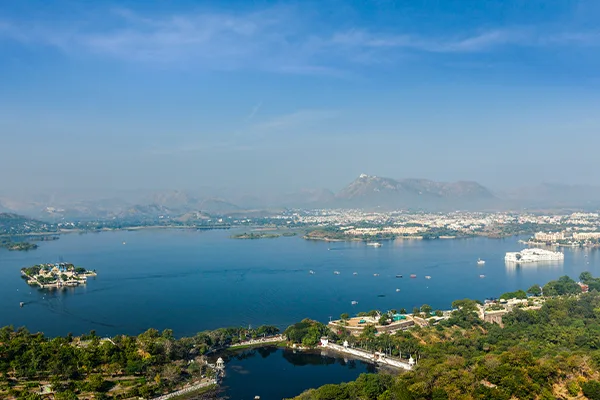
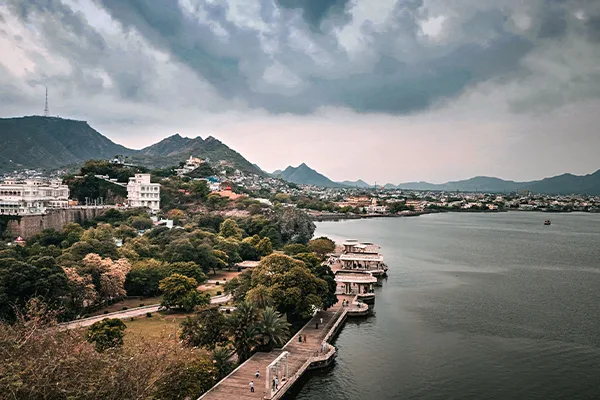
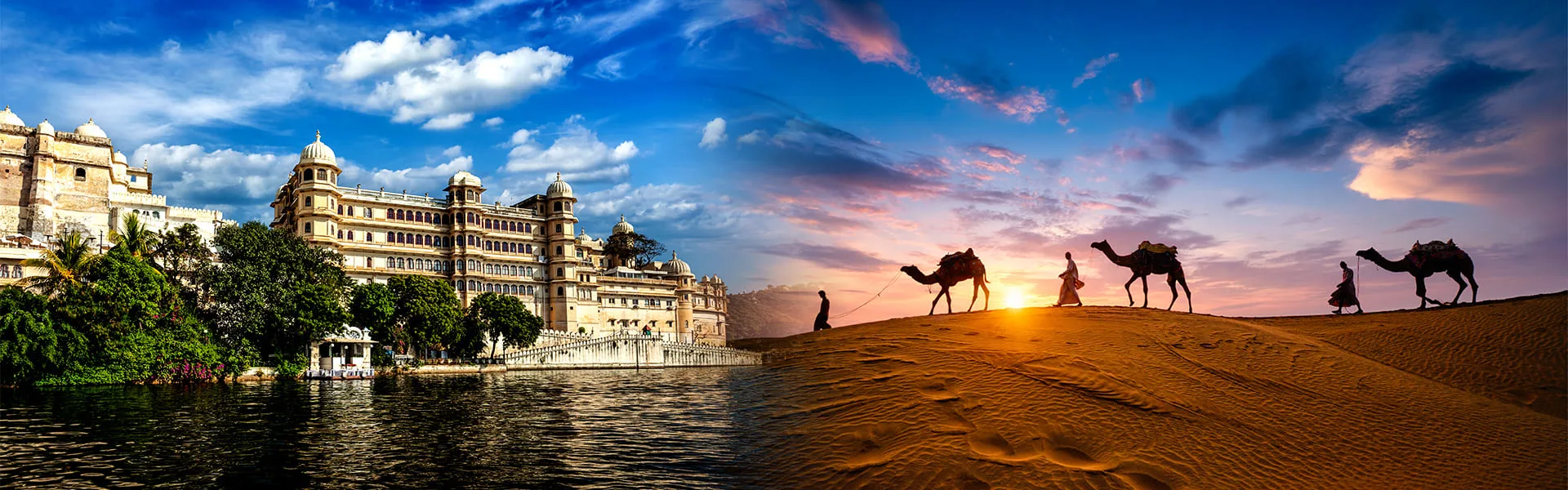
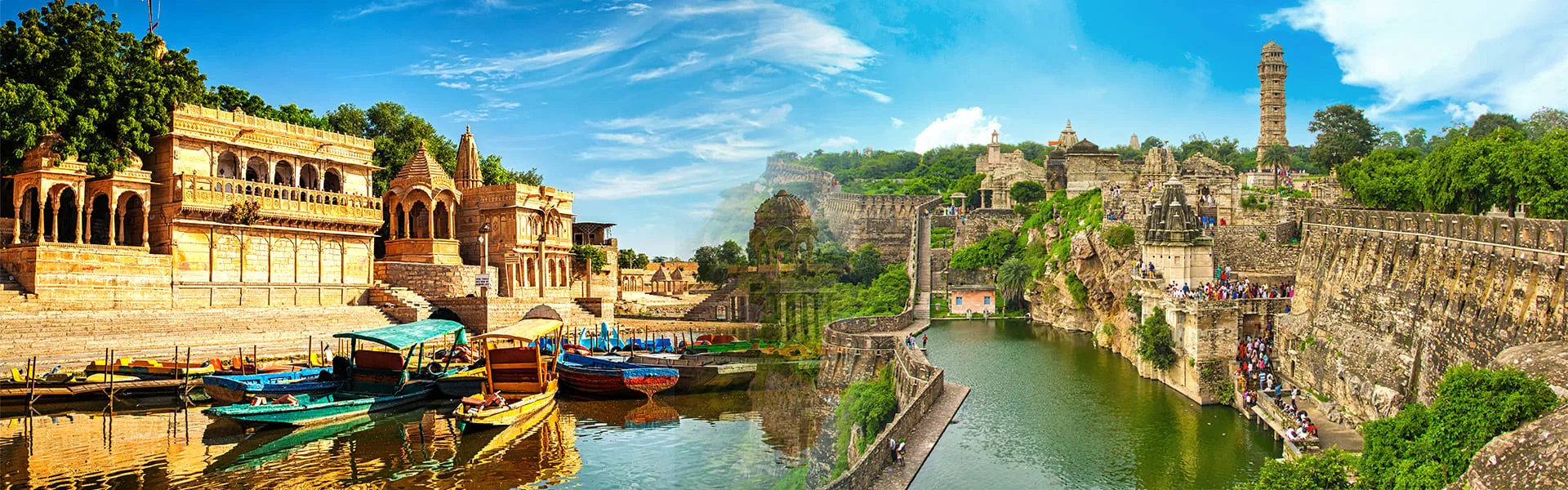
Udaipur was founded in 1559 by Maharana Udai Singh II, who moved his capital here from Chittorgarh after that fortress fell to Mughal siege. He chose the site for one reason above all: water — in a state otherwise defined by desert, Udaipur sits among a chain of artificial lakes that make it feel like nowhere else in Rajasthan.
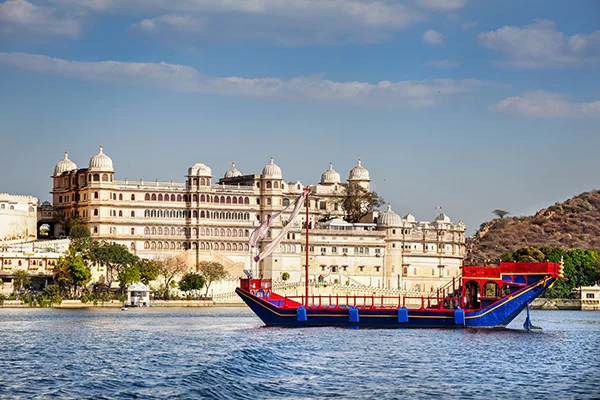
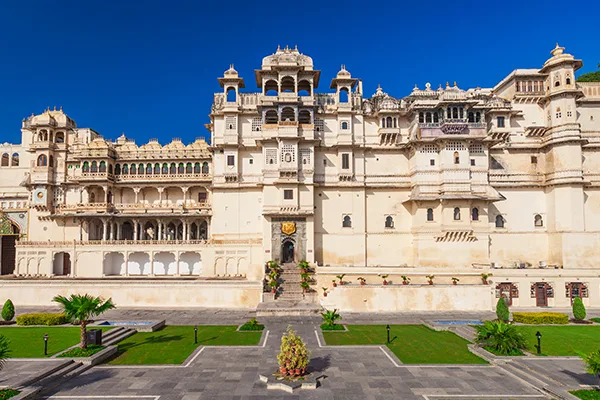
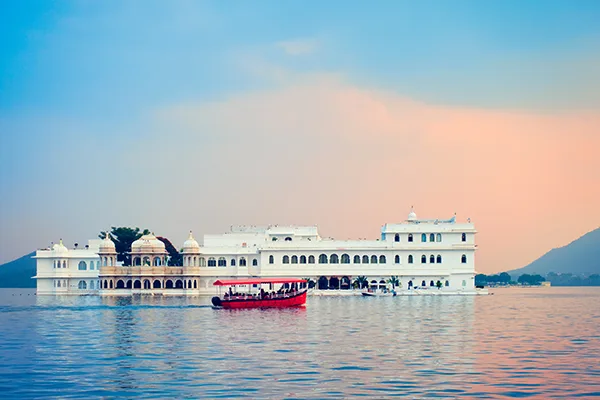
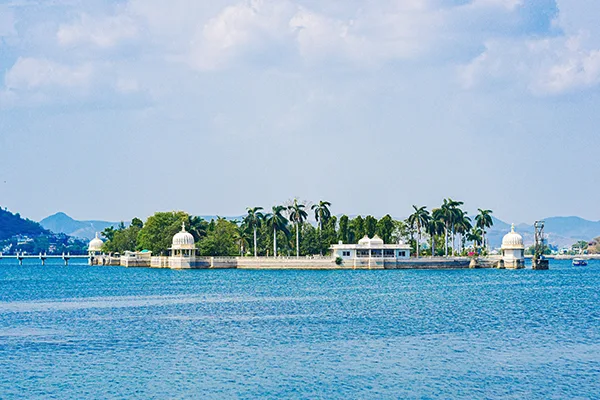
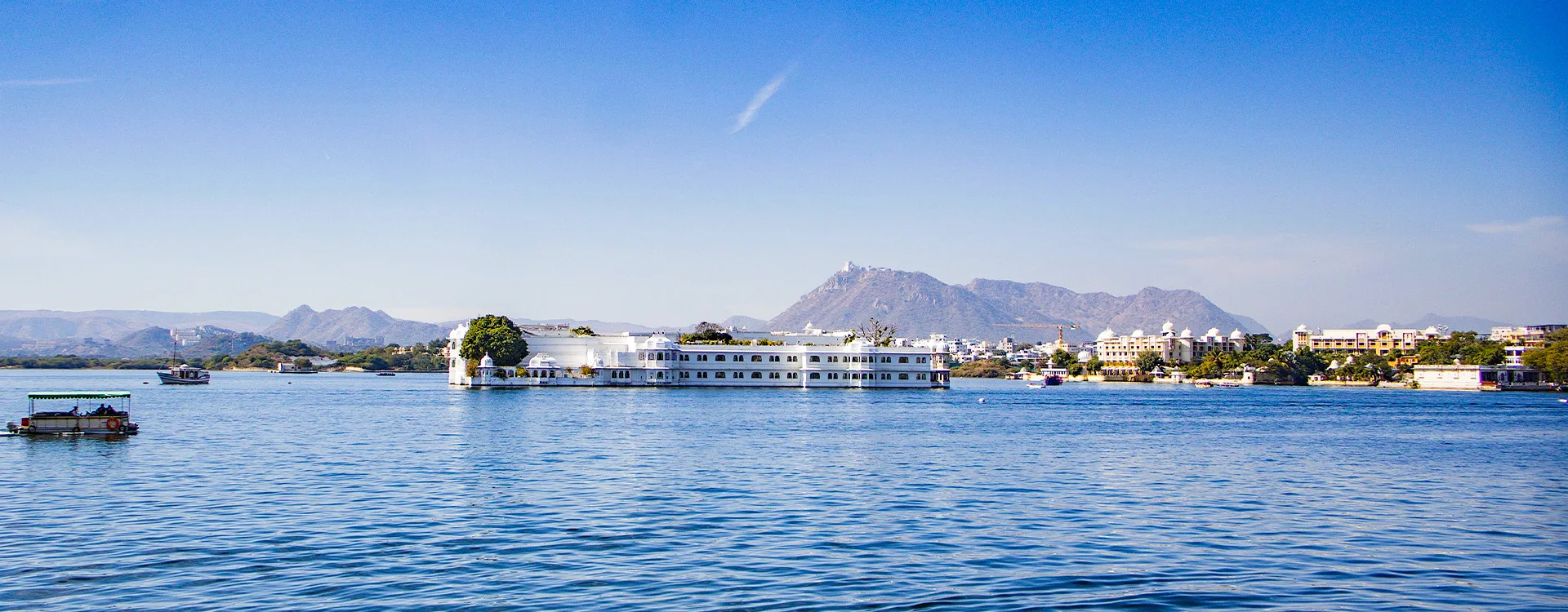
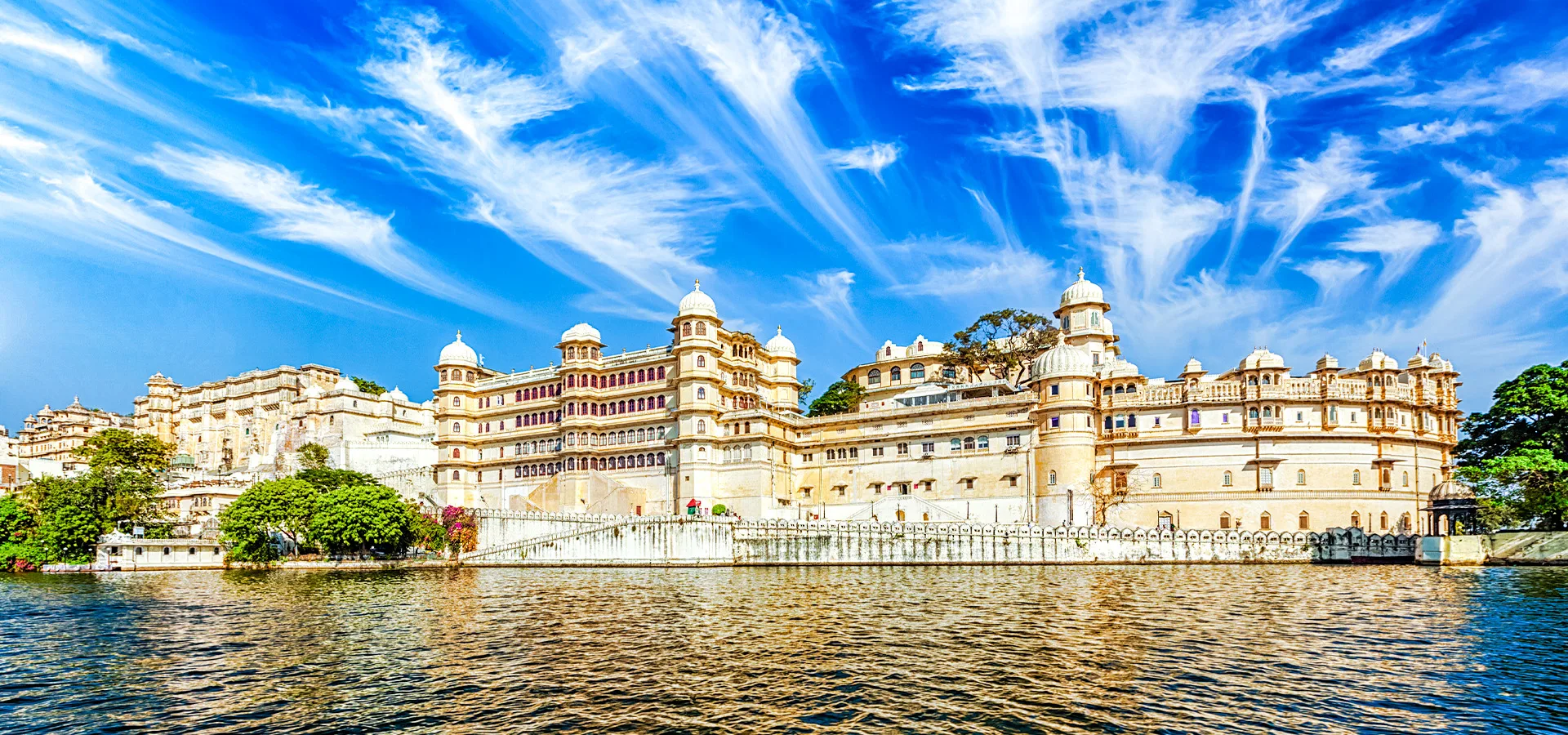
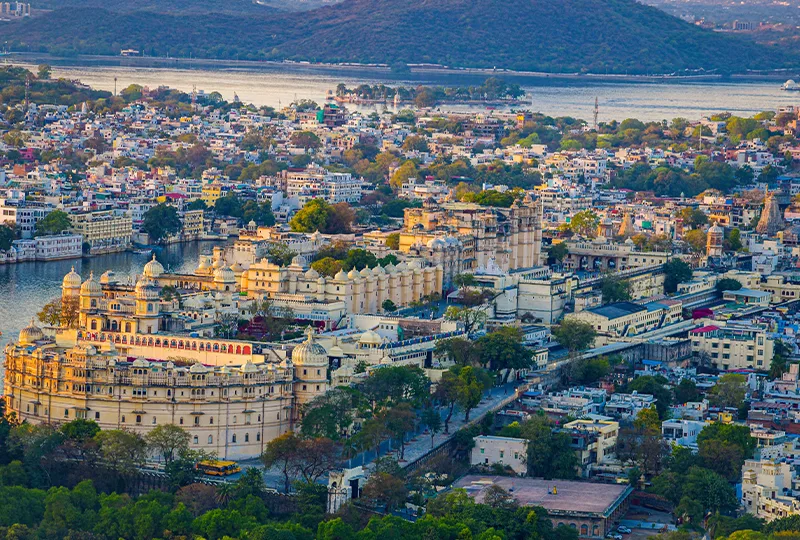
Often called the most romantic city in India, Udaipur's skyline is dominated by the City Palace complex and, floating just offshore in Lake Pichola, the white marble Lake Palace — now one of the world's most famous heritage hotels, instantly recognisable from its appearance in the James Bond film Octopussy.
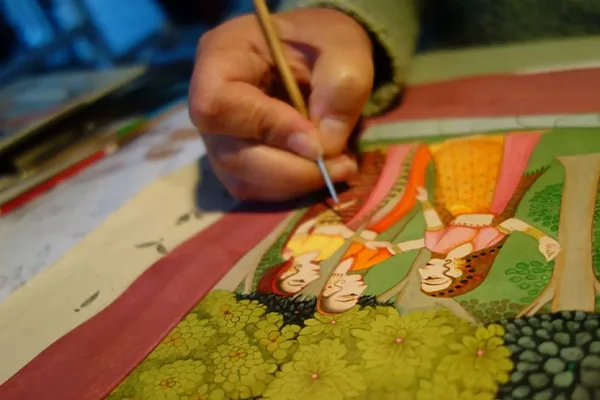
Tourism here centres on this water-and-marble combination: boat rides at sunset, rooftop restaurants overlooking the lake, and a old city of narrow lanes that has become one of India's leading centres for miniature painting, an art form still taught and practised in small ateliers throughout the city.
Udaipur's lake-cooled climate is gentler than the rest of Rajasthan, but the same broad seasonal pattern applies.
Comfortable temperatures (15–28°C), clear skies, and the lakes at their fullest after the monsoon — the finest months for boat rides and rooftop dining.
Warm but bearable, especially in the early morning and evening; fewer crowds than peak winter season.
Intense heat through May and June (up to 42°C); the monsoon (July–August) cools things down but can lower the lakes if rainfall is poor.
Eight landmarks — palaces, lakes, gardens, and galleries — that define a visit to the City of Lakes.
Palace
The largest palace complex in Rajasthan, built over nearly 400 years by successive Maharanas — a fusion of courtyards, museums, and mirrored halls overlooking Lake Pichola.
Lake
An artificial lake created in 1362 and expanded under Udai Singh II — a sunset boat ride past the Lake Palace and Jagmandir island is Udaipur's signature experience.
Landmark
A white marble palace that appears to float in the middle of Lake Pichola, now a luxury hotel — visible from the shore or, for hotel guests, in person.
Temple
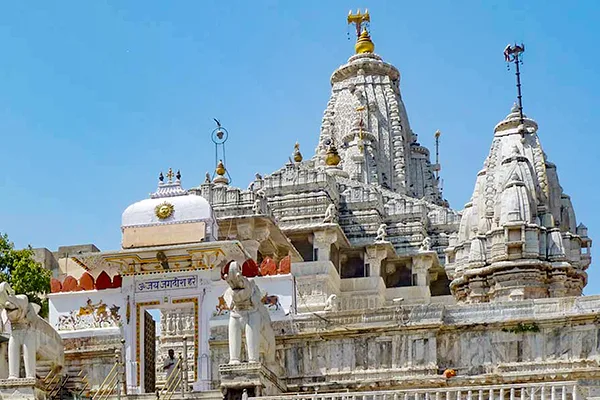
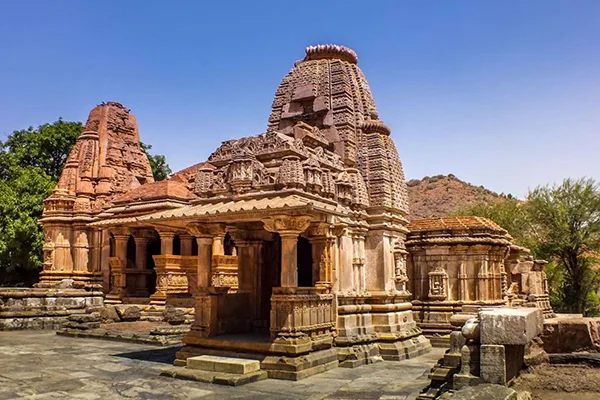
A 1651 Indo-Aryan temple dedicated to Vishnu, its intricately carved spire rising near the City Palace's main gate — still an active place of daily worship.
Garden
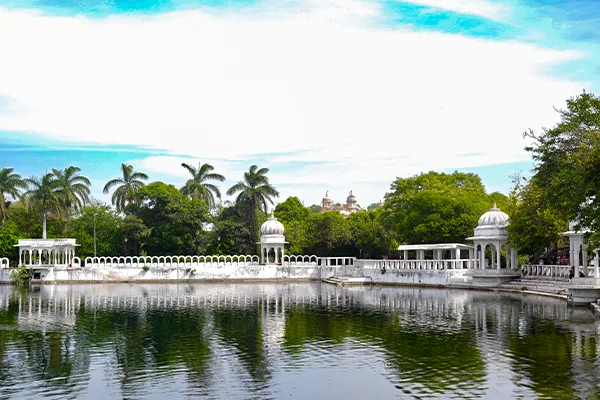
The 'Garden of the Maidens' — a formal 18th-century garden of fountains, lotus pools, and marble elephants, built for the queens' attendants.
Palace
A second island palace on Lake Pichola, predating the Lake Palace — once gave shelter to a young Mughal prince, now a restaurant and event venue.
Museum
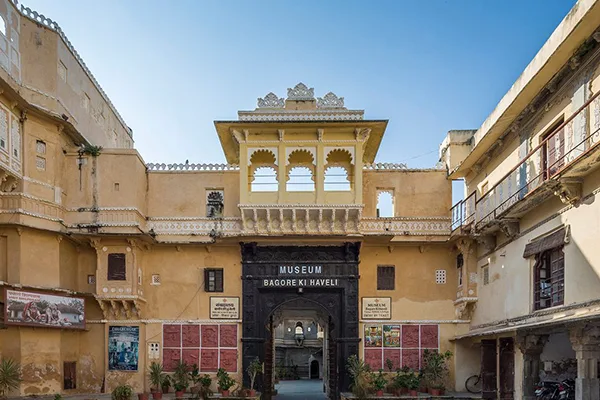
An 18th-century lakeside mansion, now a museum of Mewar culture, hosting nightly Rajasthani folk dance performances including the famous Dharohar show.
Viewpoint
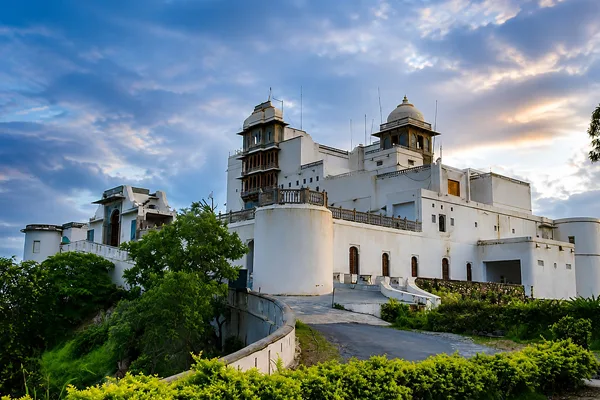
A hilltop palace built to watch monsoon clouds roll in, now Udaipur's best sunset viewpoint over the city, lakes, and Aravalli range.
The natural heart of Udaipur — the City Palace, Jagdish Temple, and the ghats all sit within a short walk of the lake's eastern shore.
Sunset here, with the Lake Palace glowing offshore and the Aravalli hills behind, is one of India's classic travel images.
Narrow lanes behind the lakefront hold Udaipur's miniature painting ateliers, silver jewellery workshops, and rooftop cafés with palace views.
This is the best area for a slow wander and a coffee with a view, away from the main tourist flow.
Sajjangarh's hilltop palace and the surrounding Sajjangarh Wildlife Sanctuary give Udaipur an entirely different, greener character above the lakes.
A sunset visit here is the perfect bookend to a day spent among the palaces below.
Eklingji and Nagda's ancient temples, and the marble Jain temple complex at Ranakpur, are all within a comfortable day trip of the city.
These excursions add Mewar dynastic history and Rajasthan's finest temple architecture to an Udaipur stay.
Udaipur is well connected by air and rail, and a popular stop on the Rajasthan road circuit from Jaipur or Jodhpur.
Maharana Pratap Airport (UDR) is 22 km from the city, with direct flights from Delhi, Mumbai, Jaipur, and other major Indian cities.
Udaipur City railway station connects to Delhi, Jaipur, and Ahmedabad with overnight and day services, though road or air is generally faster.
A scenic private vehicle journey through the Aravalli range connects Udaipur to Jaipur, Jodhpur, and Mount Abu.
What to eat, and a few customs worth knowing, before you arrive
The Rajasthani staple — baked wheat rolls, spiced lentils, and sweet crumbled wheat — found on nearly every Udaipur menu.
A local Udaipur street food — large green chillies stuffed with spiced potato, dipped in batter and deep-fried.
A splurge-worthy afternoon tea at the Lake Palace or Jagmandir, even for non-hotel guests on some occasions — booked in advance.
Cover shoulders and knees at temples and the City Palace — respectful, and often required for entry.
Sunset boat slots on Lake Pichola sell out in peak season — reserve your ride in the morning for that evening.
Especially around the ghats, where locals bathe and do laundry — a simple courtesy that's always appreciated.
A few practical things worth knowing before you arrive in Udaipur.
City Palace entry includes access to most of its museum sections; the Crystal Gallery and a few special exhibits require a separate ticket.
Boat rides and Sajjangarh visits are both at their best in the final hour before sunset — plan your day so you arrive then.
Many Udaipur hotels offer lake-facing rooms at a premium — genuinely worth it here, more than almost any other Indian city.
The old city is compact and walkable; auto-rickshaws and taxis are easy to find for trips to Sajjangarh or Fateh Sagar.
Udaipur is known for fine silver jewellery and miniature paintings — buy from established shops with a portfolio you can review.
Mewar Festival (March/April) and Shilpgram crafts fair (December) both bring extra colour and crowds — plan accordingly.
In drought years, Lake Pichola's water level can drop noticeably by April-May — check current conditions if lake views are a priority.
Udaipur is generally very safe for travellers; as everywhere, agree taxi and guide fees clearly before the service begins.