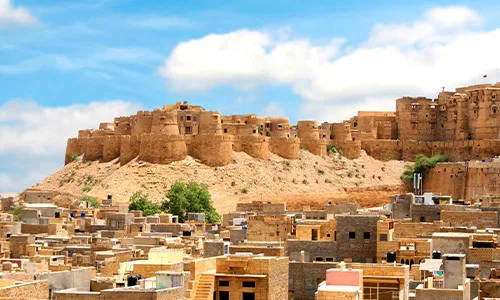
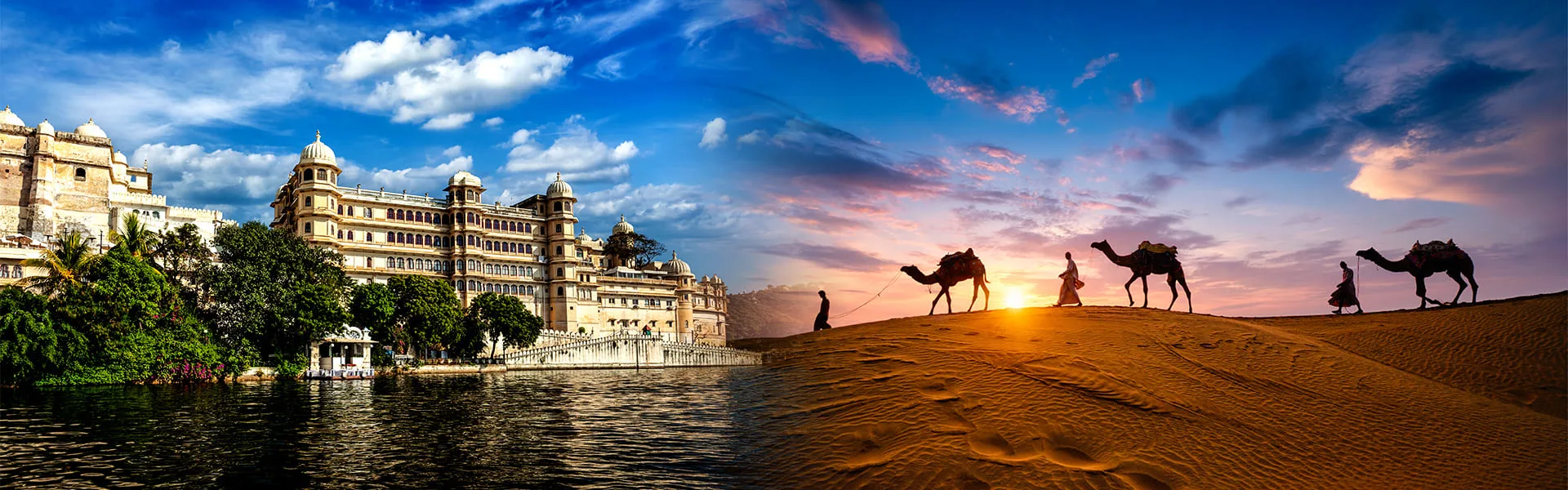
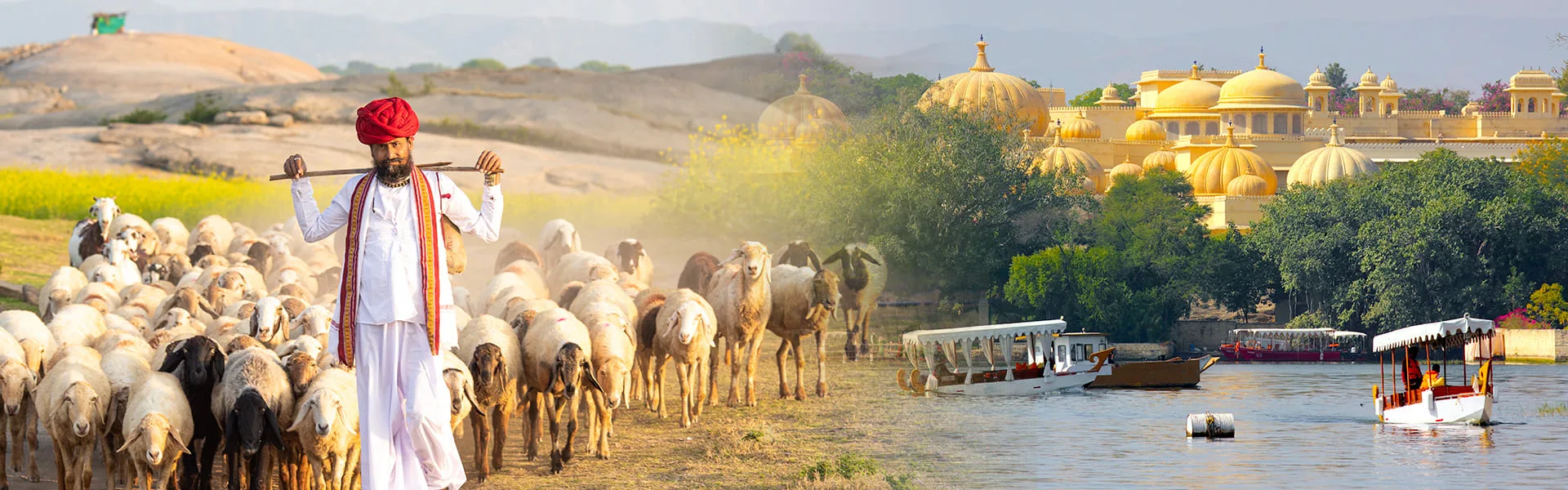
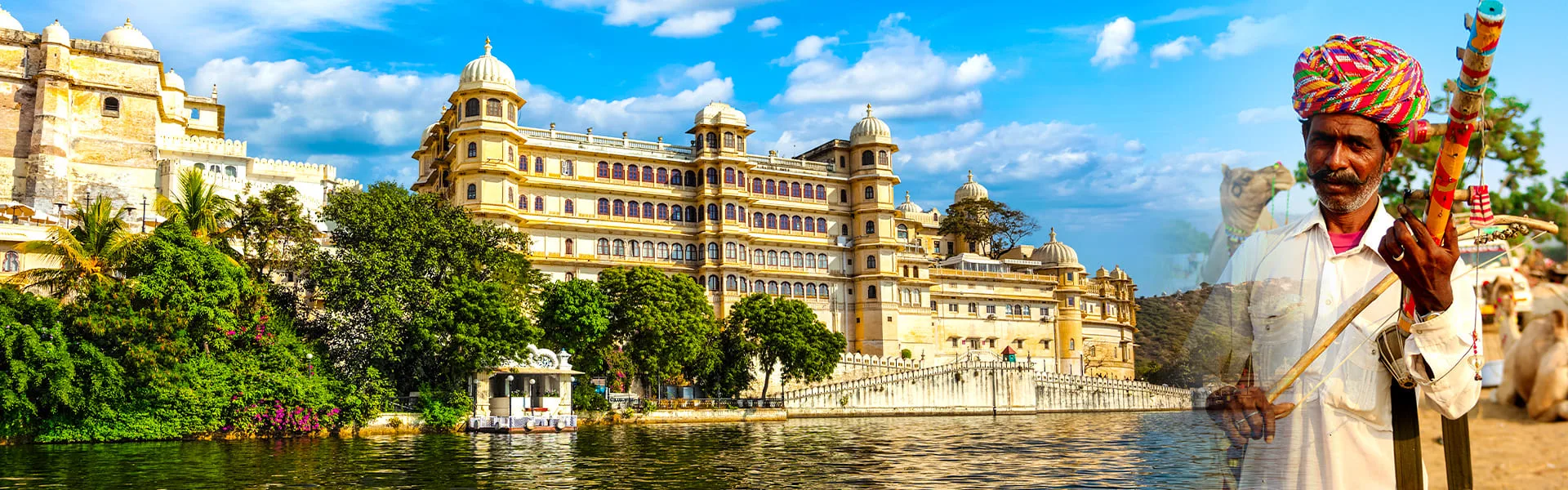
Jaisalmer was founded in 1156 by Rawal Jaisal, a Bhati Rajput ruler, on a ridge overlooking the Thar Desert near the old trade routes to Central Asia. Its fort is one of the last 'living forts' in the world — roughly a quarter of the old city's population still resides within its walls, among havelis, temples, and shops that have operated continuously for centuries.
The entire city is built from a local golden-yellow sandstone that gives Jaisalmer its nickname — at sunset, the fort and the old city's havelis genuinely seem to glow. This light is one of the most photographed effects in all of Rajasthan.
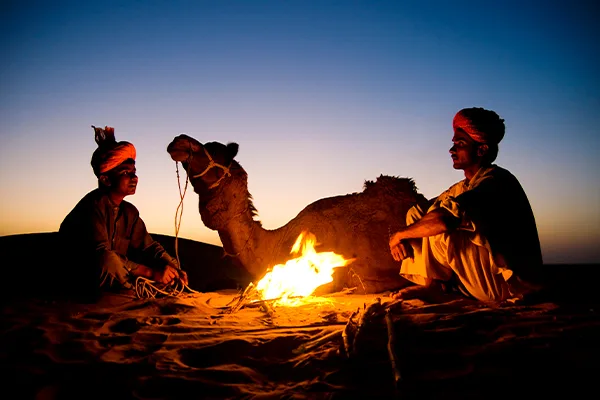
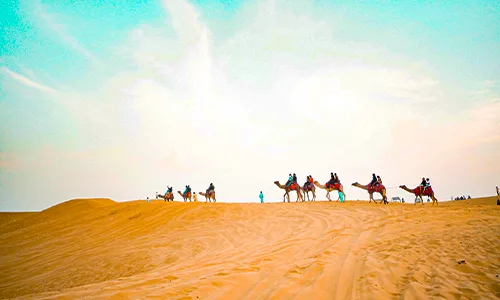
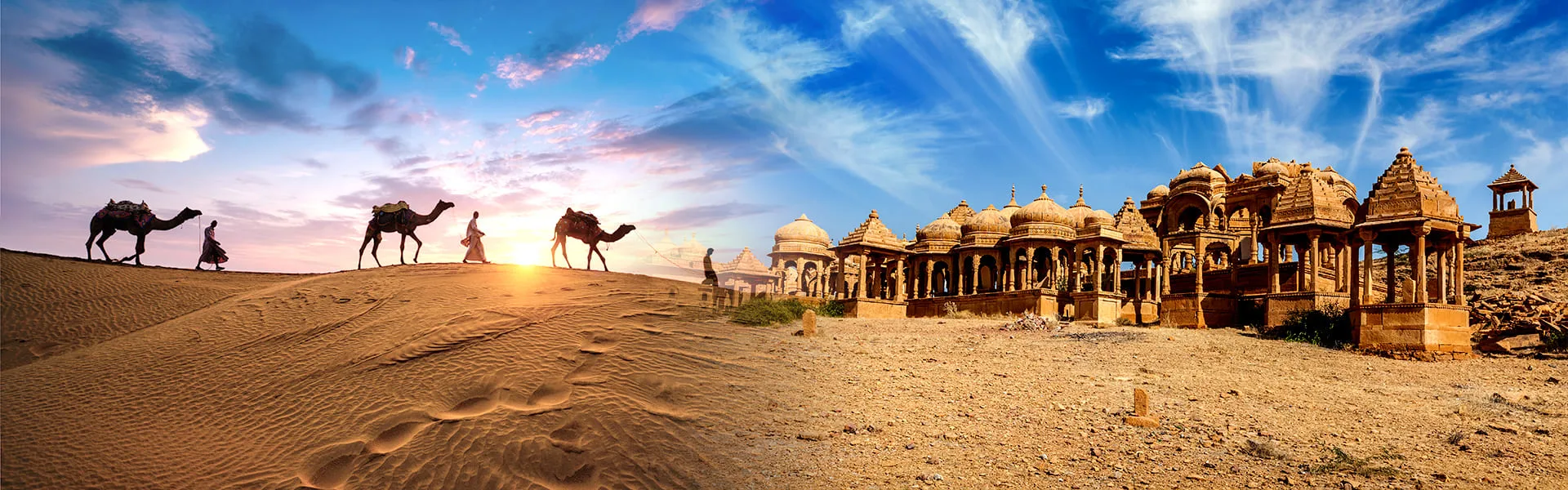
Tourism here is built around three things: the living fort itself, the carved stone havelis of wealthy merchant families, and the Thar Desert beyond — camel treks into the Sam and Khuri sand dunes, with a night under a famously starry desert sky, remain the single most popular reason travellers come this far west.
Jaisalmer's true desert climate is the most extreme in Rajasthan — timing matters more here than almost anywhere else in the state.
Comfortably cool by desert standards (10–25°C), with cold desert nights — the only realistic window for camel safaris and fort exploration.
Warming quickly but still manageable; the Desert Festival (February/March) brings camel races and folk music to the dunes.
Among the harshest climates in India, with temperatures regularly above 45°C and minimal rainfall even in monsoon — genuinely dangerous for outdoor activity.
Seven landmarks — the fort, havelis, and desert beyond — that define a visit to the Golden City.
Living Fort
One of the few 'living forts' on earth — homes, shops, and temples still operate within its golden sandstone walls, alongside a royal palace museum and Jain temple complex.
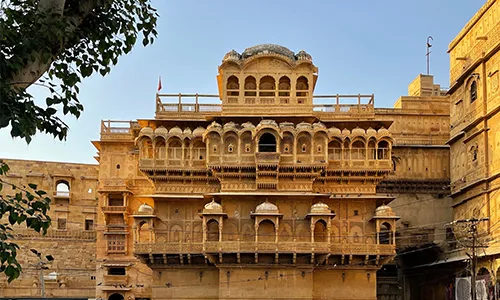
Haveli
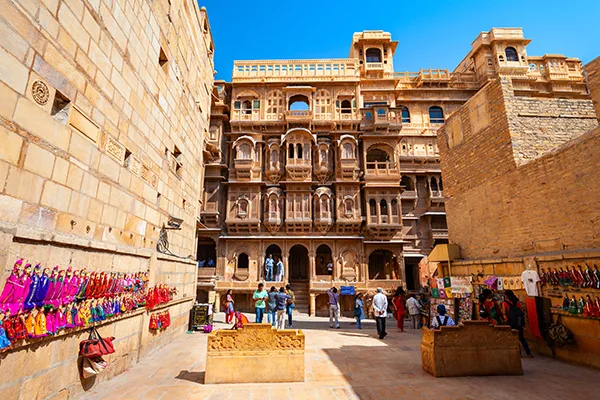
A cluster of five interconnected mansions built by a wealthy merchant family in the 1800s, with extraordinarily intricate carved facades — Jaisalmer's finest haveli complex.
Desert
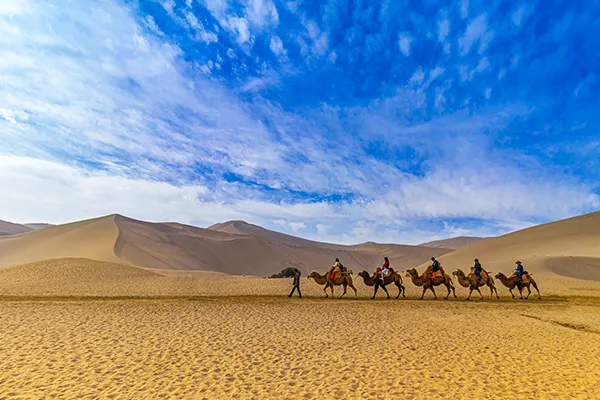
The most accessible and popular dunes near Jaisalmer, where camel treks at sunset are followed by folk music and a night camped under an exceptionally starry desert sky.
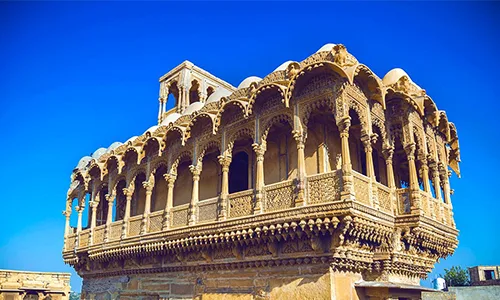
Haveli
A distinctive 17th-century mansion with a curved, peacock-shaped upper structure, built for a former prime minister of Jaisalmer state.
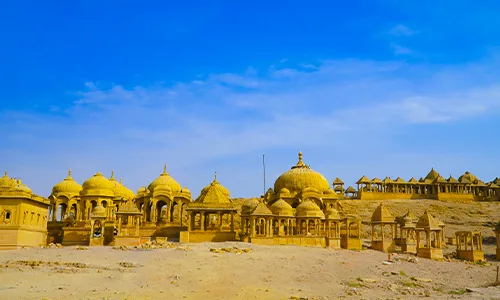
Cenotaphs
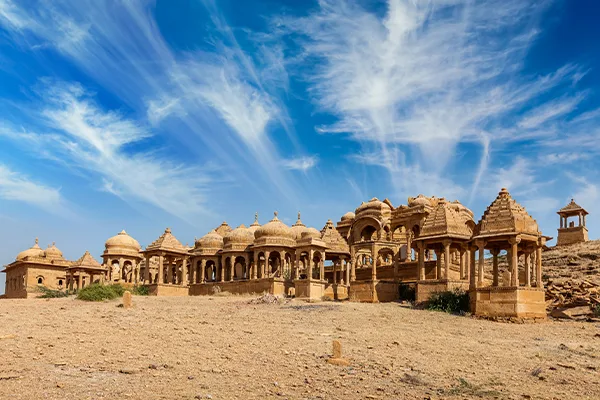
A garden of royal cenotaphs commemorating Jaisalmer's Bhati rulers, set on a hillside dotted with traditional desert windmills — especially atmospheric at sunset.
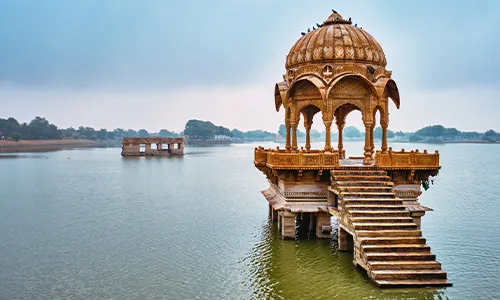
Lake
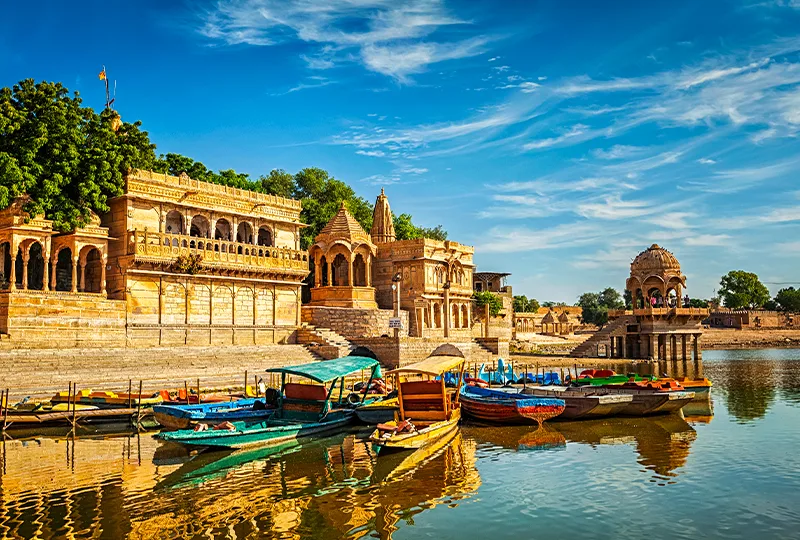
A 14th-century rainwater reservoir lined with small temples and shrines, now a peaceful spot for an evening boat ride or simply watching the sunset over the water.
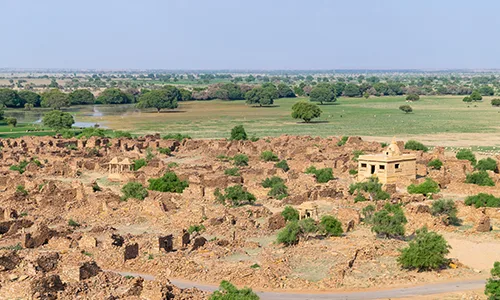
Excursion
A once-thriving village abandoned overnight in the 19th century under mysterious circumstances, now a haunting, photogenic ruin in the desert.
Climbing through the fort's four gateways reveals a genuinely lived-in medieval town — homestays, rooftop cafés, and shops occupy buildings centuries old.
The royal palace museum and the cluster of Jain temples within the fort walls are the key formal sights here.
Below the fort, the old city's merchant quarter holds Jaisalmer's most extraordinary stone carving — entire facades worked in golden sandstone lace.
Patwon ki Haveli and Salim Singh ki Haveli are the standout examples, both an easy walk apart.
The Sam and Khuri dunes, both within an hour of the city, are where most visitors' Jaisalmer memories are made — camel treks, sunset, and a night sky free of any light pollution.
Desert camps range from simple tents to more comfortable 'luxury camp' setups, depending on preference and budget.
Bada Bagh's royal cenotaphs and the eerie abandoned village of Kuldhara both make excellent half-day excursions from the city.
Both are particularly striking in the soft light of early morning or late afternoon.
Jaisalmer is the most remote of Rajasthan's major tourist cities — plan extra travel time to reach it.
Jaisalmer Airport (JSA) has limited but growing connectivity, with seasonal direct flights from Delhi and Mumbai during peak tourist months.
Jaisalmer railway station connects to Jodhpur and Delhi, with an overnight train being the most popular option for longer distances.
A long but well-maintained desert highway connects Jaisalmer to Jodhpur — most travellers arrive this way as part of a wider Rajasthan circuit.
What to eat, and a few customs worth knowing, before you arrive
A distinctly desert dish — wild beans and berries cooked in spices, found nowhere outside this part of Rajasthan.
A tangy yoghurt curry served with millet flatbread — a staple of Marwari desert cuisine, hearty and warming after a cold desert night.
A rich, ghee-soaked sweet specific to Jaisalmer, often offered as a gift to mark special occasions.
Layer clothing for camel safaris — desert days are warm but nights drop sharply, even in the cooler months.
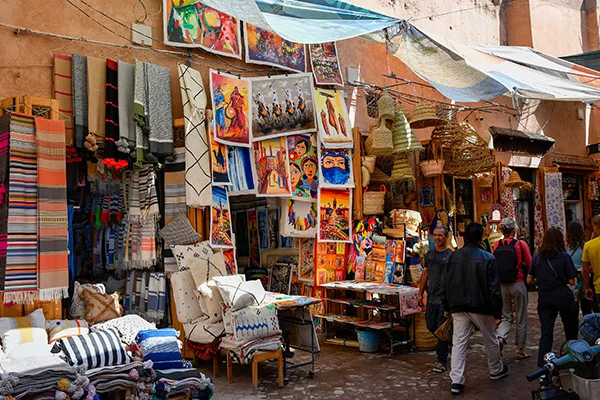
In the haveli-quarter shops and desert camp add-ons, prices are usually negotiable — politely settle in the middle.
Real families live within Jaisalmer Fort — be considerate when photographing homes and private spaces.
A few practical things worth knowing before you arrive in Jaisalmer.
Sam Dunes are the most popular and most crowded; Khuri offers a quieter, slightly less commercial desert experience.
Even in winter daytime warmth, desert camp nights can drop close to freezing — bring or request warm layers.
A combined ticket covers the Fort Palace Museum and several haveli interiors — ask at the first site you visit.
Jaisalmer's remoteness means longer transfers than elsewhere in Rajasthan — build this into your itinerary rather than rushing.
The open desert offers no shade — sunscreen, a hat, and sunglasses are essential even on cooler days.
The Jaisalmer Desert Festival (February/March) features camel races, turban-tying contests, and folk performances — book well ahead if visiting then.
Dehydration is the most common issue for desert visitors — carry more water than you think you'll need on any excursion.
Jaisalmer is welcoming to travellers; book camel safaris and desert camps through reputable operators with clear safety standards.