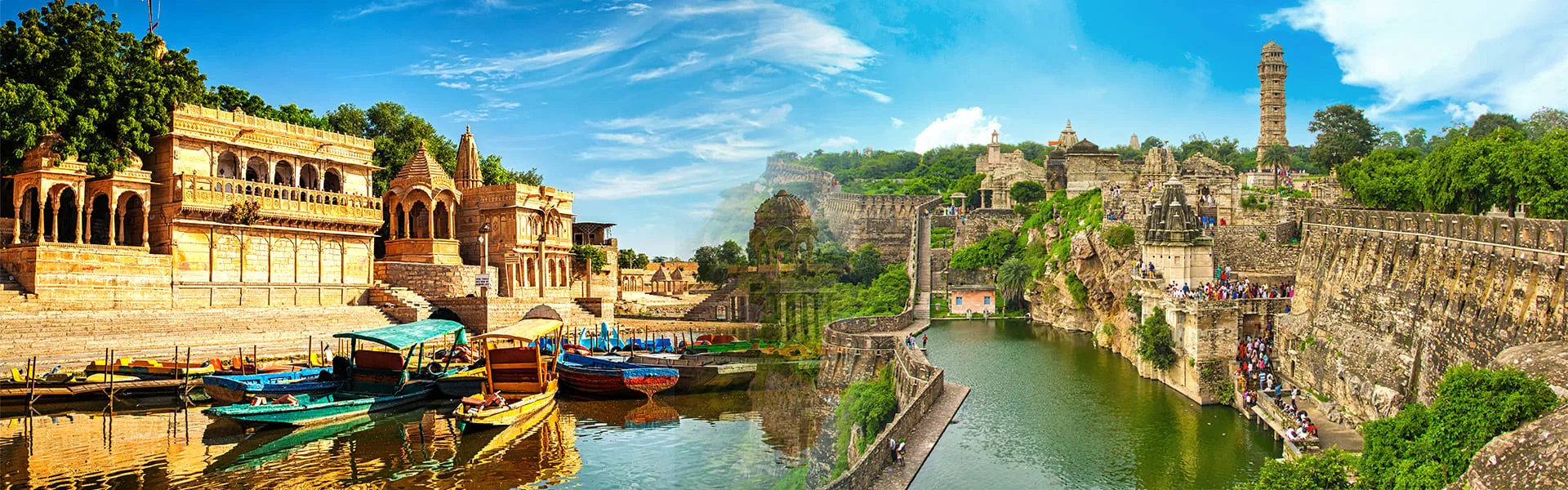
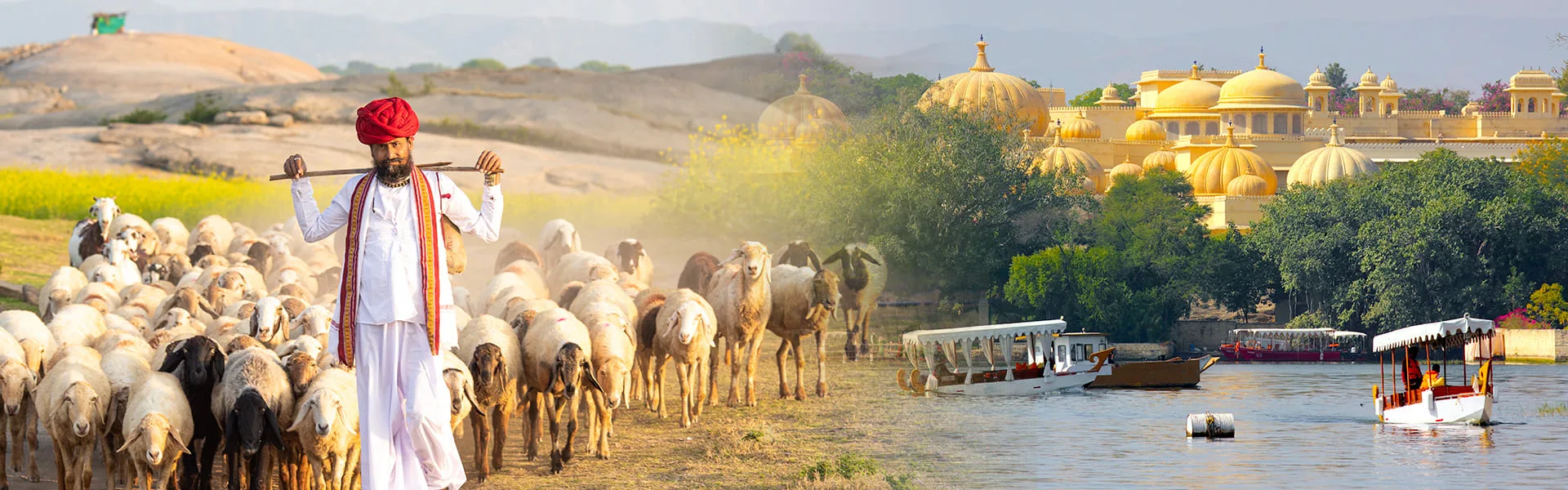
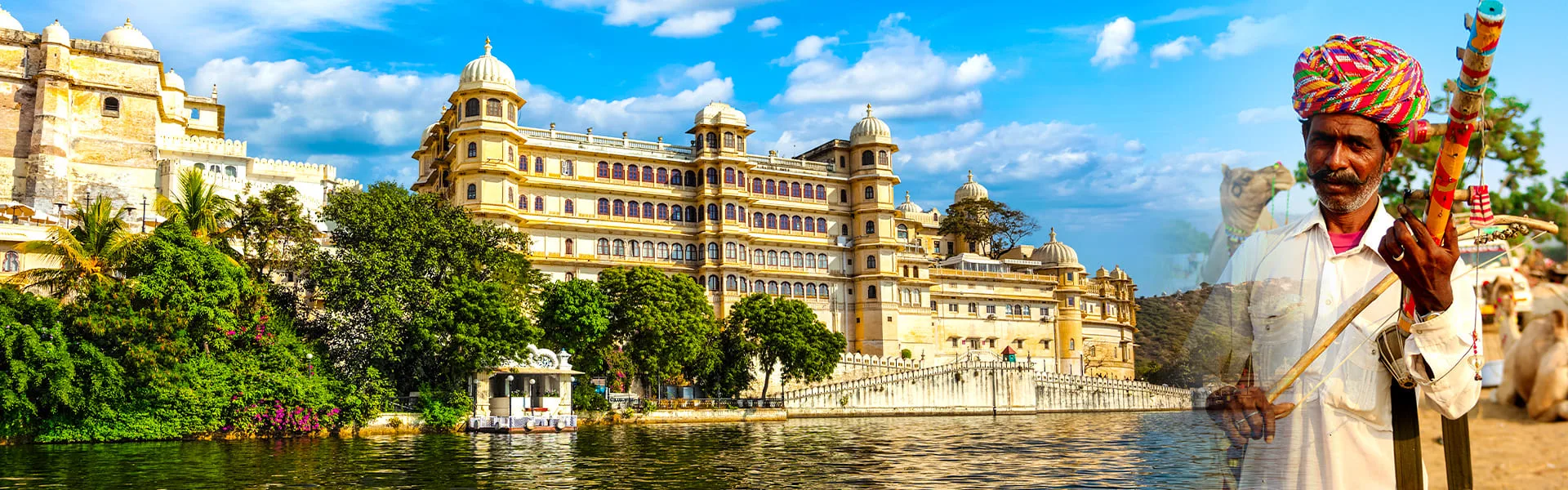
Bikaner was founded in 1488 by Rao Bika, a Rathore prince who struck out on his own after a dispute over succession in Jodhpur, building a new capital on a ridge in the northern Thar Desert. The city's wealth came from controlling the caravan trade routes between Central Asia and the ports of Gujarat.
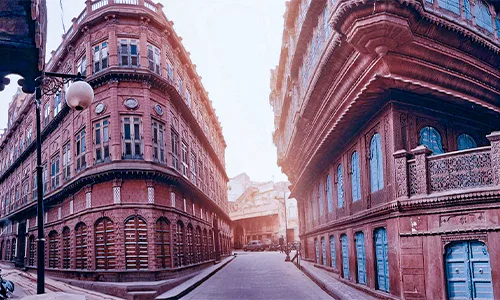
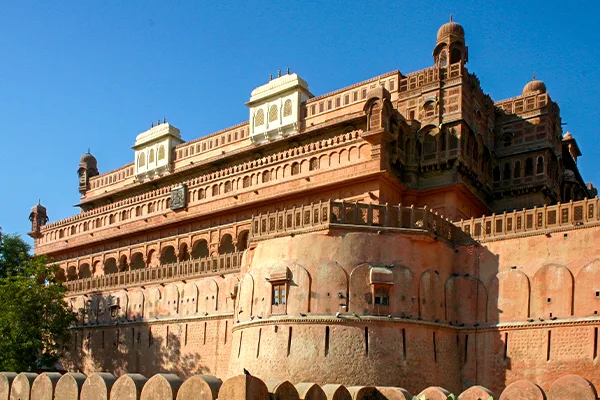
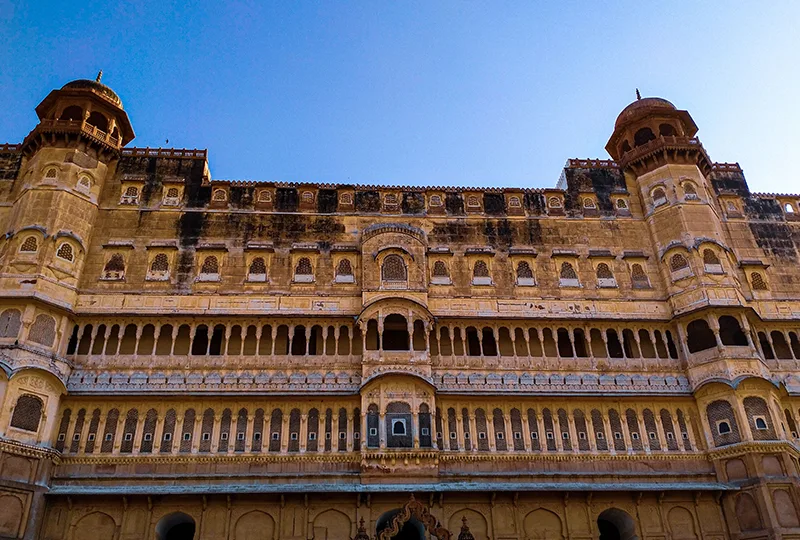
That wealth is most visible in Junagarh Fort — built, unusually for Rajasthan, on flat ground rather than a hilltop, and never successfully besieged — and in the elaborately carved red sandstone havelis built by Bikaner's merchant families, rivalling those of Jaisalmer in craftsmanship if not in scale of tourism.
Bikaner is also home to the National Research Centre on Camel, reflecting its enduring identity as the historic heart of India's camel-breeding country, and is famous nationwide for its savoury snacks — bhujia and namkeen exported across India under the Bikaner name.
Bikaner's northern desert location gives it a climate similar to Jaisalmer's, with cold winters and extreme summer heat.
Cool and dry (8–24°C), with cold desert nights in December-January — the only comfortable window for fort and haveli exploration.
Post-monsoon, with temperatures beginning to moderate; the Camel Festival (January) is a popular reason to visit within peak season.
Extremely hot, regularly exceeding 45°C, with dust storms common — outdoor sightseeing best avoided.
Seven landmarks — the fort, havelis, and camel country beyond — that define a visit to Bikaner.
Fort
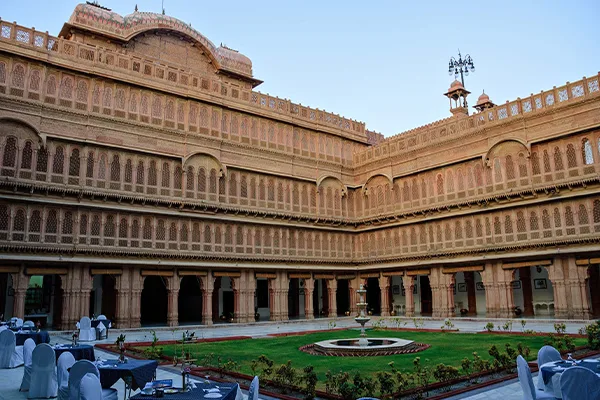
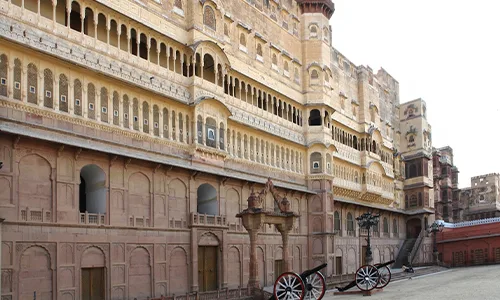
Built in 1593 on flat ground rather than a hilltop, and never successfully captured — its palace complex within holds ornate mirror-work halls and a fascinating museum of royal weapons and artefacts.
Palace
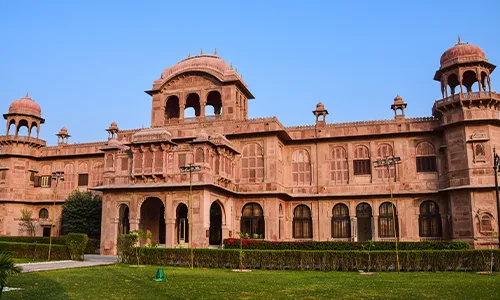
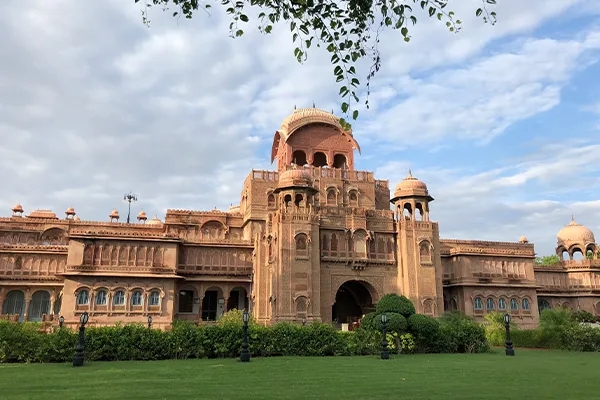
An early 20th-century red sandstone palace built for Maharaja Ganga Singh, blending European and traditional Rajput styles — part hotel, part museum, part still home to the royal family.
Wildlife
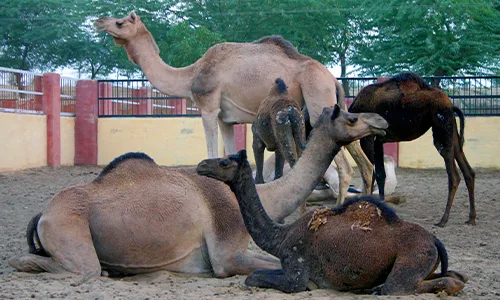
A government research facility breeding and studying camels, with a small museum and the chance to try camel milk products — a uniquely Bikaner experience.
Haveli
A cluster of elaborately carved red sandstone mansions built by wealthy Jain merchant families, rivalling Jaisalmer's havelis in craftsmanship within the old city.
Temple
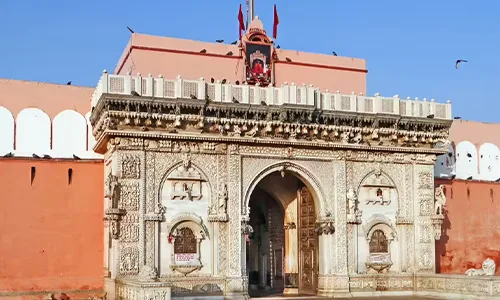
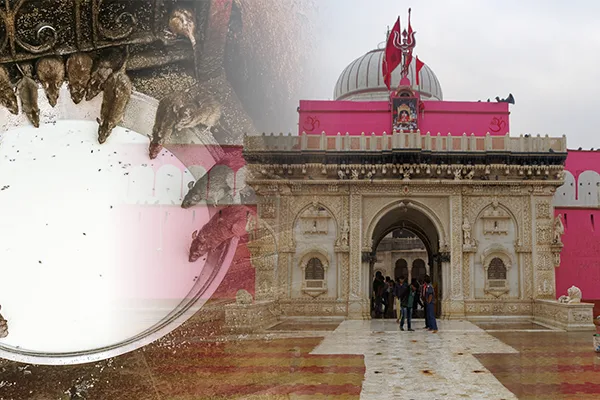
The famous 'Rat Temple', 30 km from Bikaner, where thousands of black rats are revered and protected as reincarnations of the goddess's devotees — genuinely unlike anywhere else in India.
Palace
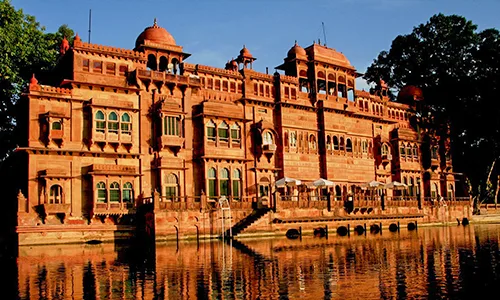
A former royal hunting lodge on a lake 32 km from the city, now a heritage hotel — peacocks, imperial sandgrouse, and a tranquil desert-lake setting.
Temple
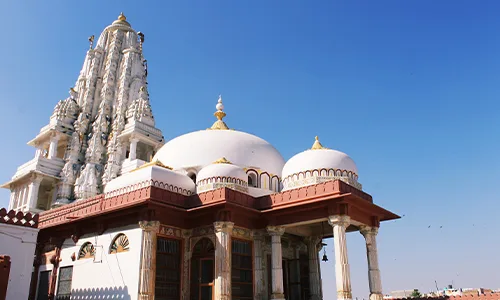
Two 15th-16th century Jain temples in the old city, known for their delicate frescoes and a (disputed) legend of construction using ghee instead of water in the mortar.
The fort's flat-ground position is unusual for Rajasthan, and its interior palaces are some of the most opulently decorated of any Rajasthani fort museum.
The surrounding old city holds the Rampuria havelis and Jain temples within easy walking distance.
Lalgarh Palace represents a more modern Bikaner — early 20th-century royal grandeur, part hotel, part museum of the Ganga Singh era.
This newer part of the city is also home to the camel research centre, reflecting Bikaner's enduring desert heritage.
Karni Mata Temple at Deshnoke and Gajner Palace's lake both make memorable half-day excursions from the city, each offering something genuinely unlike the city itself.
Both are easily combined into a single day if time is limited.
Bikaner sits in Rajasthan's northern desert belt, best reached via Jodhpur or directly from Delhi by rail or road.
Nal Airport (BKB) near Bikaner has limited connectivity; most travellers fly into Jodhpur and continue by road.
Bikaner Junction connects to Delhi, Jaipur, and Jodhpur, with both day and overnight train options available.
A well-maintained highway connects Bikaner to Jodhpur and onward to Jaisalmer, forming a natural leg of a western Rajasthan desert circuit.
What to eat, and a few customs worth knowing, before you arrive
Bikaner's most famous export — crunchy, spiced savoury snacks sold in shops across the city and shipped nationwide.
Bikaner has its own distinctive sweet-making tradition, worth sampling alongside its savoury specialities.
Try camel milk tea, ice cream, or cheese at the National Research Centre on Camel — a genuinely local speciality.
Cover shoulders and knees at temples and the fort museum — respectful, and sometimes required for entry.
At the Rat Temple, walking barefoot is required and stepping on a rat (even accidentally) is considered inauspicious — tread carefully.
In the old city's haveli-quarter shops, prices are usually negotiable — settle around the middle of the opening offer.
A few practical things worth knowing before you arrive in Bikaner.
The fort museum's audio guide is genuinely worthwhile — it covers details easily missed without commentary.
Bikaner's own Camel Festival (January) features races, decoration competitions, and folk performances — a colourful time to visit.
Winter desert nights drop sharply even when days are pleasant — bring warm layers for the December-January period.
A knowledgeable local guide adds real depth to Junagarh Fort and the havelis, where unmarked details often go unnoticed.
Buy bhujia and namkeen directly from a recognised Bikaner shop rather than a tourist stall, for the most authentic version.
Bikaner sees fewer tourists than Jodhpur or Jaisalmer, making it a quieter, equally rewarding desert-city alternative.
Bikaner is generally safe and welcoming to travellers; as everywhere, agree any taxi or guide pricing clearly in advance.